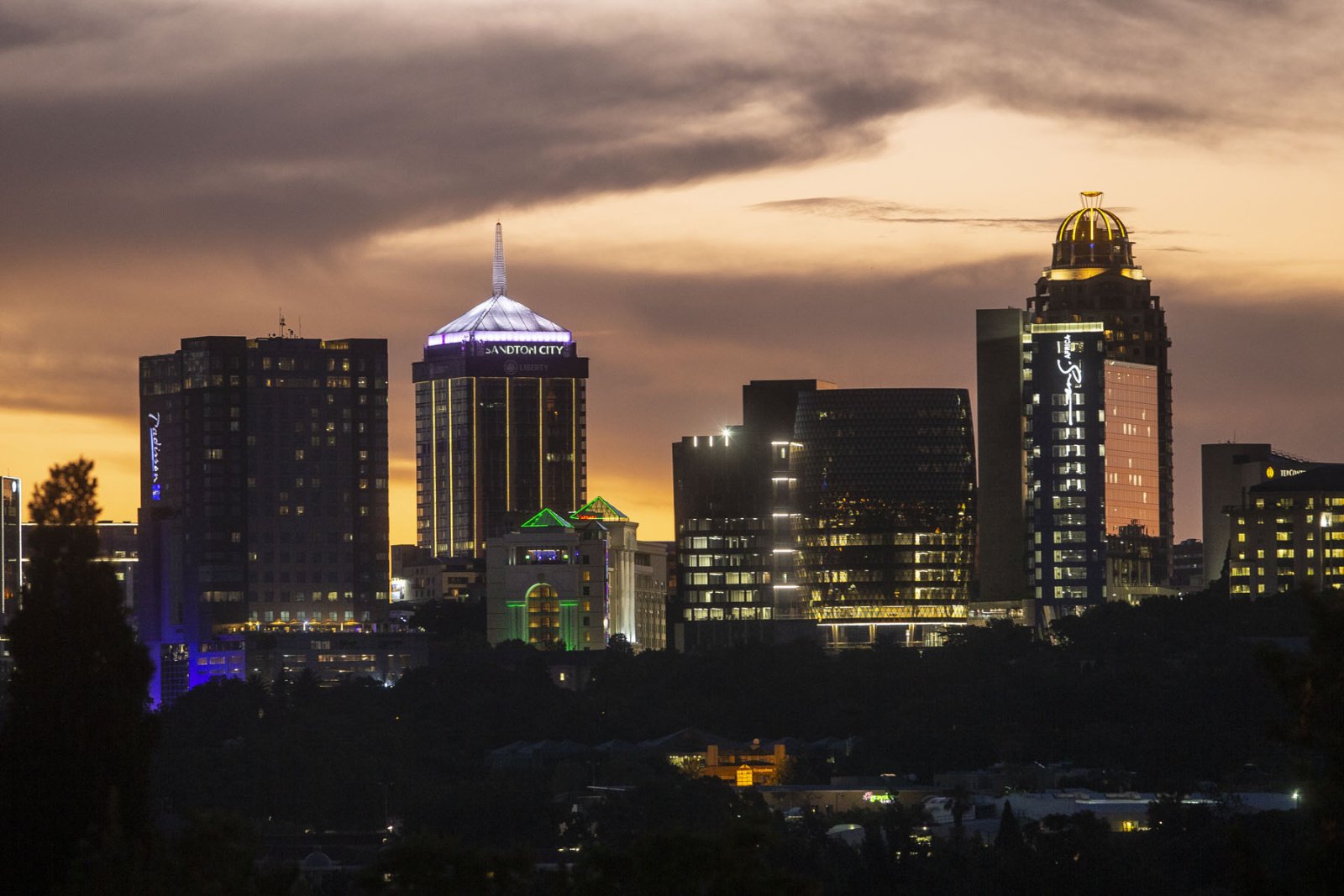
Johannesburg Latest News
The Mail & Guardian
KZN village cut off as deadly river crossings claim lives
The village of uMhlwazi, which sits among the rolling mountains of uMhlumayo in KwaZulu-Natal’s uThukela district, feels forgotten. With barely any services and almost entirely cut off from the rest of the predominantly rural district, daily life in the impoverished village is marked by isolation and hardship. The Mail & Guardian witnessed first-hand the struggles faced by residents trying simply to move in and out of the community. After more than three hours on a heavily potholed tar road that ends halfway, the journey continued along a punishing gravel route leading to the village. uMhlwazi lies roughly three hours from the seat of the Alfred Duma local municipality, headquartered in the town of Ladysmith, known to locals as eMnambithi. Running through the middle of the village is the Indaka River, both a lifeline and a danger to residents. With no water infrastructure, villagers rely on the river as their only source of water, sharing it with livestock. But locals say the river has also claimed six lives over the years, earning it the grim nickname: “the river of death”. Community leader Khanyisani Sibisi initially appeared reluctant to speak to the M&G. “Nizohlekisa ngosizi lwethu,” he said angrily. “You’re here to make a mockery of our struggles. People are perishing here.” Village elder Mboniseni Mazibuko later explained the source of Sibisi’s frustration. “Please pardon him. He lost his younger brother in these waters,” Mazibuko said, pointing at the river. “Government officials have come here and made a lot of promises. People are angry.” Pupils not only walk kilometres to reach Mandlakhe High School, the only secondary school serving several surrounding villages but must also risk crossing the Indaka River, which residents say is infested with crocodiles. The community has never had a bridge connecting it to the other side. Local councillor Bongani Nicholas Madondo said the provincial department of transport must take responsibility for the community’s ongoing suffering. “Government officials and the department of transport have visited this area several times and made many promises,” Madondo said. “The first was former KwaZulu-Natal transport MEC Willies Mchunu, who presided over a sod-turning ceremony and promised a bridge would be built. Nothing came from that. The current education MEC, Sipho Hlomuka, also conducted a sod-turning ceremony in 2023.” Madondo said residents remained traumatised by repeated drownings, including the death of 36-year-old Lungeleni Shabalala. Shabalala had travelled to Ladysmith, the nearest town serving the surrounding villages, to buy household items when she drowned while attempting to cross the river, he said. Her body was recovered the following afternoon. “Two learners have also died in similar incidents,” said Madondo. “Parents sometimes keep their children at home during rainy days because they fear for their safety. The situation is catastrophic.” He said the lack of a bridge also stripped grieving families of dignity during funerals. “During burials, families are forced to carry coffins across the river,” he said. “It completely takes away their dignity.” Mncedisi Maphisa, chairperson of the transport portfolio committee in the KwaZulu-Natal legislature, described the situation as “a travesty of justice”. “We will seek answers about what happened to the funds meant for the construction of this much-needed bridge,” Maphisa said. “If there are people who must be held accountable, heads will roll.” In the nearby village of Mbondwane, about 15km away, residents described similar hardship. The only bridge serving the community was damaged during floods, forcing parents to carry children on their backs across dangerous sections so they can reach Mnyanda Primary School. Villagers also told the M&G that there are no nearby clinics and that poor cellphone reception leaves them isolated. “We are shut off from the world because there’s no network in our village,” said resident Sphelele Gumede. “We have to climb the mountains just to make calls or receive important ones.” uMhlumayo falls under the traditional leadership of eMangweni. KwaZulu-Natal transport department spokesperson Ndabezinhle Sibiya said he was uncertain about the status of the bridge project. “I will have to check with the engineers regarding the status of the bridge,” he said.
The Mail & Guardian
Court puts municipality in its place
A court case that most South Africans probably scrolled past this month deserves a lot more attention than it got. On 30 April 2026, the Western Cape High Court ruled that Cape Town’s fixed charges for citywide cleaning, water and sanitation were unlawful and unconstitutional. The South African Property Owners Association (Sapoa) brought the case and won. The city has since decided not to appeal, which tells you everything you need to know about the strength of its legal position. The issue was that Cape Town had structured the fixed service charges so that the amount you paid was calculated based on your property’s value. The more expensive your property, the more you paid for cleaning and basic water, regardless of how much water you used or how much rubbish you generated. The court found that linking a service charge to property value converts it into a property tax in disguise. Municipalities don’t have the legal authority to introduce new property taxes. That power sits with the national government. What looked like a service charge was, legally speaking, an unlawful levy. The city is scrambling to rework a budget that depended on roughly R2 billion in revenue from those charges. A new draft budget goes out for public comment on 27 May 2026. Sapoa has said citywide cleaning should be funded through property rates, the mechanism that exists for broad-based municipal expenditure. The city appears to agree. Why does this matter beyond the Western Cape? The ruling is a mirror being held up to every municipality in the country. Municipalities have a problem and it is one that few are willing to talk about honestly. They are over-reliant on a small group of people to fund their budgets — property owners. Property taxes and rates make up a disproportionate share of municipal income in most of our major cities. When you add surcharges and service fees that get stacked on top of rate bills, a significant portion of what municipalities collect comes from the same pool of ratepayers. That is not a sustainable funding model and it creates a political temptation that is almost impossible to resist. To put it another way, if you need more money, you look at property owners because they’re paying, their properties are registered and they’re relatively easy to bill. Cape Town’s value-linked charges were a version of that temptation. Instead of going through the proper legislative process to increase rates, which requires alignment with the national framework and public consultation, the city found a creative workaround. Link the service charge to property value, collect more from higher-value properties and achieve the revenue outcome without technically calling it a rate increase. The court said no. Here is what the data tells us about the broader problem. According to research compiled from the National Treasury’s local government data, property rates as a share of municipal operating revenue have climbed steadily over the past decade. In the metros, rates income has in many cases grown faster than inflation — and significantly faster than the property values being taxed. The City of Cape Town’s budget shows rates income growing at compound rates that have consistently outpaced CPI. The same pattern holds in Johannesburg, Tshwane and eThekwini, where property rate increases have run between 8% and 12% annually, even during periods when inflation was at 4% or 5%. For property owners, this is not an abstract policy conversation. It lands on your doorstep in the form of a municipal account that seems to grow faster than almost anything else in your cost of living. Being a property owner in South Africa in 2025 is sometimes not as glamorous as it looks. The romanticised version of buying a property, building wealth, collecting rent and retiring comfortably has become something different. The costs of owning, maintaining and managing property have escalated dramatically while the income from that property has often not kept pace. Think about what goes into owning a property. You start with transfer duty on acquisition, which applies at a graduated rate to purchases above R1.1 million, plus conveyancing fees, bond registration costs and potentially an estate agent commission. That’s before you’ve switched on a light. Then come the monthly costs of the bond, levies if you’re in a complex, property rates, building insurance, maintenance and repairs. If you’re a landlord, add vacancy periods, property management fees if you use an agent, the cost of tenant disputes and the risk of a non-paying tenant you cannot remove quickly because the Rental Housing Tribunal moves at its own pace. As for the effectiveness of the Prevention of Illegal Eviction from and Unlawful Occupation of Land Act 19 of 1998, let me save the rant for another article. Rates alone have become a material line item. A property valued at R3m in Cape Town can attract a monthly rates bill of R2 500 to R3 500 or more, depending on the category and the valuation cycle. The number was lower five years ago. In Johannesburg, where property values in many areas have gone flat or backwards in real terms, rates bills have kept climbing. You are paying more for a municipal service in a city where the roads are worse, the water infrastructure is under pressure and load shedding, while recently improved, has cost property owners significantly in generator investments and electricity surcharges. The cumulative effect on affordability is real and underestimated. When first-time buyers do the maths on whether they can afford a property, they typically look at the bond repayment and maybe the levy. Rates often get underestimated. The cost of maintenance, which, for an average freestanding house, is roughly 1% of the property value a year almost never features in the calculation. The true cost of owning property is considerably higher than the headline price suggests. Municipalities raising their rates above inflation year after year are making that calculation worse. None of this is an argument against municipalities collecting revenue. They need it. Roads, water reticulation, waste removal and electricity infrastructure cost money and property owners benefit from them. A well-run city with reliable services and maintained infrastructure is the most important driver of property value. I have made this argument in this column before: the reason Cape Town properties appreciate the way they do is not just the mountain and the ocean. It is the fact that the city’s lights stay on, the sewage system mostly works and the streets get cleaned. That is worth paying for. But paying for it and being exploited are two different things. When a municipality creates a charge that is linked to the value of your asset and not to your usage, not to the cost of the service but to how much your property is worth, it has crossed from taxation into something that looks more like a wealth levy applied to an illiquid asset. You cannot sell 10% of your house to pay your rates and you cannot easily liquidate equity. You are being asked to fund the municipality based on a notional value, while the municipality often fails to justify how the number translates into service delivery. Sapoa is engaging Mangaung Metropolitan Municipality on the same issue. Other municipalities had better take note because the precedent is set. The lesson is not complicated. Property rates and proper service levies are legitimate. They are the clean, constitutionally sound way to fund shared municipal services. Sapoa has said it supports the mechanism. What is not legitimate is using property values as a proxy for ability to pay, packaging it as a service charge to avoid legislative scrutiny and then running a R2bn hole in your budget when a court calls it out. Municipalities need to do the hard work of broadening their revenue bases rather than returning to the same well. They need to improve billing and collection rates and be transparent to ratepayers about how their money is being spent. Property owners are carrying more than their fair share of an increasingly heavy load. They are not an inexhaustible revenue source. As this court case has reminded us all, they are not without legal recourse either.
IOL
Social media unites behind George family following the tragic death of 12-year-old
After the tragic death of 12-year-old karate champion Morgan Mentoor, heartfelt tributes flood social media, celebrating his life and the impact he made on his community.
IOL
King Misuzulu clears the air about his former private secretary's role in palace affairs
AmaZulu King Misuzulu kaZwelithini clarifies the status of Arnold Nododile within the royal family, addressing recent announcements about his dismissal
The Citizen
McKenzie – Bafana will leave for World Cup on Monday
Minister for Sports, Arts and Culture Gayton McKenzie said on Sunday night that Bafana Bafana’s players all now had their US visas and would depart for the 2026 Fifa World Cup on Monday, a day later than initially scheduled. Bafana delayed Bafana were set to jet off to their training base in Pachuca, Mexico on Sunday morning, but were unable to fly as it emerged that due to an administrative issue, several players did not have the required paperwork to travel. “All @BafanaBafana players received their visas to travel to the USA, outstanding is assistant coach, team doctor, head of security and one analyst. The charter will leave tomorrow,” tweeted McKenzie on Sunday evening. It remains unclear who was responsible for the visa debacle, though the spotlight immediately fell once more on controversial Bafana team manager Vincent Tseka. Tseka was heavily criticised for his involvement in Bafana’s fielding of midfielder Teboho Mokoena in a Fifa World Cup qualifier in over a year ago, when the Sundowns man was supposed to be suspended. The incident ended up almost costing Bafana a place at the World Cup, as that game was ultimately awarded by Fifa to Lesotho as a 3-0 win. Safa issued a statement on the visa issue on Saturday. ‘SAFA is working around the clock’ “The South African Football Association (SAFA) wishes to update the nation on Bafana Bafana’s travel plans to Mexico ahead of the 2026 FIFA World Cup,” read the statement. “The South African senior men’s national team has experienced challenges regarding Visas for some players and officials, and as a result the group could not travel to North America this morning as originally planned. “SAFA is working around the clock to ensure that the team travels to Mexico City as soon as possible ahead of the opening match of the global tournament against the hosts Mexico at the Estadio Azteca on June 11, 2026. We remain committed to ensuring that the team’s preparations for the tournament remain on track and in the meantime, Bafana Bafana will continue to train in Johannesburg until departure. “SAFA will have an Emergency Committee Meeting this evening (Sunday, 31 May 2026) and a further update will be communicated to the nation after its conclusion.”
The Citizen
Series has been ‘incredibly valuable’ for Junior Boks, says coach Foote
The Junior Springboks capped an impressive unbeaten run with a commanding 57-14 victory over Georgia at Paul Roos Gymnasium’s Markötter Stadium in Stellenbosch on Saturday, securing a clean sweep in the U20 International Series following earlier victories over Chile and Fiji. The final outing of the series in Stellenbosch provided SA U20 head coach Kevin Foote with invaluable insights as his squad builds towards the forthcoming World Rugby Junior World Championship (JWC) in Georgia. The Junior Boks scored nine tries on their way to a third straight win in the series, after leading 38-7 at the halfway mark. “It was a very physical test. Georgia are strong at set piece and collisions, and they’ve got a lot of pride. This is exactly the kind of challenge we needed, especially with another clash against them looming in their home conditions (at the Junior World Cup),” Foote said after the match. Beyond the scoreboard, the match served a broader purpose in the Junior Bok programme, with Foote highlighting the importance of squad depth and player development. “This series has been incredibly valuable. It gave us the opportunity to blood new players, reintegrate others, and bring some guys back from injury,” explained Foote. “Now the challenge is narrowing the group to 30 players – and that’s not going to be easy, given the talent we have available.” The Junior Bok mentor emphasised that JWC selection would focus not only on individual performances, but also on established combinations and overall squad balance. “We look closely at combinations and continuity. At the same time, players must be ready to perform at the highest level. The next two weeks will be crucial in ensuring that everyone is fully prepared.” Captain Norton Riley Norton, the Junior Boks’ lock and captain, echoed his coach’s sentiments, expressing confidence in the squad’s physical and mental condition heading into the international showpiece, where they were set to defend their U20 world title. “We’re in a really good place as a group. There’s been a demanding schedule, but we’ve also had the opportunity to recover properly. The squad is feeling confident and united,” said Norton. For Norton, the occasion also carried personal significance, returning to his former school ground at Paul Roos, where he played his schoolboy rugby just two years ago. “It was incredibly special to play here again. It’s a place that means a lot to many of us, and to do it in a Junior Bok jersey made it even more meaningful,” he said. Looking ahead, Norton acknowledged the importance of the physical test provided by Georgia: “They’re a proud rugby nation and very physical. They never go away, and we know playing them in their own backyard in a few weeks (at the JWC) will be an even bigger challenge.” The Junior Springboks will now enter a critical selection and preparation phase before departing to Georgia for the 2026 edition of the JWC, to be staged in three weeks’ time.
The South African
Gayton vows to send 6 excluded Bafana players to World Cup
Minister of Sport, Gayton McKenzie, has vowed to send the six excluded Bafana players to the FIFA World Cup, despite not making coach Hugo Broos’s cut. This comes as the rest of the 26-man squad’s travel to the tournament has been delayed due to visa issues. The national team are set to play the opening match against Mexico on 11 June. GAYTON MCKENZIE VOWS TO SEND EXCLUDED SIX TO WORLD CUP Over the weekend, Gayton McKenzie announced that the Department of Sport had partnered with South African sportswear brand Old School to send the six excluded Bafana players to the FIFA World Cup The collaboration would cover the travel and accommodation costs and allow the players to join the rest of the squad, despite being out of play. The six players – Brandon Petersen, Patrick Maswanganyi, Thabiso Monyane, Thapelo Morena, Lebohang Maboe and Brooklyn Poggenpoel – will watch the team play their opening Group A match against co-hosts Mexico at the iconic Estadio Azteca on 11 June. Gayton said in a statement: “These six men trained, sacrificed and prepared with the same dedication as every player in that squad. They were part of this journey. The margin between making the final cut and missing out at a World Cup is razor-thin. It would be wrong for that margin to mean that their contribution simply disappears. They deserve to be there, and they deserve to see what they helped build.” The Minister of Sport acknowledged that Bafana coach Hugo Broos was tasked with an “impossible choice” in selecting 26 men to travel to the FIFA World Cup. He continued: “It is in the nature of sport because disappointment for some is the inescapable flip side of glory for others. “We go to Mexico as one nation. There will be 26 deserving players in the squad and six more equally special ones in the stands. All of them are Bafana Bafana. On that day, all 60 million of us will be Bafana Bafana.” VISA WOES FOR BAFANA SQUAD Meanwhile, Gayton McKenzie has chastised the South African Football Association (SAFA) for the administrative errors behind the visa issues that have halted Bafana’s trip to The FIFA World Cup squad were set to depart for Mexico on a chartered flight on early Sunday morning, but were grounded over the team “experienced challenges regarding visas for some players and officials” On his X account, the minister posted: “This travel and visa debacle is embarrassing and grossly unfair towards the players and coaching staff. I have informed @SAFA_net that I need a report, and action must be taken against those responsible for this mess”. He added: “We are being made to look like fools”. This @SAFA_net travel & visa debacle is embarrassing & grossly unfair towards the players & coaching staff. I have informed @SAFA_net that I need a report and action must be taken against those responsible for this mess. We are being made to look like fools.— Gayton McKenzie (@GaytonMcK) May 31, 2026
The South African
Grape industry reels from Cape flood damage as recovery bill mounts
South Africa’s table grape industry is counting the costs of severe storms and flooding that swept across parts of the Western Cape earlier this month, with some growers facing losses of up to R1.2 million per hectare. The South African Table Grape Industry (SATI) has appealed to provincial and national authorities for disaster relief and recovery support after widespread damage to vineyards and farming infrastructure. The recent series of cold fronts brought heavy rainfall, flooding and strong winds to several parts of the province. While the 2025/26 table grape season has already ended, growers are now grappling with damage that could affect future harvests. The Berg River, Hex River and Olifants River regions were among the hardest hit. Damage to vineyards and infrastructure According to SATI, damaged and washed-away roads have left some farms difficult to access, hampering recovery efforts. Feedback from growers revealed flooded vineyards, collapsed netting and poles, damaged trellising systems and irrigation infrastructure. “Some farms reported that more than a third of their plantings had been affected,” said SATI chief executive officer Mecia Petersen. The Hex River Valley has been particularly hard hit. The region has now experienced severe flooding for the third time in five years. “In some cases, vines that were replanted in August 2025 to replace vineyards damaged during the 2024 floods have now been washed away again,” Petersen said. She noted that establishing a single hectare of table grapes can cost up to R1.2 million, highlighting the scale of the financial losses facing affected producers. Calls for relief as grape growers rebuild The flooding struck during a critical post-harvest period when growers normally undertake vineyard management work for the next production season. “These post-harvest activities are crucial in determining the size, quality, and productivity of next season’s table grape crop,” Petersen noted. SATI warned that delays in restoring operations could have longer-term consequences for productivity, sustainability and employment. “Government disaster relief processes must be accelerated to address these extenuating circumstances,” Petersen added. The industry body has urged affected growers to complete damage assessment surveys administered by the Western Cape Department of Agriculture as authorities assess the extent of the losses. “Without urgent intervention, the impact of these storms could extend far beyond the immediate damage already suffered by producers and rural communities,” Petersen warned.
TechCentral
Telkom reports this Tuesday: the real story will be in the detail
Telkom has guided to a 45-55% earnings jump when it reports this week, but base effects complicate the picture.
TechCentral
Nvidia CPUs to debut in Windows laptops this week
Microsoft and Dell are expected to lead the launch as Nvidia muscles into a space dominated by Intel and AMD.