General Information
Johannesburg is the most populous city in South Africa. The City of Johannesburg itself has a population of 5,538,596, while the City of Johannesburg Metropolitan Municipality has a population of 6,599,190, making it one of the 100 largest urban areas in the world. Johannesburg is the provincial capital of Gauteng, the wealthiest province in South Africa, and seat of the country's highest court, the Constitutional Court. Situated on the mineral-rich Witwatersrand hills, the city has long been at the epicentre of the international mineral and gold trade. The richest city in Africa by GDP and private wealth, Johannesburg functions as the economic capital of South Africa and is home to the continent's largest stock exchange, the Johannesburg Stock Exchange.
- Population: 5,900,000+ (Metro Area)
- Area: 1,645 km²
- Currency: South African Rand (ZAR)
- Coordinates: Latitude: -26.204444885254, Longitude: 28.045555114746
- Timezone: Timezone info not available
- Current Local Time: ailab
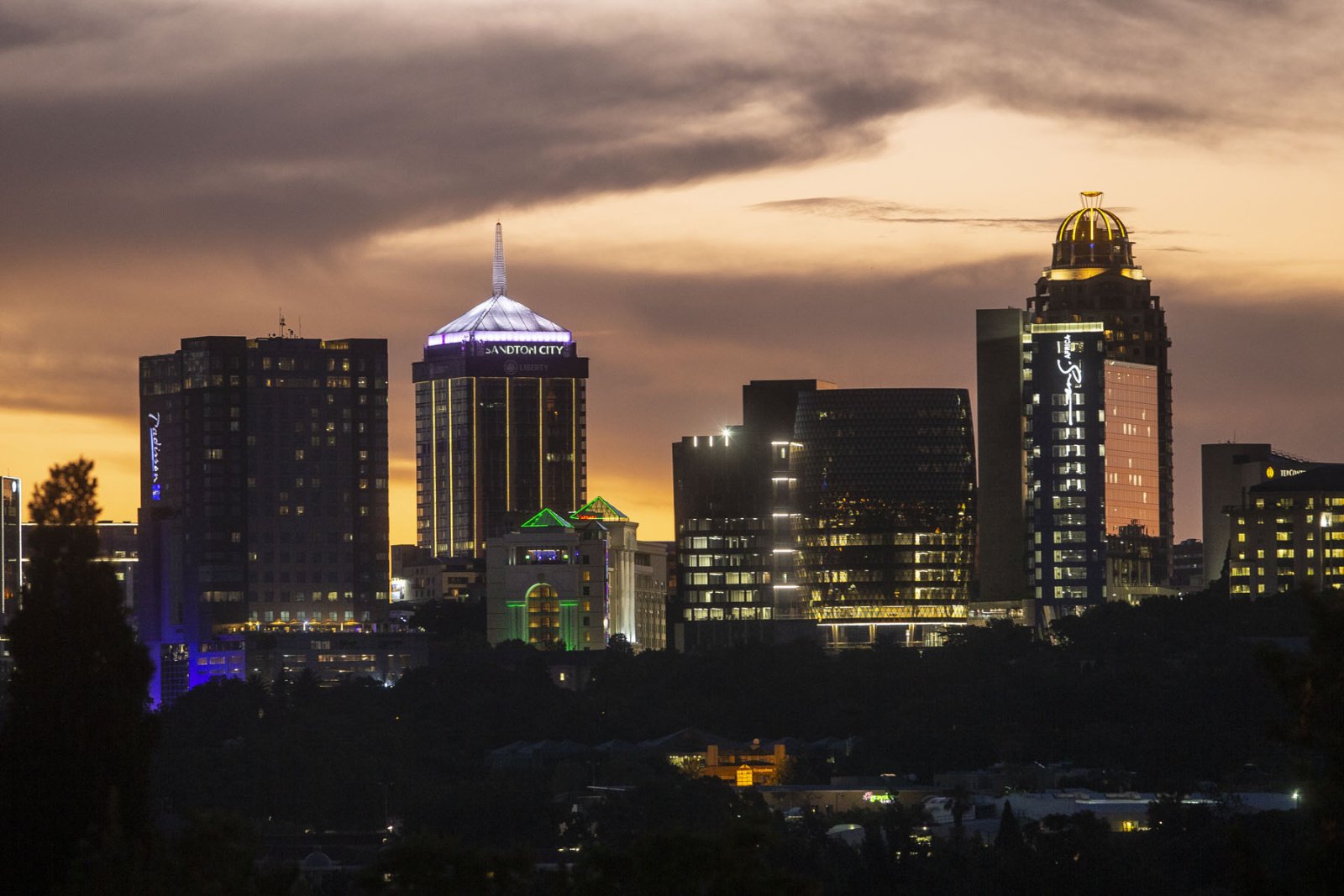
Sandton
Business towers, upscale malls, Nelson Mandela Square, and city nightlife.
Johannesburg CBD
Downtown streets, Commissioner Street, Gandhi Square, and real urban life.
Soweto
Township streets, Maponya Mall, Protea North, and cultural walking tours.
Rosebank & Melrose Arch
Shopping areas, nightlife, and modern mixed-use districts.
Johannesburg Latest News
IOL
WhatsApp: The stealth super-app for deskless workers
With many frontline workers lacking regular access to email or workplace computers, South African businesses are using WhatsApp to provide payslips, leave applications and HR support — but privacy, data costs and digital exclusion remain concerns.
IOL
What makes China's market so uniquely valuable?
Instead of chasing every fleeting trend in a frenzy, China stays focused on innovation within chosen sectors. Instead of faltering amid headwinds, it stays anchored to the goal of fostering new quality productive forces.
The Citizen
Eskom warns parties election posters on power poles could cost lives
As electioneering gathers momentum across South Africa, Eskom has warned political parties not to turn power infrastructure into campaign billboards, cautioning that workers hanging or removing posters risk electrocution, serious injury or death. As posters multiply ahead of the 4 November polls, Eskom’s next round of “load shedding” could involve stripping campaign posters from light poles. Electricity poles in Suburbs, towns, and cities nationwide have become campaign tools ahead of the 4 November polls, which are expected to be hotly contested as service delivery woes frustrate residents. Election posters While political parties’ election posters may be unsightly, Eskom has appealed to all political parties, independent candidates, supporters, campaign teams, advertising agencies, and members of the public not to place election posters, banners, or any promotional material on Eskom-owned or operated electricity infrastructure. Eskom spokesperson Daphne Mokwena said the utility has observed an increase in election-related posters being attached to electricity poles, mini-substations, transformers and other electrical infrastructure during the current campaign period. “While electioneering is an important part of South Africa’s democratic process, electricity infrastructure must not be used for advertising or promotional purposes due to the significant safety risks involved. “The prohibition on attaching unauthorised material to Eskom infrastructure applies throughout the year. The current appeal follows an increase in election-related posters observed during the election campaign period,” Mokwena said. Risk Mokwena warned that the risk arises when individuals climb poles, use ladders, or work in close proximity to live electrical equipment while installing or removing posters. She said such activities can expose people to electric shock, severe burns, serious injury or even death. “Unauthorised attachments can also damage infrastructure, obstruct inspections and maintenance activities, and compromise safe access to electrical equipment required to support reliable electricity supply. “ Appeal Eskom has urged all election stakeholders to use only authorised advertising structures and to refrain from placing campaign material on any electricity infrastructure. “Members of the public are reminded to always treat all electrical installations as live and dangerous. Unsafe activities involving Eskom infrastructure should be reported through Eskom’s customer service channels or local operating offices.” Eskom warned that it may remove any unauthorised material attached to its infrastructure where necessary to protect public safety and ensure access to critical infrastructure.
The Citizen
BMA official nabbed with 22 Lesotho passports in major border corruption bust
A 65-year-old Border Management Authority (BMA) official stationed at the Maseru Port of Entry has been arrested after an intelligence-driven operation allegedly caught him with 22 passports belonging to Lesotho nationals and cash suspected to be linked to an unlawful visa-stamping scheme. The official was handcuffed on Wednesday, 15 October 2026, following an intelligence-driven operation conducted by the BMA Integrity Management Unit, the Department of Home Affairs Counter Corruption Unit, the South African Police Service (SAPS) and Crime Intelligence Free State. Intelligence operation The arrest took place just over ten days after the fifth instalment of the Anti-Corruption Awareness Campaign, hosted under the Border Management and Immigration Anti-Corruption Forum at OR Tambo International Airport. BMA Deputy Assistant Commissioner, Communications and Marketing Mmemme Mogotsi said the operation began after the State Security Agency (SSA) provided information that several Lesotho nationals’ passports had been placed under monitoring. “Intelligence indicated that the passports had allegedly been transported from Limpopo to Ladybrand for the purpose of unlawfully being stamped and extending their visa validity and stay in the Republic of South Africa without the passport holders being physically present, as required by law. “Acting on this information, law enforcement authorities conducted an operation that resulted in the arrest of the BMA official. At the time of the arrest, the official was allegedly found in possession of 22 stamped passports belonging to Lesotho nationals, without the lawful holders being present, as well as R2 100 in cash,” Mogotsi said. Picture: BMA Arrest The suspect was arrested on the spot and is expected to appear before the Ladybrand Magistrate’s Court on charges relating to corruption, possession of passports without lawful authority, and immigration-related offences. Mogotsi said the investigation remains ongoing, and additional arrests have not been ruled out. Warning The Commissioner of the BMA, Dr Michael Masiapato, said the BMA was established to address longstanding challenges relating to illegal migration and corruption within the ecosystem. “South Africa is beginning to see the tangible benefits of the BMA leadership’s firm and uncompromising stance against corruption. The BMA is currently finalising more than 60 labour relations and disciplinary cases involving internal control breaches, fraud, corruption and other misconduct affecting organisational integrity.” Masiapato said the BMA dismissed 17 officials in the last three months, and more are expected. Masiapato has warned that the BMA will remain committed to combating corruption and safeguarding the integrity of South Africa’s ports of entry.
The South African
‘Uyena’: Social media reacts to Nathi Mthethwa’s lookalike [photos]
On 11 October 2026, X users couldn’t help but turn a harmless post into a fun roast after photos of Nathi Mthethwa’s lookalike caused a stir on social media. FRENZY OVER NATHI MTHETHWA’S LOOKALIKE Edward ThembaSa, an X user, posted a series of photos at the Upside Down House, a popular tourist attraction in Hartbeespoort. However, fellow netizen @Makofane Dimphoo reposted the photos and jokingly indicated that Edward bears a resemblance to the late politician Nathi Mthethwa. It didn’t take long for other X users to chime in, as many agreed that Edward could easily be mistaken for Nathi. Close enough, why is your family moving to France?— Moremadi wa Ford Ranger (@MakofaneDimphoo) October 11, 2026 NETIZENS WEIGH IN @carol_seabi: I also thought it was a young throwback. @ThatZeeZee: I thought nguye nyani [it was really him]. @masenyamakola: Heban, uyena! Nathi Mthethwa. @D_Molatoli: No man, you look too much like Nathi Mthethwa. @Lecheadi: You couldn’t wait a little longer before you resurfaced. @QondileKM: Uyena [it’s him]. NATHI MTHETHWA’S FAMILY ALLEGEDLY MOVES TO FRANCE In October 2026, rumours emerged that Nathi Mthethwa’s family would be moving back to France, where he lived with his wife, Philisiwe Buthelezi. Before his passing, Mthethwa served as South Africa’s ambassador to France after his tenure as a cabinet minister in South Africa. The passing of the seasoned politician in France has been shrouded in mystery. According to the authorities in France, they indicated that Nathi may have committed suicide after jumping from the 22nd floor of the Hyatt Regency hotel in September 2025.
The South African
Rachel Kolisi shows up for Siya’s Stormers homecoming [video]
Rachel Kolisi has been hailed a “super mom” after taking her children and their friends to watch her ex, Siya Kolisi’s Stormers homecoming match last weekend. The mom-of-two and her rugby-player ex announced their marriage split two years ago. While Siya has moved on with a woman named Rachel John, his former spouse has remained single. The 35-year-old has returned to the Cape Town club in a bid to be closer to his family. RACHEL KOLISI SUPPORTS SIYA’S STORMERS HOMECOMING On her TikTok account, Rachel Kolisi vlogged a “day in the life” video about her busy weekend This included hosting a dozen children for her son Nick’s 12th birthday celebrations and taking the kids to watch the Stormers match against the Sharks at the DHL Stadium . In the video, Rachel dons a Stormers rugby shirt while cheering from the stands. She zooms onto the pitch, seemingly at her ex, Siya Kolisi, who celebrated his homecoming match. Rachel says in the vlog: “I haven’t been to a live game in ages, so it was super fun. The kids had a great time”. @rachelkolisi A little bit of everything, all in a day 🤍 ♬ original sound – Rachel Kolisi HAPPY TO BE HOME Like his ex, Rachel Kolisi, Siya Kolisi appears happy to be home after his return to Cape Town and the Stormers. The 35-year-old has been enjoying the sights and cuisine of the Western Province in his social media posts.
TechCentral
iOCO CEO Rhys Summerton’s naartjie theory of share buybacks
iOCO will not pay a dividend for as long as Rhys Summerton is at the helm of the company.
TechCentral
Ampath finds no evidence that test results were taken in breach
ID numbers, medical aid details and payment information may have been taken, Ampath has told patients.