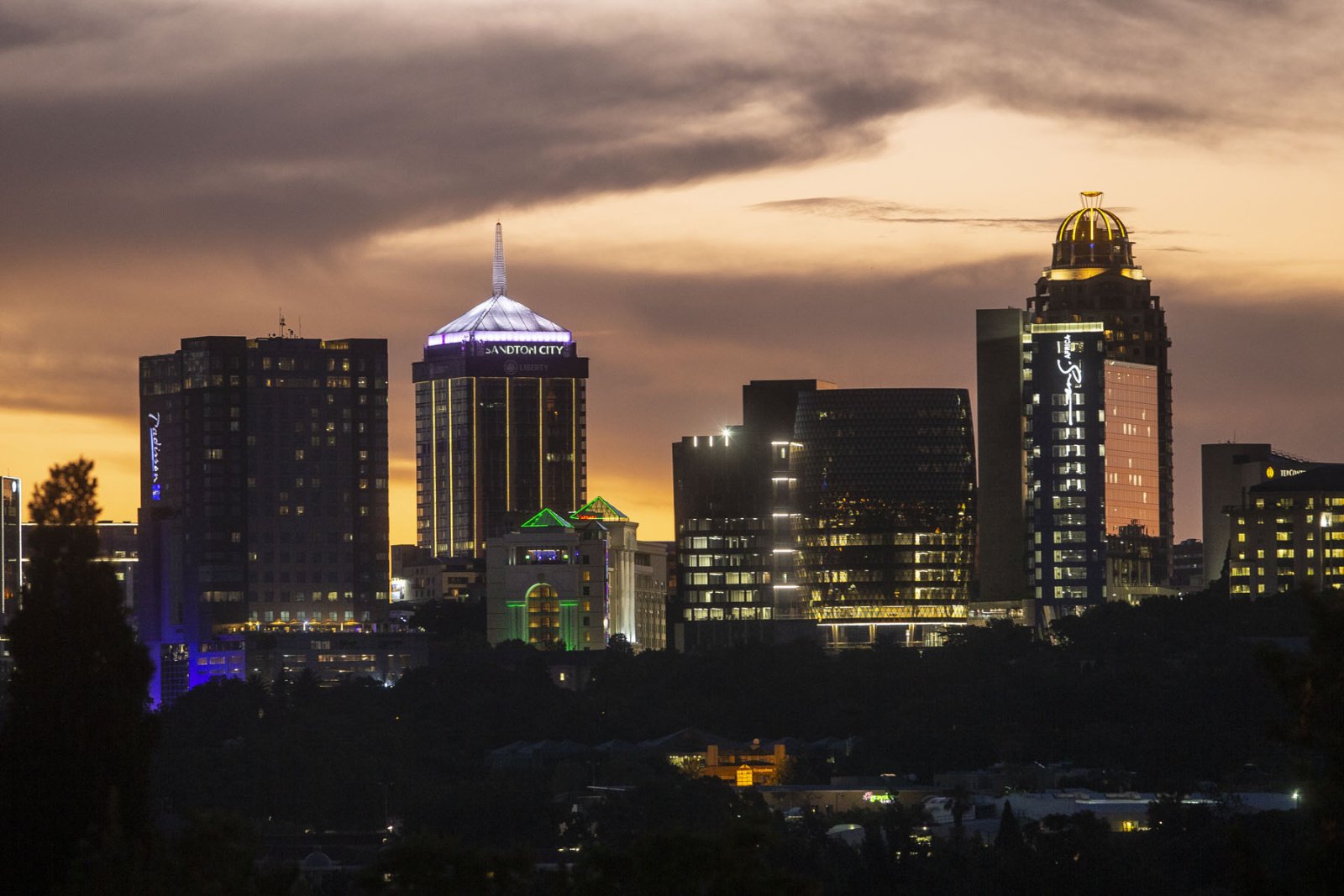
General Information
Johannesburg is the most populous city in South Africa. The City of Johannesburg itself has a population of 5,538,596, while the City of Johannesburg Metropolitan Municipality has a population of 6,599,190, making it one of the 100 largest urban areas in the world. Johannesburg is the provincial capital of Gauteng, the wealthiest province in South Africa, and seat of the country's highest court, the Constitutional Court. Situated on the mineral-rich Witwatersrand hills, the city has long been at the epicentre of the international mineral and gold trade. The richest city in Africa by GDP and private wealth, Johannesburg functions as the economic capital of South Africa and is home to the continent's largest stock exchange, the Johannesburg Stock Exchange.
- Population: 5,900,000+ (Metro Area)
- Area: 1,645 km²
- Currency: South African Rand (ZAR)
- Coordinates: Latitude: -26.204444885254, Longitude: 28.045555114746
- Timezone: Timezone info not available
- Current Local Time: ailab
Johannesburg Latest News
IOL
Constitutional Court allows ANC candidates on ballot, but at what cost to democracy?
The Constitutional Court's ruling to allow the ANC to field candidates is seen as a safeguard of democracy—but it raises troubling questions about the party's accountability.
IOL
Gwarube dismisses claims of NSC English Paper 3 leak as AI-generated fake news
Basic Education Minister Siviwe Gwarube has warned against the spread of AI-generated fake news after claims that the 2026 matric English Paper 3 examination paper had been leaked.
The Citizen
‘We don’t have any excuses,’ says Cheetahs coach Frans Steyn ahead of Challenge Cup start
Cheetahs coach Frans Steyn says that his team have no excuses in this season’s Challenge Cup competition, as they kick off their campaign against Aviron Bayonnais in Bayonne, France on Sunday afternoon. The Cheetahs have been an invitational side to the second-tier European Rugby (EPCR) competition over the past four seasons, with this set to be their fifth campaign. Their best finishes were getting through the pool stage of the 2022-23 and 2023-24 editions, where they were dumped out in the last 16 phase, by French sides Toulon and Clermont. The past two seasons have seen the Cheetahs‘ challenge end in the pool stage, and they will be desperate to do better this campaign, but again they will have their backs up against the wall as they play all their matches in Europe. Due to being an invitational side, the Cheetahs have to play their games overseas, with their base previously being the Netherlands National Rugby Stadium in Amsterdam, but this season they will play their “home” games at St Helen’s Stadium in Swansea. This season they will also be playing Zebre away in Italy in January, while hosting Dragons and Perpignan in Wales in December and January, but despite these challenges former Springbok World Cup winner Steyn believes they have what it takes to go far. No excuses “This year, we don’t have any excuses. We’ve got a great squad, and we need to perform. It doesn’t matter where we play, we need to stick to our game plan and execute it better than the opposition on the day,” explained Steyn. “We’re looking forward to going to Wales later in the competition and making it our new home away from home.” Steyn is also excited about the recent loan acquisition of Griquas star loose forward Carl Els, who played a big role in their second straight Currie Cup title run that ended last month. “We’re all excited to have Carl Els here. He had a great Currie Cup campaign, and hopefully he finds his feet quickly in our squad and gets comfortable with our system. We want him to continue that good form, because we’re definitely going to need it against Bayonne,” said Steyn. Cheetahs captain Neels Volschenk admitted he was well aware of the challenge that awaits his side, but was looking forward to seeing where they match up against their more illustrious opponents. “They’ve (Bayonne) got an incredible squad with quality international players and guys who have played at the highest level. That will be a real test for us as a group, because we’ll need to match that standard,” said Volschenk. “We’re looking forward to the challenge, and with this year’s EPCR schedule being so spread out, it will give us a good indication of where we stand.”
The Citizen
Political campaigns: Visibility does not guarantee voter support
Political parties should not confuse campaign visibility with electoral support, as their success ultimately depends on credible promises, local relevance and the ability to deliver, according to a strategic communications expert. Tshepo Matseba, managing director of Reputation 1st Group and former head of marketing and communication at five JSE-listed companies, said political campaigns are about competing for voters’ attention, trust and confidence. Political campaign visibility does not reveal funding But he warned against judging parties’ financial strength by the number, size or quality of their posters and billboards. “We must be careful not to confuse the visibility of a political party’s campaign with the amount of money it has raised,” Matseba said. South Africa’s regulated political funding disclosure framework provided publicly available information that could help assess declared donations, he said. Rise Mzansi had attracted significant private funding relative to its electoral size, while the DA featured among the leading recipients of declared private donations in several reporting periods. But declared donations should not be confused with total campaign expenditure, Matseba said. Political parties also differed in how they allocated resources across provinces, municipalities and communities, making it difficult to draw national conclusions from isolated observations. In Mbombela, Mpumalanga and parts of Gauteng, including Mandela Village in Hammanskraal, Matseba observed a strong ANC outdoor advertising presence. The DA, EFF, ActionSA and other parties were also visible in different communities. Parties target voters with different messages From a strategic communications perspective, the DA and ActionSA had developed direct messages around municipal service delivery and public frustration with local government, Matseba said. “These messages have the potential to resonate because they speak to issues that voters experience daily.” The ANC benefited from visual consistency and established brand recognition, while the EFF had a distinctive political identity. Rise Mzansi, meanwhile, could distinguish itself through political renewal and credible local leadership. However, these were qualitative observations, not evidence of electoral effectiveness, he said. Candidates visibility Matseba also questioned the prominence of political leaders on campaign material, saying ward councillors and mayoral candidates should receive greater visibility. “Voters should know who is asking for their mandate and who will be answerable to them after the election,” Matseba said. Although featuring national leaders could strengthen party recognition, it risked overshadowing candidates responsible for municipal governance. Standardised campaign materials could also reduce production costs, although the reasons behind individual parties’ decisions should not be assumed without evidence. Matseba said credible voter research and campaign exposure data would be needed to determine which parties’ advertising was most effective. “A political campaign can dominate the physical landscape without necessarily dominating the hearts and minds of voters.” Credible promises must match delivery capacity Parties should demonstrate a direct relationship between their promises and their capacity to deliver, Matseba said. As the country approaches the local government elections, he said parties should focus on practical, measurable and achievable solutions tailored to individual municipalities. “What works in Mbombela may not necessarily address the priorities of communities in Johannesburg, eThekwini or Polokwane,” Matseba said. Political credibility depended on connecting local challenges with capable leadership, relevant expertise and demonstrable capacity to deliver, he added. “Ultimately, political credibility is not built on the size of a promise, but on the ability to fulfil it.”
The South African
Burkina Faso suspends beauty pageants, launches science competition for girls
Burkina Faso has suspended beauty pageants nationwide while authorities prepare new regulations governing the competitions, leaving organisers and contestants waiting for clarity on the future of the events. The decision prohibits the organisation of beauty pageants across the West African country until the new regulatory framework comes into effect. According to the Agence d’Information du Burkina (AIB), the government says the move is intended to strengthen oversight of the sector while protecting national cultural identity, social values and human dignity. Burkina Faso suspends beauty pageants pending new rules In a statement, the Ministry of Communication, Culture, Arts and Tourism said it was developing regulations to ensure beauty competitions were organised under a more rigorous and consistent framework. The ministry said the initiative formed part of efforts to preserve and promote the country’s cultural heritage in line with the government’s stated policy direction. Authorities also said the regulations would seek to uphold Burkina Faso’s cultural identity, moral and social values, ethical principles and human dignity. During the transition period, no authorisations would be issued for beauty pageants. The ministry said it would oversee compliance with the suspension while working towards better organisation of the sector. However, the announcement did not provide a specific date for when the new regulations would be introduced or when competitions could resume. What happens to beauty pageant organisers and contestants? The immediate effect is that organisers cannot obtain permission to stage beauty pageants while the suspension remains in force. The restrictions could affect event organisers, sponsors and contestants who rely on competitions for visibility, networking and potential career opportunities. However, the extent of the impact will depend on the final regulations and how long the suspension lasts. The government has not announced a confirmed reopening date, leaving the future of competitions uncertain. The new rules will be important in determining what organisers must do to secure authorisation and what standards competitions will be expected to meet. Until the framework is published, it remains unclear whether the authorities will introduce new eligibility requirements, event standards or other conditions for organisers. Burkina Faso launches a science competition for young women Meanwhile, Burkina Faso has introduced HAKILI Mousso, a national competition designed to identify and encourage talented young women in science. According to the government’s official information service, the competition brought together 84 candidates selected nationally to compete in mathematics, physics and chemistry in September 2026. The initiative also offered prizes and scholarships to support participants’ academic pursuits. Although the science competition followed the pageant suspension, authorities have not established that one initiative was intended to replace the other. The longer-term impact of both developments will depend on the regulations governing beauty competitions and whether the science initiative provides sustained educational opportunities. For now, organisers and contestants await further clarity on the future of beauty pageants in Burkina Faso.
The South African
The playful South African kid’s song that ended up in Equality Court
The year is 1962, and Ag Pleez Deddy is a cheerful tune about suburban kids nagging their dad for a trip to the drive-in. Firstly, how did it become the best-selling single in South Africa that year? Secondly, why did a song about peanuts and popcorn end up causing so much offence? It was eventually banned by the national broadcaster, the SABC. And it even ended up in the Equality Court. AG PLEEZ DEDDY If you’re unfamiliar with Ag Pleez Deddy, singer and songwriter Jeremy Taylor tells the story behind it HERE. For context, Taylor was born in England and educated at Oxford. He moved to Johannesburg in 1959 to teach. He later explained he was ‘enchanted’ by the way his pupils in the southern suburbs of Joburg spoke. The areas’s unique blend of English and Afrikaans, with slang all of its own, inspired him to write Ag Pleez Deddy. It was also known as The Ballad of the Southern Suburbs. The seemingly harmless song became the showpiece of the revue Wait a Minim!, which opened in Johannesburg in January 1962. A live recording was released by Gallotone as a single. A SMASH HIT Originals are selling on Ebay for several hundred US dollars. Image: Ebay No one could have predicted how successful Ag Pleez Deddy would become. The single reached number one on the LM Radio charts in June 1962. This earned Taylor a gold disc for more than 75 000 copies. It outsold Elvis Presley, and every other domestic single in South Africa at the time. However, the Apartheid-era SABC proceeded to ban the song, along with most of Taylor’s work. The offence was not the racial slur describing one particular sweet, which did eventually end up in the modern-day Equality Court. Instead, it was Taylor’s mixing of English and Afrikaans that forced the ban. At the time, keeping the languages separate was official broadcasting policy, and linguistic purity carried political weight. STIRRED STRONG FEELINGS However, there’s perhaps more to Ag Pleez Deddy than initially meets the ear. Taylor himself said the song stirred strong feelings long before it was banned. “A lot of people were offended by it. The song held up a mirror to white middle-class suburban life and its sort of mongrel speech. Some felt it mocked their language and class,” said Taylor. Nevertheless, as is so often the case, the ban couldn’t stop it. In fact, it emboldened people to get hold of the record and sing along to the chirpy chorus around the braai. It’s just one of those songs that South Africans of a certain generation know by heart. And others are happy they’ll never hear again … But what do you think? Have you heard Ag Pleez Deddy before? Are you offended when you hear it today? Please share your thoughts in the comments section below …
TechCentral
Safaricom control to stay with Vodacom until appeal
The shares and the purchase price paid to Kenya's government will stay where they are until a fast-tracked appeal is heard.
TechCentral
South Africa’s midday power glut is a hidden risk for wheeling deals
Private wheeling projects have no regulated compensation if the grid operator curtails them because of oversupply.