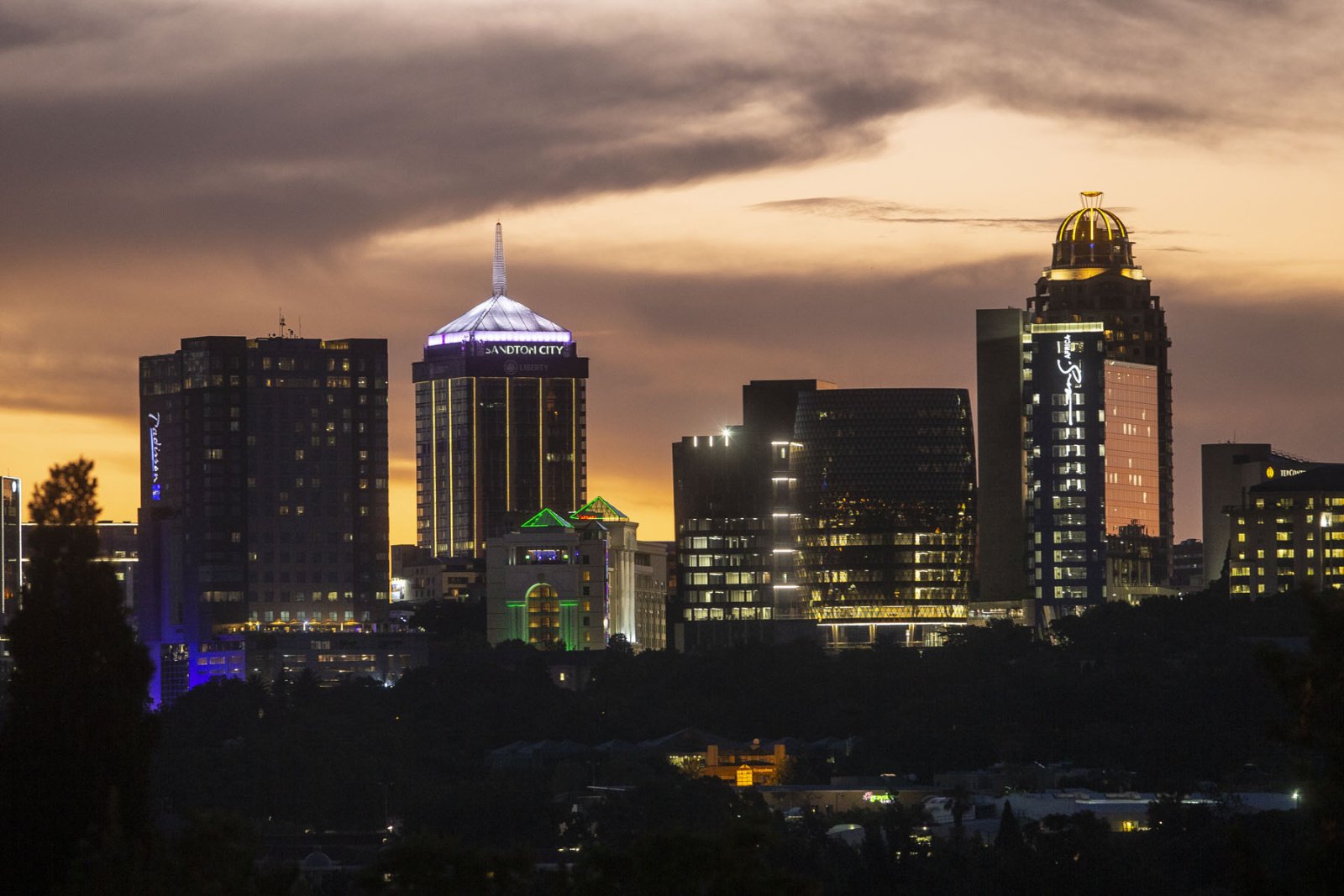
General Information
Johannesburg is the most populous city in South Africa. The City of Johannesburg itself has a population of 5,538,596, while the City of Johannesburg Metropolitan Municipality has a population of 6,599,190, making it one of the 100 largest urban areas in the world. Johannesburg is the provincial capital of Gauteng, the wealthiest province in South Africa, and seat of the country's highest court, the Constitutional Court. Situated on the mineral-rich Witwatersrand hills, the city has long been at the epicentre of the international mineral and gold trade. The richest city in Africa by GDP and private wealth, Johannesburg functions as the economic capital of South Africa and is home to the continent's largest stock exchange, the Johannesburg Stock Exchange.
- Population: 5,900,000+ (Metro Area)
- Area: 1,645 km²
- Currency: South African Rand (ZAR)
- Coordinates: Latitude: -26.204444885254, Longitude: 28.045555114746
- Timezone: Timezone info not available
- Current Local Time: ailab
Johannesburg Latest News
IOL
Mulaudzi and Xaba lead South African charge at inaugural Absa RUN YOUR CITY MANGAUNG 10K
The inaugural Absa RUN YOUR CITY MANGAUNG 10K in Bloemfontein features a stellar field of South African elite runners and top East African athletes.
IOL
‘No risks with the Ferrari’: Ouaddou delivers Appollis update
Oswin Appollis has returned to Orlando Pirates training without pain, but head coach Abdeslam Ouaddou is taking a cautious approach with a demanding run of fixtures ahead.
The Citizen
Another scorching weekend for Gauteng
Gauteng residents can expect a warm, dry weekend with clear to mostly clear skies and no rain forecast across Pretoria and Johannesburg, according to the South African Weather Service. In Pretoria, temperatures will range from a minimum of 16°C to a maximum of 32°C on Saturday. The weather service forecasts clear skies through the early morning and mostly clear conditions later in the day. Temperatures will reach about 27°C at 2pm before easing to 24°C in the evening. Morning humidity will sit at around 65% before dropping to 45% in the afternoon and 40% at night. The weather service forecasts no rainfall for the capital, with a 0% chance of rain and 0mm of expected rainfall on Saturday. “Clear skies” are forecast for the early hours and afternoon, while conditions will become “mostly clear” at other intervals. Sunday will remain dry, with Pretoria temperatures expected to range from 16°C to 31°C. The weather service forecasts mostly clear skies early in the day before conditions become partly cloudy in the afternoon. Johannesburg slightly cooler Johannesburg will also be dry, although temperatures will remain slightly lower than those forecast for Pretoria. Saturday will bring a minimum temperature of 16°C and a maximum of 29°C, with clear skies early before mostly clear conditions dominate for much of the day. Temperatures will be about 18°C in the early morning, rising to 25°C by 2pm before easing to 23°C in the evening. Humidity will range from 65% in the morning to 35% at night, while winds will generally remain light to moderate. The weather service forecasts 0mm of rain and a 0% probability of rainfall for Johannesburg on Saturday. Sunday will be cooler, with temperatures ranging from 15°C to 28°C. The city will start with mostly clear skies before partly cloudy conditions develop in the afternoon. Dry conditions dominate Across both major Gauteng centres, the weekend forecast points to warm daytime temperatures, limited cloud cover and no significant rainfall. Residents planning outdoor activities can expect generally favourable weather, although afternoon temperatures will remain high, particularly in Pretoria.
The Citizen
Organisation slams MTBPS as ‘anti-poor’: Here’s why
Fair Play Movement has slammed the Finance minister Enoch Godongwana’s medium-term budget policy statement (MBPTS) as anti-poor, citing that the government has once again failed to prioritise struggling households. Godongwana’s MBPTS delivered on Wednesday, 21 October, has received different reactions. Some have welcomed it with optimism, while some are unhappy with what the minister tabled. Fair Play is on the latter side. The Fair Play Movement is a not-for-profit advocacy organisation founded in October 2016, and it campaigns against predatory and illegal trade practices, specifically the “dumping” of foreign goods, selling products in South Africa at prices lower than their cost of production in home markets. Did the MTBPS speak to the poor? Fair Play’s founder, Francois Baird, has expressed dissatisfaction that the government has once again ignored the call to include chicken portions on the list of foods exempt from value-added tax (VAT). “For the eighth year in a row, South Africa’s government has failed to implement a simple, pro-poor measure – exempt from VAT the chicken portions most consumed by low-income households,” he said. “Godongwana had the opportunity once again in today’s medium-term budget. Once again, he failed to take it. He has rejected a move which has the support of all political parties, as well as President Ramaphosa. He has done so at a time when the move is affordable. And he has turned away from an initiative that would have stimulated growth and jobs.” VAT-free chicken plea ignored in the MTBPS The Fair Play Movement was one of the organisations fighting to have chicken portions included on the list of foods exempt from VAT when the list was expanded in 2025. However, the organisations’ pleas fell on deaf ears. They argued that low-income households consume most chicken portions and that chicken is the cheapest source of protein. “Fair Play welcomes the R1.6 billion that will go to child nutrition to help reduce South Africa’s horrific rate of child stunting, which is caused by malnutrition,” said Baird “However, he has ignored the contribution that VAT-free chicken would make to vulnerable families with malnourished children. Now millions of poor South Africans will continue to pay an extra 15% on every chicken portion that they buy, and on every pack of chicken liver.” Plea for Godongwana to reconsider Baird asks the minister to reconsider adding chicken portions to the list of foods exempt from VAT. “Hunger, poverty and unemployment have increased every year since 2018, when the government first refused to opt for VAT-free chicken. Petrol and diesel prices are rising inexorably, and will drive up food inflation. Hunger levels will go up further. “It is a situation crying out for a quick and easy step to make food more affordable. “We appeal to Minister Godongwana to reconsider. Drop VAT on chicken, and prices will drop immediately. Millions of poor people will thank you,” said Baird. Not the first time This is not the first time the government has been criticised for being anti-poor on relief. Earlier in the year, Godongwana announced a temporary suspension of the fuel levy on petrol and diesel, but said nothing about paraffin, which did not land well. The Motor Industry Staff Association (Misa) was one of the organisations pleading with the minister to extend relief for vulnerable households. Paraffin prices are treated like petrol and diesel, influenced by a combination of international market forces, currency values, and local distribution dynamics. Martlé Keyter, Misa CEO of operations, said paraffin remains the primary energy source for many people in the country, and its high price will only make things worse for already struggling families. Delivering his MTBPS, Godongwana did it again; he offered relief to motorists but not to paraffin users. For October 2026, the wholesale price of illuminating paraffin is R27.27 per litre inland and R23.41 per litre in coastal areas. Relief welcomed Senior Research Analyst at Nedbank, Reezwana Sumad, welcomed the relief, citing that the fuel price relief will be felt at the household level. She was speaking during a webinar hosted by the North-West University (NWU) Business School on Thursday. “Oil prices remain elevated; the rand has been fairly stable. Oil is well over $100 a barrel, and that is the crux of the reason why fuel prices have escalated in the last six months,” she said. “The fuel price relief will be felt at the household level, as well as across businesses. In the logistics space, businesses that are diesel-intensive should find some relief in November with a slightly lower diesel price. “Inflation forecasts for November and December it’s slightly lower because of the relief, but for the full year, it means that previously we were anticipating inflation at 4.4%, it’s likely to be 4.3% now. It also means that the South African Reserve Bank (Sarb) can hold off on hiking interest rates to assess how inflation evolves and how the oil price evolves.”
The South African
‘Stop treating a lack of experience as a lack of ability’: Ramaphosa’s youth unemployment plea
Youth unemployment is at 47.4%, and President Cyril Ramaphosa says business must help fix it. He’s called on employers to give young people their first chance at work. He’s also admitted that government programmes alone aren’t enough. Here’s what he said, and where young South Africans can find opportunities now. Ramaphosa was speaking at the SA Youth National Leadership Convening on Thursday, 22 October, which brought together government, business, labour and civil society. “Let us stop treating a lack of experience as a lack of ability,” he told business leaders. WATCH LIVE: President Ramaphosa addresses the SA National Leadership Convening on Youth Employment.Link: #YES #GovZAUpdates— South African Government (@GovernmentZA) October 22, 2026 BREAKING THE ‘NO EXPERIENCE’ CYCLE Ramaphosa said many young people are stuck in a familiar trap. “They cannot get a job because they do not have experience. And they cannot get experience because nobody will give them a job,” he said. He urged employers to look beyond formal qualifications and previous work experience, and to train and mentor young people. “This is not an appeal for charity. It is an appeal for investment in the future of our economy,” he said. ‘NOT SIMPLY TEMPORARY PROGRAMMES’ Ramaphosa also acknowledged that many government youth programmes offer only short-term work. “Our objective cannot simply be to place young people in temporary programmes. It must be to create pathways into sustainable livelihoods,” he said. He said the government is reforming the skills development system, including the Sector Education and Training Authorities (SETAs) and technical and vocational education and training (TVET) colleges, so they better match the skills employers need. “Not every young person needs to attend a university to build a successful future,” he said. SUPPORT FOR YOUNG ENTREPRENEURS Ramaphosa called on established businesses to bring young entrepreneurs into their supply chains. “A young entrepreneur does not always need a grant. Sometimes what that entrepreneur needs most is a customer,” he said. He said the government and business must also expand access to start-up and working capital, and remove unnecessary red tape. THE LATEST YOUTH UNEMPLOYMENT FIGURES According to Statistics South Africa’s latest Quarterly Labour Force Survey (QLFS), youth unemployment rose from 45.8% in the first quarter of 2026 to 47.4% in the second quarter. The number of unemployed young people aged 15 to 34 increased by 264,000, to 5.6 million, according to Parliament’s Portfolio Committee on Employment and Labour. Of about 10.4 million young people aged 15 to 24, 36.4% were not in employment, education or training, according to the National Youth Development Agency (NYDA). WHERE TO START: SAYOUTH.MOBI Most government youth employment opportunities are listed on SAYouth.mobi, a free platform run as part of the Presidential Youth Employment Intervention (PYEI). More than 5.7 million young people are registered on it. THE PROGRAMMES YOU CAN APPLY FOR National Youth Service The revitalised National Youth Service places young people in paid service opportunities in their communities. It has placed 132,784 young people so far, according to the Presidency. The Youth Employment Service (YES) YES places young people in year-long work experience opportunities at companies across the country. It has created more than 228,000 youth jobs, and 60% of participants have gone on to full-time employment. Jobs Boost Outcomes Fund This pay-for-performance fund links training to real jobs. Training providers only receive most of their funding once the young people they train find verified, sustained employment. Basic Education Employment Initiative This programme places young people as assistants in schools. Support for young entrepreneurs The NYDA offers entrepreneurship development, skills programmes and employment facilitation, including training, mentorship and grants. TIPS FOR YOUNG JOB SEEKERS Register on SAYouth.mobi, and keep your profile up to date. Apply for work experience, even if it’s temporary, since it builds your CV. Consider a TVET college if you’d like a practical or technical career. Never pay for a job or a placement. Government youth programmes are free to apply for. WHAT WOULD HELP YOU MOST TO FIND YOUR FIRST JOB? Let us know in the comments below…
The South African
Crime is taking over South Africa’s favourite holiday destinations
Every year, thousands of South Africans flock to their favourite small coastal towns for much-needed family time. They want to relax and enjoy the slower pace. But crime is rocking many of these peaceful escapes. Rising crime could ruin these seaside escapes There isn’t a part of South Africa’s 2 800 kilometres of coast where rising crime hasn’t penetrated. Small towns along the West Coast, South Coast, Wild Coast, Sunshine Coast, and Overberg have all recorded a rise in crime. The data reflects a worrying trend based on first-quarter statistics from the South African Police Service (SAPS). The West Coast In the first quarter, crime is up 8.2% in Saldanha and 15% in Langebaan. While Saldanha still reports more crime than Langebaan, Langebaan has been increasing over time, while in Saldanha it’s trending downward. Drug-related crimes in both towns feature in the top 5 most recorded crimes in the police precincts. The Overberg Of the 15 police precincts on the Overberg, 10 have reported worse crime statistics in the first quarter of this year than in the first quarter of last year. The worst-offending coastal town is Kleinmond. In the first quarter of this year, crime is up 22.1%. In Hermanus, crime is stabilising after it peaked last year. Hermanus and Kleinmond share similar issues. In both towns, drug-related crime is the most recorded, followed by commercial crime, theft, and residential burglary. The South Coast Along the South Coast, Port Shepstone and Port Edward are the only police precincts reporting a rise in crime in the first quarter. Port Shepstone reported a 10.1% increase in crime. In Port Edward, crime is up 6.3%. However, both towns are down from their peaks. In Margate, however, crime is trending downward in the first quarter. But crime overall has been rising in the town. The Sunshine Coast On the Sunshine Coast, Jeffrey’s Bay has had the worst first quarter for crime. Crime in the area rose 64.1% in the first quarter. Crime in St Francis Bay is up 13.7%, and in Port Alfred it’s up 10%. Kenton-on-Sea saw the lowest increase at only 3.3%. The Wild Coast Last year in Port St Johns, crime declined slightly from its 2024 peak. Crime is up 21.3% in the first quarter of this year. If this continues, crime in the town could break its 2024 records.
TechCentral
AI’s boardroom honeymoon is over
South Africa's big financial firms call artificial intelligence a growth driver, yet benefits are rarely tracked properly.
TechCentral
4Sight revenue jumps 29%, but software resale squeezes margins
Growth came mainly from low-margin Microsoft and Sage distribution, and flat costs did the rest.