General Information
Johannesburg is the most populous city in South Africa. The City of Johannesburg itself has a population of 5,538,596, while the City of Johannesburg Metropolitan Municipality has a population of 6,599,190, making it one of the 100 largest urban areas in the world. Johannesburg is the provincial capital of Gauteng, the wealthiest province in South Africa, and seat of the country's highest court, the Constitutional Court. Situated on the mineral-rich Witwatersrand hills, the city has long been at the epicentre of the international mineral and gold trade. The richest city in Africa by GDP and private wealth, Johannesburg functions as the economic capital of South Africa and is home to the continent's largest stock exchange, the Johannesburg Stock Exchange.
- Population: 5,900,000+ (Metro Area)
- Area: 1,645 km²
- Currency: South African Rand (ZAR)
- Coordinates: Latitude: -26.204444885254, Longitude: 28.045555114746
- Timezone: Timezone info not available
- Current Local Time: ailab
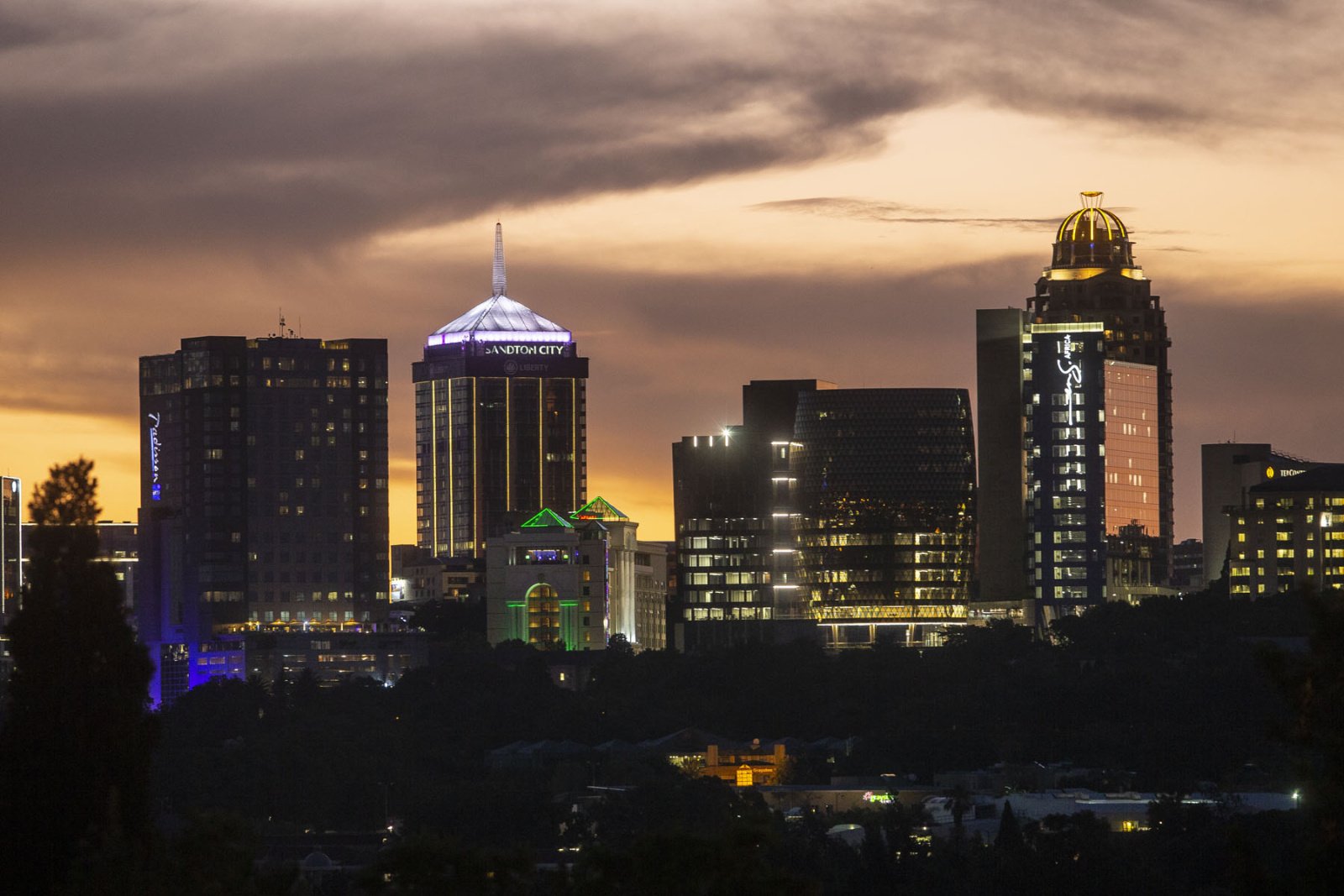
Sandton
Business towers, upscale malls, Nelson Mandela Square, and city nightlife.
Johannesburg CBD
Downtown streets, Commissioner Street, Gandhi Square, and real urban life.
Soweto
Township streets, Maponya Mall, Protea North, and cultural walking tours.
Rosebank & Melrose Arch
Shopping areas, nightlife, and modern mixed-use districts.
Johannesburg Latest News
IOL
Why is South Africa seeing so much halaal food? The facts behind the viral debate
A viral TikTok video has prompted questions about halaal certification in South Africa. Here is what the label means, why it can appear on vegetables and processed foods, and whether consumers are being forced to eat halaal products.
IOL
Marco Jansen’s milestone day cannot prevent Australia seizing control at Newlands
Proteas bowling coach Piet Botha said the bowlers had anticipated a demanding day but acknowledged they would need to improve if they were to force their way back into the contest.
The Citizen
16 released on warning and face public violence charges after Samwu protest
The Johannesburg Magistrate’s Court has released 16 people on warning after the South African Municipal Workers’ Union’s (Samwu) wage dispute protest allegedly turned violent, with tyre burning, road blockades and clashes with police. Samwu’s protest in the City of Johannesburg (CoJ) is about the city’s failure to implement the Political Facilitated Agreement (PFA). The CCMA-facilitated collective agreement aims to correct income disparities in CoJ entities. Samwu protest about city’s failure to implement PFA On Monday, union members demanded that the city manager address them, but he left the situation unattended. Protesters marched onto the M1 Freeway at Smit Street in Braamfontein, causing a complete closure in both directions at the on- and off-ramps and severe congestion and delays. The state alleges that the protest turned violent as participants burnt tyres, robbed a municipal truck driver of his cellphone and damaged the truck. Protestors also allegedly set alight pallets taken from the truck. Authorities deployed Public Order Policing units to disperse the crowd, and Samwu alleged that police used excessive force against the workers. The state, however, alleges that protestors resisted police intervention by throwing stones and bottles at officers. Police pursued the alleged perpetrators and apprehended and arrested some of them. 16 suspects face charges of public violence, malicious injury to property National Prosecuting Authority (NPA) spokesperson Magaboke Mohlatlole said the 16 suspects face charges of public violence, malicious injury to property, and contravening National Road Traffic Act regulations relating to conduct on public roads. The accused are Nombulelo Zolani, Duduzile Khumalo, Aphelele Nqakwana, Dumile Gombelo, Mpilonhle Masindeni, Ndumiso Makaula, Abraham Nyamuando, Mufeba Masala, Simphiwe Ndaba, Celimpilo Mzila, Tsakani Ngobeni, Nokuthula Mbatha, Matoe Ntatamela, Wilson Chengedzeni Mudau, Sylvia Ramulifho and Betty Ntimande. The court postponed the matter to 3 December for further investigations and released all accused on warning. “The NPA reiterates that the right to protest must be exercised within the confines of the law,” Mohlatlole said. “Acts of violence, property damage, and conduct that endangers public safety or disrupts the free movement of other road users will be dealt with through the criminal justice system.” Union called on members to remain resolute and united Meanwhile, Samwu called on its Joburg members to remain resolute and united. “Our members’ struggle is legitimate. It is part of the broader fight for fair wages and dignity. Samwu will defend municipal workers against any attempt to silence or intimidate them,” the union said in a statement on Wednesday. The union said its national office bearers fully support the Joburg members and will defend them against police brutality and attempts to silence them. “If the city believes that courts and police will silence our dispute, it is mistaken. Repression strengthens our resolve,” Samwu said.
The Citizen
Daily Lotto results: Wednesday, 28 October 2026
Get the Daily Lotto results as soon as they are drawn on The Citizen, so you can rest easy and check your tickets with confidence. Estimated Daily Lotto jackpot for Wednesday, 28 October 2026: Daily Lotto: R500 000 Daily Lotto results for 28 October 2026: The winning Daily Lotto numbers will appear below after the draw. Usually, within 10 minutes of the draw. You might need to refresh the page to see the updated results. Daily Lotto: 00, 00, 00, 00, 00. For more details and to verify the Daily Lotto results, visit the National Lottery website. How to play Daily Lotto in SA? If you are buying a ticket in-store: Pick up a betslip in any lottery store. Choose five numbers between 1 and 36 or ask for a Quick Pick. Entries cost R3 each. You can play a max of R150, but you are allowed to play multiple boards. Select how many consecutive draws you wish to enter, up to a maximum of 10. Leave blank for a single draw. Take your betslip to the teller to pay for your ticket. Write your details on the back of your ticket in case you need to claim a prize. If you do not sign your ticket and you lose it, anyone can use it to claim the prize. If you are playing online: Set up a lottery account here and make a deposit to pay for tickets. Choose five numbers from 1 to 36 or select ‘Quick Pick’ to generate a random set. Repeat this on as many boards as you want to play. Decide whether to enter a single draw or multiple draws. Confirm and pay for your entry. What time is the Daily Lotto draw? The Daily Lotto draws take place shortly after 9pm every evening, and tickets can be bought until 8:30pm.
The South African
‘For some it was cut off’: KZN caregiver questions how SASSA decides who keeps grant support
Getrude Tshandu has nothing bad to say about how SASSA pays her. What she wants to know is how SASSA decides who keeps getting help. The KwaZulu-Natal resident has received the Child Support Grant for more than five years. She shared her experience with The South African through our SASSA grant survey. Reliable Grant payments, empty pockets She said her grant has been straightforward from the start, with no problems, and rated SASSA’s communication with recipients as very good. The money goes mainly towards school fees and her children’s needs. Tshandu rents privately and supports one to two dependants. She said her grant does not cover her basic needs and that she regularly struggles to make ends meet. By month end, nothing is left. Even so, she has kept food on the table. She confirmed that no one in her household went without food in the past month. Job hunt takes priority Tshandu is unemployed and looking for work. She named unemployment as her biggest financial concern. She has experience in admin and office work and is willing to relocate for the right job. That willingness shows how far many grant recipients will go for a steady income. Tshandu has also tried to get extra government support beyond her grant, but she said she was declined or gave up during the process. A question about fairness That experience shaped the comment she shared with The South African. Tshandu wants to know why some people lost the Social Relief of Distress (SRD) grant while others kept receiving it. “My comment will be based on why do other people get to be cut of from the R370 grant while others still receive the money, even those who gets it for children they still receive the money but for some it was cut off why is that,” she said. Her question reflects confusion many South Africans have voiced about SRD grant approvals and cancellations. Some households report losing the grant without a clear explanation, while others in similar circumstances keep receiving it. Win R2 000 in the South African SASSA grant survey If you receive a SASSA grant and want to share your story, we want to hear from you. Take part in our survey and stand a chance to win R2 000. Your responses help us tell the stories that matter.
The South African
Will SARS throw South Africans an early Christmas interest rate present?
South Africans face mixed signals over the prospect of an interest rate hike in November, with inflation risks keeping the door open to an increase while other indicators suggest the South African Reserve Bank (SARB) could leave rates unchanged. The SARB’s final Monetary Policy Committee (MPC) meeting of 2026 is scheduled for Thursday, 19 November, with economists divided over whether further tightening is necessary. A R10 billion fuel tax relief package announced by Finance Minister Enoch Godongwana during the Medium-Term Budget Policy Statement (MTBPS) has changed the inflation outlook, but uncertainty surrounding international oil prices and the rand continues to complicate the picture. Fuel relief changes the inflation outlook Before the announcement of the fuel relief package, expectations of higher petrol and diesel prices had raised concerns that inflation could climb sharply towards the end of the year. The outlook has since improved, with the temporary reduction in fuel taxes expected to provide relief to motorists in November. The latest forecasts cited in the market analysis suggest inflation could peak at around 5.7% in October before easing. This is lower than earlier expectations of a November peak of 6.4%. However, the improved outlook has not eliminated the risk of an interest rate increase. Persistently high fuel costs could feed into transport, production and other business expenses, eventually putting further pressure on consumer prices. Such second-round effects would make it more difficult for the Reserve Bank to bring inflation down to its 3% target. Why the Reserve Bank could hold rates Other market indicators suggest the Reserve Bank may have less reason to increase borrowing costs. One view is that the recent inflation pressures could prove temporary, particularly if fuel prices stabilise and the impact of higher costs fades from annual inflation comparisons during 2027. Under this scenario, inflation could move closer to the Reserve Bank’s 3% target as the year progresses, reducing the need for additional monetary tightening. The rand’s recent weakness has also been linked to expectations that South African and US interest rate policies could move in different directions. A narrowing interest rate differential could put further pressure on the local currency, potentially complicating the inflation outlook. Nevertheless, the argument for holding rates rests partly on the expectation that current price pressures will ease rather than become entrenched. If inflation declines as anticipated, further rate increases could prove unnecessary and place additional pressure on households and businesses already facing high borrowing costs. As a reminder, following the most recent Monetary Policy Committee (MPC) meeting in September, the repo rate stands to 7.25%, while the prime lending rate is 10.75%. What happens next? The SARB’s next Monetary Policy Committee meeting is scheduled for Thursday, 19 November 2026 and will be the final interest-rate decision of the year. Will there be a pre-Christmas shock to the wallet? Watch this space … bond repayment examples At the new prime lending rate of 10.75%, monthly repayments over 20 years are: BondCurrentR1 millionR10 152R1.5 millionR15 228R1 695 257R17 211R2 millionR20 305R2.5 millionR25 381R3 millionR30 457 Dates and outcomes of SARB MPC meetings in 2026 MonthDateOutcomeJanuary29 JanuaryNo changeMarch26 MarchNo changeMay28 May25 bps hikeJuly23 JulyNo changeSeptember23 September25 bps hikeNovember19 NovemberTBA Loading…
TechCentral
South Africa’s 3G networks could go dark within two years
Vodacom Group CTO Dejan Kastelic says South Africa could switch off 3G within two years if operators act together.
TechCentral
Vodacom books R23-billion Safaricom gain as court fight rages
Vodacom will book a R23.2-billion gain on Safaricom, even as Kenya's courts weigh undoing the deal.