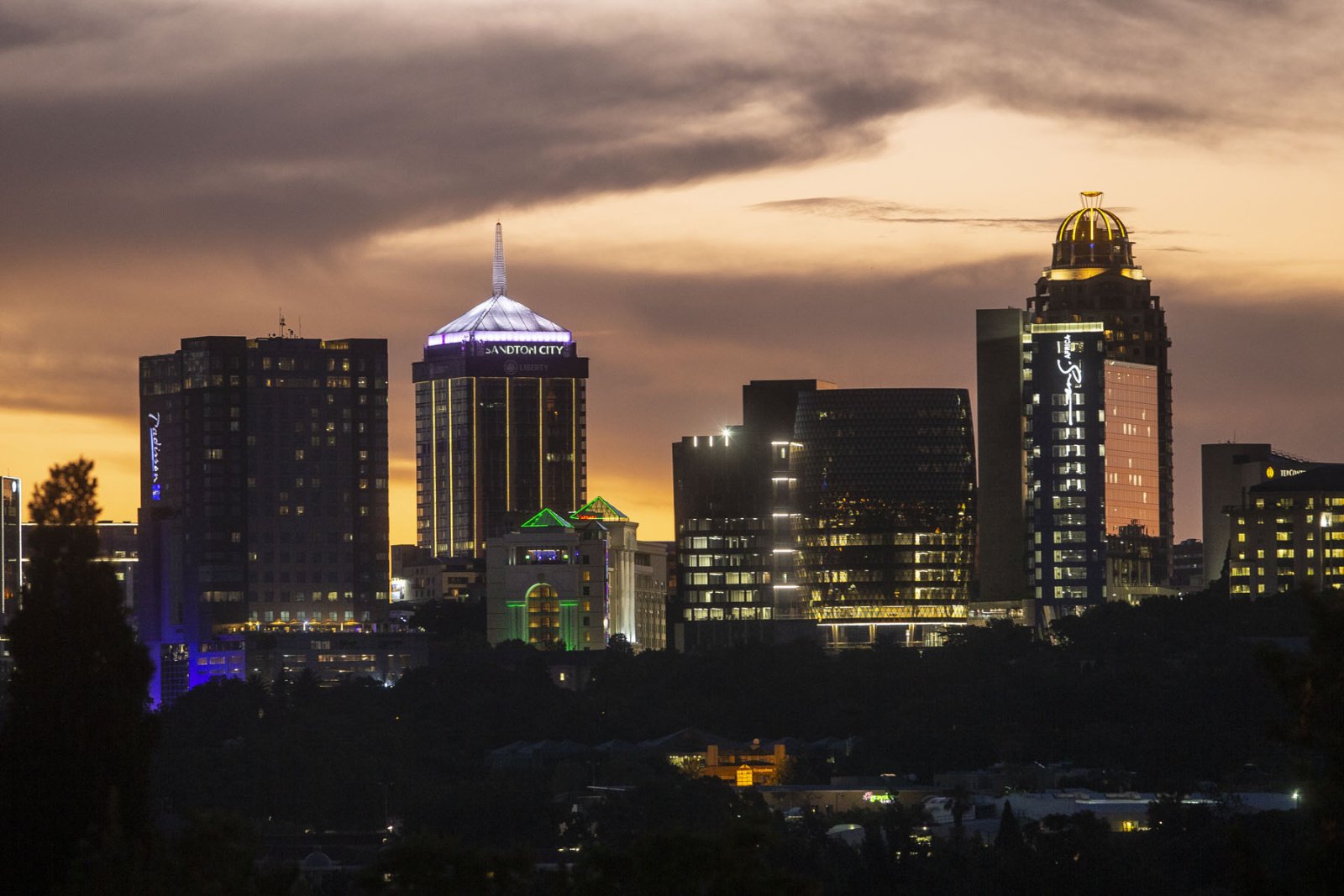
Johannesburg Latest News
IOL
How digital tools are transforming agricultural practices in South Africa
Farmers in South Africa are increasingly adopting digital platforms to enhance productivity and efficiency in their operations, as highlighted by Nedbank Commercial Banking's insights on the agricultural sector's digital transformation.
IOL
After travel drama, All Blacks set sights on Stormers showdown in Greatest Rivalry opener
The All Blacks have arrived in South Africa determined to take on rugby's toughest assignment against the Springboks after receiving a rousing welcome in Cape Town.
The Citizen
‘No one is saying f*k*l’: Idac investigator tells Madlanga commission of internal plot against him
A senior investigator has painted a picture of internal conflict within the Investigating Directorate Against Corruption (Idac), telling the Madlanga commission that he was investigated after resisting further involvement in a controversial probe. Mantsha Raphesu testified on Friday, 31 July 2026, at the Brigitte Mabandla Justice College in Pretoria, where he detailed his concerns about the handling of investigations into the police’s Crime Intelligence division and the fallout that followed his objections. The probes stem from a Section 27 referral submitted in November 2024 by National Coloured Congress leader and member of parliament Fadiel Adams. Among the issues under scrutiny were allegations linked to the appointment of Dineo Mokwele, a former BMW employee, to a brigadier position. Idac investigator testifies at Madlanga commission Raphesu, who reported to suspended Idac chief investigator Dylan Perumal, told the commission on Friday that investigators like himself do not select cases, but cases are assigned to them through internal processes. “One is assigned to a matter and called to a meeting. The assignment is communicated by the chief investigator or the prosecutor working on the matter, or the project manager,” his affidavit read. He further described how former Idac head Andrea Johnson would sometimes directly allocate teams to specific investigations, including matters involving the political killings task team (PKTT), despite such decisions typically falling outside her office’s role. A key point in Raphesu’s evidence was his claim that Johnson misled parliament’s ad hoc committee during her testimony in November 2025. The investigator alleged that Johnson presented what he described as a “false” version of Adams’ Section 27 referral, omitting allegations relating to the PKTT’s alleged misuse of Crime Intelligence’s secret service account, known as the slush fund. “I was shocked because the Section 27 that I saw, that information was there,” he said. According to Raphesu, the way the Crime Intelligence investigation was initiated and handled raised serious concerns, prompting him to request removal from the matter. From objection to internal investigation Raphesu told the commission that he instead became the subject of disciplinary action. “It was a time when I was questioning or refusing to work on this matter. “The chief was not happy that I was also indicating that they cannot do any of the investigation without informing me, so he took issue with that.” He recounted being summoned to Johnson’s office on 10 February 2025, where he was formally notified of allegations that he had leaked sensitive information. “I didn’t even know what the investigation was about,” Raphesu remarked. The accusations centred on claims that he had alerted Cedric Nkabinde, former chief of staff to Police Minister Senzo Mchunu, about an Idac investigation into him, including plans to subpoena his bank records. He was also accused of revealing the identity of the investigating officer. Raphesu rejected the allegations after having responded within the required seven-day period. He testified he urged Johnson, who recently resigned as Idac’s investigating director, to investigate suspended investigator Brian Padayachee and Perumal, whom he alleged called Nkabinde. Raphesu also offered to submit his cellphone for forensic analysis and undergo a polygraph test to prove his innocence. ‘Fabricated’ claims Supplementary allegations were added in a second letter dated 26 February 2025, while no formal statement was obtained from Nkabinde despite his request. “I knew he will not provide it because this thing was just concocted. It was just fabricated to look like it’s legit. “I wanted him to bind himself legally that he is saying I did that so that he can face the consequences, but he refused to write the affidavit.” Raphesu further raised concerns about potential conflicts of interest, highlighting a close relationship between Perumal and the investigating officer linked to the case. He claimed that both individuals originate from East London in the Eastern Cape. “They are very close.” He argued that Perumal’s involvement blurred lines in the investigation. “It then means that Mr Perumal will be a referee and a player in this process.” Formal grievance Months later, with no apparent progress or clarity, Raphesu filed a formal complaint in October 2025. “I decided to file a grievance to say I have been investigated from this day and still today, no one is saying fokol about this thing.” He said it was only after lodging the complaint that developments followed, including efforts to obtain an affidavit from Nkabinde and the opening of a case against him. Raphesu further alleged that Padayachee had been spreading rumours within Idac that he had compromised operational safety. The investigator told the commission he believes the case against him was orchestrated. He said he intends to pursue criminal charges against Perumal and Padayachee and appealed for the commission’s assistance to ensure the matter does not “land in the wrong hands”.
The Citizen
Full-scale tour will benefit us, says coach Rennie as All Blacks meet fans in Cape Town
New Zealand’s first full-scale rugby tour of South Africa in 30 years will have significant benefits for them, head coach Dave Rennie said in Cape Town on Friday. He was speaking on the sidelines of an All Blacks welcome event at Cape Town Stadium, the venue for the team’s opening match against the Stormers next Friday. The All Blacks will play against South Africa’s four major professional franchises as well as four Tests against the world champion Springboks. South Africa edged the All Blacks 12-11 in the 2023 Rugby World Cup final to win the competition a record fourth time. After three Tests in South Africa from August 22, the teams will travel to Baltimore in the United States for the final clash on September 12. ‘Great for the whole squad’ “It’s completely different from a World Cup,” said Rennie. “We’ll be playing the same team four times, so you review and preview and hopefully learn a few things and hopefully do things better in the next game. “We’ve got midweek games so everyone gets a chance to play. Sometimes when you’re away on tour some guys will train but never get a chance to wear the jersey. So playing the provincial sides is great for the whole squad.” Rennie, 62, said he was pleased with the form of the All Blacks since becoming head coach in March. Like the Springboks, the All Blacks took full points from their first three matches in the new Nations Championship. Their wins included an impressive victory against a powerful Ireland team, but Rennie downplayed their achievement. “We’re building, we’re a new side. We’ve got a lot of new staff and we’ve got a lot of new young players. It was a good performance, but we’re well aware of how tough this challenge is.” Coach Dave Rennie spoke to the fans and media in Cape Town on Friday. Picture: Ashley Vlotman/Gallo Images All Blacks fans Rennie said he was impressed with the depth of the Springboks. “The team they put out against Scotland had a lot of changes,” said Rennie. “Scotland are an excellent side, but they (South Africa) won convincingly.” The only member of the 44-man squad not yet in Cape Town is Test captain Ardie Savea, who has been given time off after “a massive workload”. The loose forward will arrive before the first Test in Johannesburg on August 22. Hooker Codie Taylor, the tour captain until Savea arrives, said he was surprised by the number of All Blacks supporters who turned up for the welcome event. A crowd of more than 2,000, many wearing All Blacks jerseys, gave the New Zealanders a raucous welcome. “I knew we had fans here, but I didn’t expect this much support,” said Taylor. It is the first full tour involving rugby’s two leading nations since the All Blacks visited South Africa in 1996, and became the first New Zealand team to win a series in the republic. The upcoming series renews a tradition of reciprocal tours which started when South Africa toured New Zealand in 1921. There have been six series in New Zealand and six in South Africa. Touring teams have won only one series each on foreign soil – South Africa in New Zealand in 1937 and the All Blacks in South Africa in 1996.
The South African
Thousands of ‘Cape Crusaders’ welcome All Blacks to Cape Town (videos)
An estimated 4 000 South African “Cape Crusaders” supporters turned out at Cape Town Stadium in Cape Town on Friday to give the All Blacks a warm welcome ahead of the opening Test of the highly anticipated Rugby’s Greatest Rivalry series. The free public event attracted rugby fans of all ages, with organisers treating supporters to an afternoon of live music, entertainment and family-friendly activities as excitement continued to build ahead of next week’s blockbuster clash against the Springboks. Fans get rare access to All Blacks stars One of the highlights of the event came when members of the New Zealand squad took to the stage to share their thoughts ahead of the series opener, giving supporters a rare opportunity to see some of world rugby’s biggest stars up close. Fans packed into the venue to catch a glimpse of the visitors, with many wearing black jerseys and waving New Zealand flags as they welcomed the team to the Mother City. The event formed part of the official build-up to one of rugby’s fiercest and most celebrated rivalries, with South Africa and New Zealand set to renew battle in what promises to be another memorable Test series. With anticipation continuing to grow, both teams are expected to play in front of capacity crowds as millions of viewers around the world tune in to watch two of rugby’s greatest nations go head-to-head once again. The “Cape Crusaders” refers to South African rugby fans – predominantly from Cape Town’s coloured communities – who historically supported the All Blacks and the Crusaders as a form of political protest against apartheid and discriminatory treatment by various South African sports establishments. Four provinces to test the All Blacks The All Blacks will play seven matches in South Africa on their ‘Rugby’s Greatest Rivalry’ tour, including three Tests and four matches against provincial sides. A fourth Test will take place in Baltimore in the United States on 12 September. Friday, 7 August: Stormers vs New Zealand, Cape Town Stadium, Cape Town – 19:00 Tuesday, 11 August: Sharks vs New Zealand, Hollywoodbets Kings Park, Durban – 19:00 Saturday, 15 August: Bulls vs New Zealand, Loftus Versfeld, Pretoria – 19:00 Saturday, 22 August: First Test, Ellis Park, Johannesburg – 17:05 Tuesday, 25 August: Lions vs New Zealand, Ellis Park, Johannesburg – 19:00 Saturday, 29 August: Second Test, Cape Town Stadium, Cape Town – 17:05 Saturday, 5 September: Third Test, FNB Stadium, Johannesburg – 17:05 Saturday, 12 September: Fourth Test, M&T Bank Stadium, Baltimore, United States – TBC
The South African
South Africa once had an antelope that shimmered blue. Now, its story is coming to classrooms for free
Colossal Biosciences has released a new educational video about the bluebuck, an extinct South African antelope, and paired it with a free lesson package aimed at middle and high school classrooms. The 25-minute video, Bluebuck: The Lost Blue Antelope of Africa, is available on the company’s YouTube channel. The bluebuck (Hippotragus leucophaeus) was a medium-sized grazing antelope with sweeping, ringed horns and a coat that could appear to shimmer blue in the sun. It once lived along the grasslands of South Africa’s southern Cape, and it holds a grim distinction: it was the first large African mammal species known to have gone extinct in recorded history, disappearing around 1800, just 34 years after it was first scientifically described. What the video covers The video reconstructs the animal from the fragments that survive: fossils, a small number of museum specimens, historical artwork, and modern scientific research. It braids together natural history, ecology, genetics, and conservation. Along the way it traces why Africa retained so much of its large-mammal diversity when most other regions lost theirs, and it surveys the continent’s antelope diversity, which spans more than 70 living species. The closing minutes turn to the present, and to the tools scientists use to protect threatened species today: genomics, biobanking, and advanced reproductive technologies. Because the bluebuck vanished before photography, much of what is known about it comes from old written accounts and a handful of paintings by people who saw it alive. A 2021 genetic study found that of the small number of museum specimens long attributed to the species, only four could be confirmed as genuine bluebuck. Why the bluebuck Colossal announced the bluebuck in April 2026 as the sixth species in its de-extinction portfolio, alongside the woolly mammoth, dodo, thylacine, moa, and dire wolf. It is the company’s first effort focused on antelope, a group that is both diverse and, in many cases, declining. According to the International Union for Conservation of Nature, 29 of the world’s roughly 90 antelope species are currently threatened with extinction. “African antelopes have long been neglected in global conservation,” Beth Shapiro, chief science officer at Colossal Biosciences, said in a statement announcing the effort. “While other megafauna benefit from advanced reproductive technologies and extensive genomic research, antelopes… have been left behind. The bluebuck de-extinction project changes that.” Colossal describes its aim as de-extinction, which the company defines as generating an organism that both resembles and is genetically similar to an extinct species by resurrecting its lost lineage of core genes, engineering natural resistances, and enhancing adaptability so it can thrive in today’s environment of climate change, dwindling resources, disease, and human interference. The company frames the work as building tools that benefit living species alongside extinct ones. Ben Lamm, Colossal’s co-founder and CEO, called the bluebuck a pivotal step for the company’s conservation work, noting that the antelope sits within the bovid family and lets Colossal extend its research into animals with different reproductive biology, size, and gestation timelines. Every reproductive technology and genome-editing protocol developed through the effort, Lamm said, is designed to scale and benefit the 29 antelope species currently at risk. A resource built for classrooms The video can work either as a standalone lesson or alongside units on biodiversity, evolution, ecology, genetics, or conservation. The accompanying materials include a teacher guide, a student viewing guide, classroom activities, and discussion questions, with separate versions for grades 6 through 8 and grades 9 through 12. The company suggests pairing the roughly 25-minute video with a 30-to 45-minute lesson. The stated learning objectives ask students to explain the ecological role of antelope in African ecosystems, describe the factors behind the bluebuck’s extinction, explain how reduced genetic diversity and population isolation raise a species’ risk of extinction, and research and communicate conservation information about a currently threatened species. The bluebuck’s story is, in part, a cautionary one: a stable, healthy species that disappeared within decades once its habitat was transformed. The video and its classroom materials are available on Colossal’s education site. Had you ever heard of the bluebuck before? Let us know by clicking on the comment banner below …
TechCentral
Eskom’s diesel bill falls 86% as breakdowns hit eight-year low
Eskom recorded a daily energy availability factor of 80.24% on 20 July, its best single day since 20 September 2017.
TechCentral
Ramaphosa signs off on taking the grid away from Eskom
The transmission operator will own the assets outright, reversing a plan approved by the energy minister in December.