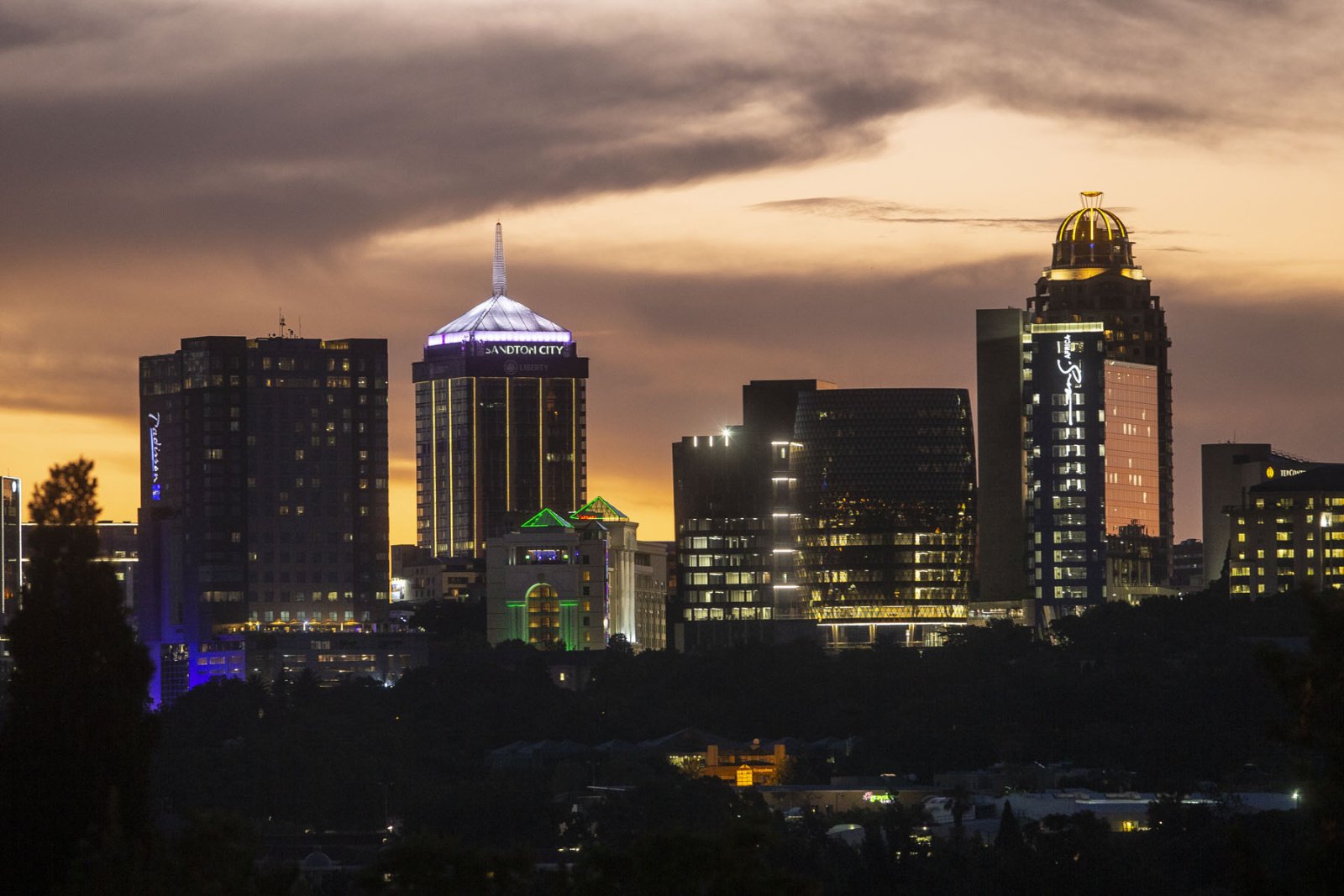
General Information
Johannesburg is the most populous city in South Africa. The City of Johannesburg itself has a population of 5,538,596, while the City of Johannesburg Metropolitan Municipality has a population of 6,599,190, making it one of the 100 largest urban areas in the world. Johannesburg is the provincial capital of Gauteng, the wealthiest province in South Africa, and seat of the country's highest court, the Constitutional Court. Situated on the mineral-rich Witwatersrand hills, the city has long been at the epicentre of the international mineral and gold trade. The richest city in Africa by GDP and private wealth, Johannesburg functions as the economic capital of South Africa and is home to the continent's largest stock exchange, the Johannesburg Stock Exchange.
- Population: 5,900,000+ (Metro Area)
- Area: 1,645 km²
- Currency: South African Rand (ZAR)
- Coordinates: Latitude: -26.204444885254, Longitude: 28.045555114746
- Timezone: Timezone info not available
- Current Local Time: ailab
Johannesburg Latest News
IOL
Stormers vs All Blacks tickets still available: How to buy at face value
Tickets are still up for grabs for the Stormers and other SA franchise clashes against the All Blacks, but fans should buy only through official channels to avoid massive markups.
IOL
Why this underrated Apple device is actually a better deal than the MacBook Neo
As AI-driven RAM shortages drive up Apple prices across South Africa, the 13-inch M3 iPad Air holds steady at R14,999, offering unbeatable value against the rest of the lineup.
The Citizen
‘We should celebrate Aarto’: RTIA defends roll-out as Outa withdraws case
The Road Traffic Infringement Agency (RTIA) says the Organisation Undoing Tax Abuse (Outa) withdrew the case against it at the eleventh hour. The civil action organisation had approached the Gauteng High Court in Pretoria in July, seeking the suspension of Phase 2 of RTIA’s Administrative Adjudication of Road Traffic Offences (Aarto) system roll-out just weeks after it was extended to 60 municipalities. The system, according to RTIA, is designed to enhance road safety and simplify traffic fine management, decriminalising minor offences. Phase 2 of the Aarto roll-out began on 1 July, extending its footprint beyond the two pilot municipalities, Tshwane and Johannesburg. Outa ‘terribly mistaken’ Outa sought its suspension on the grounds that RTIA did not establish the legal safeguards that motorists are entitled to rely on, among other concerns. Briefing the portfolio committee on transport in parliament on Tuesday, 4 August, chairperson of the road traffic agency’s board Bonolo Ramokhele said Outa realised at the last minute that “they were terribly mistaken”. The matter was supposed to be heard on Tuesday. Ramokhele said the agency had experienced a few other legal challenges over Aarto’s second phase. “But we have been able to successfully defend those in court,” he said. This includes an urgent application by the South African Local Government Association (Salga) in June, which was eventually struck from the roll. Salga had raised concerns about the regulatory framework for implementing the phase, infrastructure and equipment readiness of issuing authorities, and the financial model for municipalities. The City of Cape Town also filed a dispute against the roll-out, which has resulted in the city not being part of the municipalities included in Phase 2. RTIA defends Aarto Ramokhele, however, told the parliamentary committee that South Africans should “be happy” that the programme is finally being rolled out. “And it’s being rolled out successfully,” he said. “By the end of today, there will be 30 to 40 South Africans who are going to die on our roads and some of them may die because somebody was on a cellphone, somebody has been drinking, somebody has jumped a red robot. And some of these deaths do come out of an issue of behaviour of our road users, specifically drivers,” he added. “So, we should celebrate the Aarto programme because it’s attempting to actually do away with that. At its core, it’s not a punitive fines mechanism but a programme that government is putting into place to try and reduce road fatalities and reduce the impact of those fatalities on our economy, as well as our loved ones and our families.” Ramokhele also said that, at its core, it is decriminalising road infringements and moving to a regime of administrative penalties. “No more should we now have people going to jail for things that we could deal with from an admin penalty point of view.” Remaining municipalities to be added in third phase The third phase of the roll-out is expected to begin in March 2027, although the date has not been confirmed. RTIA registrar and CEO Matsemela Moloi said it will include phasing in the remaining 151 local municipalities. Following that, Phase 4 – which also doesn’t have a set implementation date yet – will then kick in. This phase will include the points demerit system, which will initially apply to selected contraventions. “There has been a decision taken that instead of introducing the point demerit system on all the contraventions, rather we first target those that directly contribute to fatalities in terms of the studies that have been conducted,” Moloi said. A rehabilitation programme will also be introduced in this phase, he added, so that “we are not only punitive, but also able to assist those who would be contravening the laws”. ‘In the business of saving lives’ The agency’s executive programme manager Helen Kgamanyane said the system has been yielding results since 1 July. She said 2 024 notices have been issued from 1 until 27 July, and a total of R976 950 has been paid towards them. “The amount could include notices that were paid before July; however, we just wanted to show you that the system is active and operational.” Kgamanyane said the agency wanted to emphasise that its mandate with Aarto is more about road safety and saving lives than revenue generation. “That is something that we wanted to put forward, that as RTIA and Aarto, we are not in the business of revenue generation, but we are in the business of saving lives and reducing the socio-economic burden of crashes, because that also impacts our sister department, which is the Road Accident Fund,” she said. Watch the full briefing here:
The Citizen
Just the medicine for universal health as Brics pools expertise for resilience
The adoption of the 16th Brics health ministers’ declaration, committing the bloc to deeper cooperation in health care, builds on an earlier pledge by member states to work collectively towards achieving universal health coverage (UHC). The declaration was endorsed by more than 70 representatives and partner organisations at the recent Brics (Brazil, Russia, India, China and South Africa) health ministers’ gathering chaired by India in Chandigarh. Delegates identified nine priority areas for cooperation, including mental health, tuberculosis (TB) control, pandemic preparedness, traditional medicine and the development of nuclear medicine. The agreement reinforces Brics’ commitment to UHC, one of the World Health Organisation’ key sustainable development goals, by expanding collaboration to strengthen health systems and improve access to quality health care. India’s Minister of Health and Family Welfare Jagat Prakash Nadda called for greater collective action, saying enhanced cooperation would strengthen public health systems, accelerate digital health care solutions and improve access to medical services across member states. He noted India’s experience had shown resilient health systems and equitable health care access to be essential pillars of sustainable development. Cuba’s ambassador to India, Juan Carlos Marsan Aguilera, welcomed the declaration, describing it as further evidence of Brics’ determination to deepen cooperation and improve the quality of health care services throughout the bloc. Although all Brics members share the vision of providing equitable, quality health care, while reducing the financial burden on poorer communities, few have fully achieved UHC. Among the original five Brics members, Brazil has made the greatest progress, providing free health care to all residents and visitors through its Unified Health System. Russia has a state-backed mandatory health insurance model built around an extensive public health care network, while China has achieved near-universal basic health coverage through government-supported insurance schemes. India has also made significant advances through sustained policy reforms, infrastructure investment and increased public health expenditure. Programmes such as the National Rural Health Mission have strengthened primary healthcare, while government-funded insurance schemes provide hospital care for economically disadvantaged citizens at accredited public and private hospitals. At the Chandigarh meeting, India showcased its achievements in health care delivery, medical education, scientific research and innovation. Central to its strategy is the Ayushman Bharat programme, one of the world’s largest publicly funded health insurance schemes, which provides eligible beneficiaries with access to advanced treatments, including cardiac surgery, neurosurgery, cancer care and organ transplantation. South Africa has been pursuing an ambitious National Health Insurance system but implementation has faced significant obstacles. These include funding constraints, shortages of health care professionals, inadequate infrastructure, legal challenges over the constitutionality of the legislation and opposition from parts of the private health care sector concerned about the future of medical aid schemes. While Brics members remain committed to working together to achieve UHC, it will require sustained political commitment and greater investment. The World Bank has observed that though health system reform features prominently on the policy agenda of the original Brics countries, health care spending remains relatively modest. The Brics declaration recognises cooperation in targeted areas including disease control, digital health, medical research, traditional medicine and pandemic preparedness. By pooling expertise, Brics is laying the foundations for more accessible, affordable and resilient health care for billions of people across the global south.
The South African
WAFCON 2026: Banyana Banyana through to the quarterfinals
Banyana Banyana are through to the quarterfinals of the 2026 Women’s Africa Cup of Nations (WAFCON) following their 1-0 win over Burkina Faso on Tuesday night. Thembi Kgatlana scored the only goal of the game in the first half, and there were no answers from Burkina Faso. WAFCON 2026: BANYANA BANYANA BEAT BURKINA FASO Banyana Banyana went into the encounter Rashid Moulay Stadium in desperate need of three points as they were sitting at the bottom of Group B log. Desiree Ellis’ charges were on a single point from their opening two matches after losing to Tanzania and drawing with Ivory Coast. Now, they also need Ivory Coast to beat Tanzania in the other match simply because CAF uses head-to-head when teams are equal on points. With Banyana Banyana qualifying for the quarterfinals, they are edging closer to that 2027 FIFA World Cup qualification. The four teams that will play the semifinals of this WAFCON tournament automatically qualify for the 2027 Women’s FIFA World Cup in Brazil. HOW FAR CAN SOUTH AFRICA GO? Let us know in the section below…
The South African
These content creators showed up for Grace Mondlana in hospital [video]
South African content creators, such as Bheki Ndamase, Sinethemba Madondo and Lasizwe, were among those who visited Grace Mondlana in the hospital following a health scare. On 3 August, social media was buzzing with concern when Grace, a beloved content creator, shared that she had been hospitalised after collapsing on the stairs. GRACE’S SUPPORT SYSTEM PULLED THROUGH FOR HER The avid supporters of Grace know just how much she pours into others, especially her loved ones. Now it was their turn to show up for her, and boy, did they hold her down! Her inner circle, which included her parents’, grandmother, siblings, and the mentioned content creators, pulled up with flowers and goodies. After sharing her ordeal yesterday, other content creators such as Thobi Rose and Mihlali Ndamase posted their well-wishes in the comment section. Mihlali Ndamase related to Grace experience: This happened to me once, such horrible experience. Get well soon Grace. Thobi Rose commented: Oh man, Grace. Sending you so much love. Please rest up!!! GRACE MONDLANA SHARES HEALTH SCARE WITH FANS The 25-year-old posted content from the hospital showing the medical care she received for her fractured ankle. This traumatic incident happened after her much-publicised party for her dog, Kai. “I suddenly felt noxious while walking down the stairs that morning, and before I could react, I collapsed,” she began. Grace regained consciousness thanks to the dogs’ barking, after which her helper called for an ambulance. “I tried to stand up, but I couldn’t move. Fortunately, the dogs started barking, and I regained consciousness. My helper then called for an ambulance,” she added. View this post on Instagram A post shared by Grace Mondlana (@grace._mondlana) MORE TO THE COLLAPSE THAN MEETS THE EYE While Grace thought the collapse was caused by fatigue, it turned out to be more serious, requiring surgery. “At first I assumed that it was just fatigue and that had resulted in a fractured ankle. The swelling on my ankle indicated that it could be more than just a fracture. X-rays revealed a torn and sprained ligament, which required surgery to align,” she wrote. NEW MEDICAL CONDITION DISCOVERED Regarding her newly discovered medical condition, Grace wrote, “We learnt that I have a neurological condition that caused me to collapse. I have begun physiotherapy to start the recovery journey for my ankle.” She also revealed that she is still on medication and recovering at home after spending eight nights in hospital.
TechCentral
VALR hits back at proposed cross-border crypto ban
Barring South African companies from moving crypto assets across the country’s borders will backfire, VALR has warned.
TechCentral
South Africa’s AI policy collapse shows up in World Bank report
South Africa does not appear among the economies with a national AI strategy in a flagship new World Bank report.