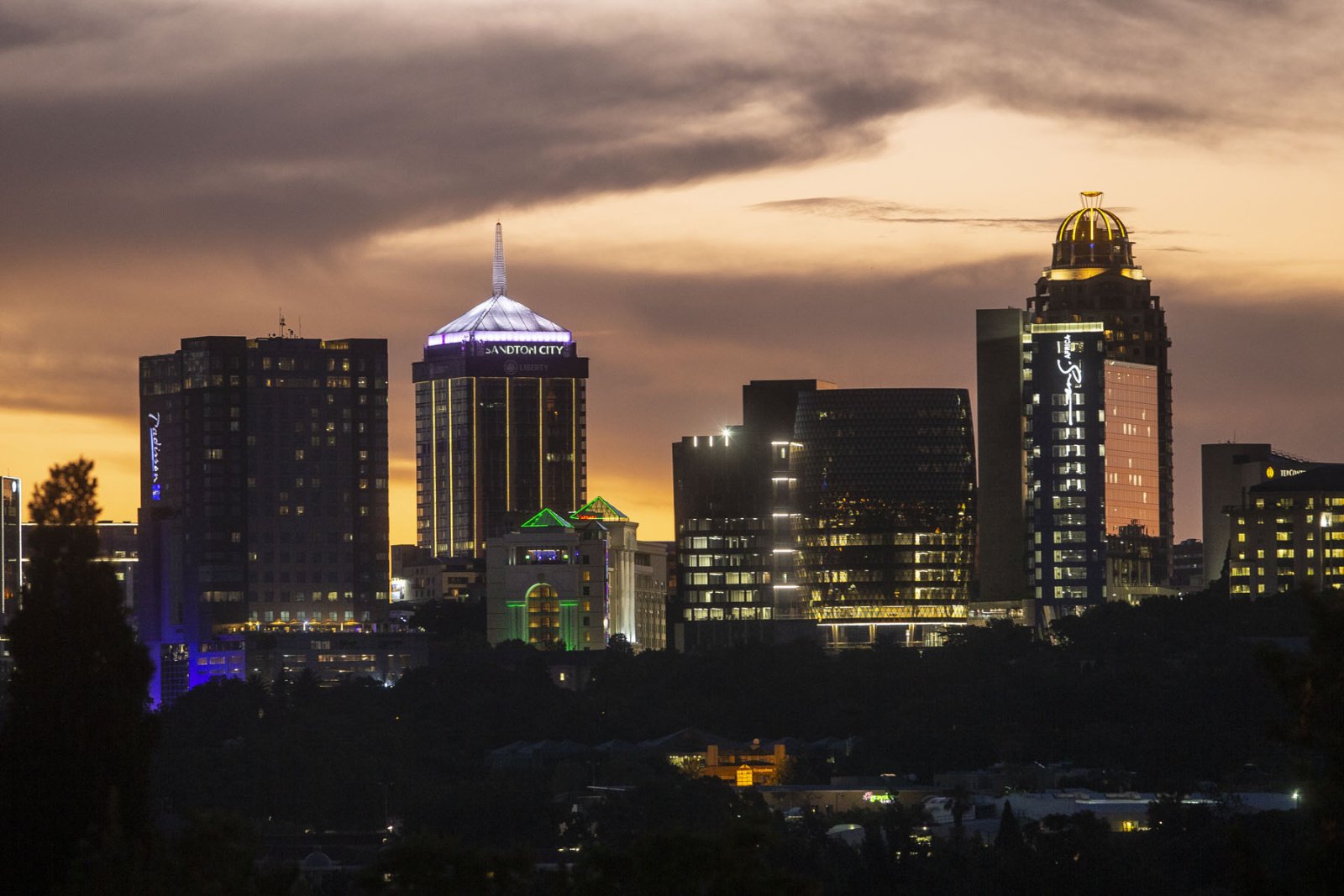
Johannesburg Latest News
IOL
Make or break for Abdeslam Ouaddou as Orlando Pirates begin Champions League's quest
Haunted by last year's shock exit to Saint-Éloi Lupopo and a recent MTN8 final defeat, Orlando Pirates head to Gaborone needing tactical discipline to secure a crucial first-leg lead.
IOL
IEC says it was not intimidated by ANC over candidate dispute
The IEC says its decision to extend a Constitutional Court ruling involving 181 excluded ANC candidates to 32 other political parties was guided by its mandate to ensure free and fair elections, rejecting suggestions that it was intimidated by the ANC.
The Citizen
Are votes for smaller parties a waste, or are the upstarts ‘challenging the established order’?
From the old guard to ambitious upstarts, over 500 political options will be on the various municipal ballots for the 2026 local government elections. Established political brands still dominate the electorate’s consciousness, but the potential of new movements is evident in the fact that 10 of the 18 parties in the National Assembly were founded in the 2010s or later. New iterations of old ideas and single-issue champions may be scoffed at, but ensuring every voice is given an equal platform is a foundational principle of South Africa’s modern democracy. So-called smaller parties explained how they try to distinguish themselves in a cluttered electoral space and what the country gained from such a variety of political options. Most importantly, they responded to the age-old claim from established parties that voting for a “small” party was a wasted vote. ‘No first and second divisions’ The top half, or left-hand side of the double-column ballots, generally features parties with a similar first word. The African Alliance Congress (AAC) was founded by Archbishop Tshidisang Simon Tsie, who is the party’s mayoral candidate for Mangaung. Espousing Christian values and focused on unity and economic empowerment, the Archbishop reminded his illustrious opponents that all were equal on the ballot. “Unfortunately for those who are making noise about “smaller” parties, the IEC has no first and second divisions in their party contact information,” the Archbishop joked. He explained that at municipal level, voters had a greater opportunity to support leaders that reflected their immediate concerns and aspirations. “South Africa is a diverse country, and no single political organisation should assume that it has all the answers to our challenges. “Political diversity encourages accountability, fresh thinking and competition based on ideas and performance,” Tsie told The Citizen. He said that the AAC understood that earning public trust took consistency and commitment over several election cycles, asking voters to embrace the future and not cling to the past. “Every political party starts somewhere, and no organisation should be judged solely by its size or history. “A vote is an expression of a citizen’s constitutional right. The most important question is not how large a party is today, but what it stands for and what it is prepared to do for the people of South Africa,” said the Archbishop. The new kingmakers Multiple parties have been founded as breakaways from the ANC, with former ANC member Muzi Hlengwa summing up why he formed African People First (APF). “The ANC is no longer the vehicle to take us forward. I have always been a pan-Africanist and decided we should form a movement that would drive that ideology. For us it’s land first, and everything else will follow,” Hlengwa told The Citizen. The APF leader and eThekwini mayoral candidate promised an end to tenderpreneurship, no more labour brokers, a gutting of taxes, and widespread water and electricity infrastructure investment. Hlengwa said he enjoyed the small-party label and believed the future of politics was one without large parties, and that those that did exist would dance to the minority tune. “When people say voting for smaller parties is throwing away your votes, they really do not understand the political space that we are in. “The small parties are kingmakers now. They are the ones who decide who takes what,” Hlengwa said. ‘Every legitimate concern’ The Aboriginal Gorilla Fighters (ABGF) will be contesting at least 40 wards across the City of Cape Town on 4 November. ABGF secretary-general Angeline Goliath said that despite the multitude of parties on offer, gaps remained in ideological coverage. “The existence of many political organisations does not automatically mean that every community is adequately represented or that every legitimate concern is being addressed,” Goliath told The Citizen. Her party “places military veterans, Aboriginal people and historically marginalised communities at the centre” of an agenda that drives service delivery and economic empowerment. Based in Cape Town, ABGF’s core focus is section 5(1) of the Military Veterans Act, which covers the obligations and benefits due to former members of the armed forces. “We believe democracy should never be limited to the voices of established political organisations. It must create space for those who have historically been excluded, overlooked or inadequately represented. “We are not seeking to reinvent the promises of existing political parties. We seek to give greater political attention to concerns that we believe remain insufficiently addressed. “Political relevance is measured by principles, integrity, leadership and service – not size, age or wealth. “Every vote matters, and no vote loses its democratic value because it supports an emerging movement. Democracy belongs to every South African-not established parties alone,” Goliath concluded. ‘Capitalist Ubuntu’ The emerging philosophy of “Capitalist Ubuntu” will be on the ballot in Johannesburg in the shape of Galtson Anthony and his new party, Know Your Power (KYP). In explaining Capitalist Ubuntu, Anthony said it was “building an economy that encourages entrepreneurship, ownership, investment and wealth creation, while ensuring that human dignity and social responsibility remain central to our progress”. He stated that he two decades of entrepreneurship had left him convinced that solving problems was only achieved through active participation. “I am not entering politics because I believe there are too few political parties. I am entering because I believe there is still work to be done, and I am prepared to take responsibility for being part of the solution. “KYP is not here to make South Africa fit an ideology. We are here to find what works for South Africa, unlock its potential and build a future in which the next generation has the opportunity to lead, prosper and thrive,” Anthony told The Citizen. He reminded voters that all parties started from scratch and stressed that supporter bases fluctuate. “Size can bring resources and influence, but it does not automatically guarantee competence, integrity or delivery. “Democracy is about choice, and people should be free to choose the party that best reflects their values, priorities and vision for the country without being made to feel that their vote is wasted. “A vote is not wasted because it challenges the established order,” Anthony concluded. ‘Future of politics is in coalitions’ Another former ANC stalwart, Marius Fransman, has brought together a collection of community activists and experienced administrators to form People’s Movement for Change (PMC). While founder and leader of the party, he won’t be on the ballot himself, choosing instead to let the youth forge their own paths across the country. Fransman said South Africa had plenty of parties, but still lacked political leadership that truly resonated with the people. He said the country needed an economic Codesa and wanted PMC candidates to place the real issues at the centre of politics. “We believe that politics has become too focused on political parties, political personalities and political survival, while the real issues facing families and communities- housing, unemployment, crime, education, transport, basic services and economic opportunity continue to grow,” Fransman told The Citizen. After almost two decades in provincial legislatures and parliament, Fransman has witnessed the fracturing of political power and the rise of the upstarts. “The argument that voters should only support established parties because smaller parties cannot make a difference is precisely the type of politics that keeps the status quo in place. “The results of 2021 and 2024 showed the future of politics is in coalitions. Small parties today decide who governs,” Fransman concluded.
The Citizen
City scratches its head over 160 sick in Tshwane
The City of Tshwane on Thursday urged residents to use water from its tankers as a precaution while it investigated a cluster of people falling ill in Bronkhorstspruit and surrounding areas in Region 7. According to the city, about 140 to 160 cases of diarrhoea and other stomach-related symptoms were reported between 7 and 12 October 2026. Most patients were treated at Bronkhorstspruit Hospital, while others went to Mamelodi Hospital, Steve Biko Academic Hospital and Wilgers Hospital. Tshwane illness: No deaths reported MMC for Health Tshegofatso Mashabela said on Thursday that the cause remained unknown. “While the illness may be water-borne, the true cause has not yet been established,” Mashabela explained. She revealed that no deaths were reported. Meanwhile, the city said it has stepped up testing at the Bronkhorstspruit Water Treatment Plant and across the distribution network. A team of city, district, provincial and national health officials was investigating, and blood and stool results were still pending. “The city’s immediate concern is for the residents who are ill and the families caring for them,” Mashabela noted. DA raises chlorine allegation The DA announced on Friday that it would open a criminal case over the city’s handling of the plant. According to DA Tshwane mayoral candidate Cilliers Brink, the party received information from a whistleblower that the plant allegedly operated without chlorine treatment for the past three weeks. He cautioned that the claim was unconfirmed. “If confirmed, this would raise serious concerns about the safety of the drinking water supplied to thousands of residents in Bronkhorstspruit, Zithobeni, Ekangala and surrounding communities,” Brink warned. Brink claimed residents had complained about discoloured tap water for months. He added that the DA warned in September that the plant was producing only 15 megalitres a day, against a design capacity of 54 megalitres. He argued that the Compulsory National Water and Sanitation Services Standards required authorities to issue advisory notices when water quality may be compromised. Health and water authorities also had to be told within 12 hours of a confirmed health risk. “The law requires residents to be warned when their drinking water may pose a danger to their health,” Brink emphasised. He asked Mayor Nasiphi Moya how long she had known about the plant’s condition and whether she knew chlorine treatment had stopped. He also wanted the records preserved for independent examination. “The DA demands the immediate publication of water-quality test results, chlorine treatment records and all relevant operational reports,” Brink insisted. The Citizen reached out to the City of Tshwane about the claim that the plant operated without chlorine treatment for three weeks. The city said it would revert, and this article will be updated once a response is received. Moya on water tanker spending Brink also raised the earlier water tanker spending row. “Tshwane residents cannot afford another R777 million water tanker bonanza,” Brink cautioned. Speaking to Newzroom Afrika, Moya addressed the row on Thursday, saying the R777 million figure came from a screenshot an official took and leaked to the DA. She explained that the city manager, chief financial officer and chief operating officer were asked to provide a breakdown of actual spending. “The figure of R777 million is a lie. As records show, spending by the previous administration was actually higher than that of the current administration,” she added. “So we then said to the people of Tshwane, there is no R777 million that was spent during our time,” Moya argued. According to Moya, the city contracted the Special Investigating Unit (SIU) to probe the entire tanker supply chain, and its report was not yet out. She said spending on water tankers dropped to R8 million a month by March, and that the city spent only R2.9 million between July and the end of September. “We bought our own water tankers,” Moya added. Plant upgrades underway Mashabela said the tankers serving Region 7 sourced their water from Cullinan, outside the affected supply area. She added that city-owned tankers were disinfected daily, and drivers were trained in handling drinking water safely. The city said work was continuing at the plant under its water stabilisation plan. This includes refurbishing the filtration system, improving pumping infrastructure and cleaning reservoirs. A broader refurbishment is under procurement to restore the plant to its full capacity of 54 million litres a day. The city also issued health advice for anyone with symptoms. “Residents experiencing persistent diarrhoea, vomiting, fever, weakness or dehydration should seek medical attention, particularly where children, older people or other vulnerable residents are affected,” Mashabela advised. Brink said residents deserved better. “The people of Bronkhorstspruit deserve safe drinking water, not another endless cycle of emergency measures and broken infrastructure,” Brink stated. The investigation is still underway. “The city will continue to follow the evidence and communicate confirmed findings as the investigation progresses,” Mashabela promised.
The South African
What happened to Springbok legend Bryan Habana after retirement?
During his playing days, Bryan Habana was undoubtedly one of South Africa’s biggest names in rugby. The retired winger was renowned for his explosive pace and finishing ability at his peak and is widely regarded as one of the greatest players to have played the game. He famously raced a cheetah in a publicity stunt that attracted worldwide attention. Having started his professional career with the Lions, Habana joined the Bulls in 2005, where he went on to win two Super Rugby titles and a Currie Cup. In 2010, he moved to the Stormers, helping the Cape side win the Currie Cup in 2012 before joining French giants Toulon a year later. Bryan Habana scored 67 tries for the Springboks Although Habana dominated South African rugby for much of his career, his greatest moments arguably came in the Springbok jersey. At international level, he earned 124 Test caps and played a key role in South Africa’s triumph at the 2007 Rugby World Cup. His outstanding performances that year earned him the IRB Player of the Year award. Habana continued to make history on the international stage. During the 2015 Rugby World Cup, he equalled Jonah Lomu’s record of 15 career tries at the tournament. He finished his international career with 67 Test tries, placing him second on the all-time men’s Test try-scoring list. What is Bryan Habana doing now? Since retiring from professional rugby in 2018, Habana has remained involved in the sport through various ambassadorial, punditry and broadcasting roles. He has also delivered talks around the world, sharing insights from his illustrious career. Beyond rugby, Habana has continued to pursue his philanthropic ambitions. His desire to give back to the community led him to establish the Bryan Habana Foundation. While he may no longer be dazzling fans on the rugby field, the Springbok legend continues to use his profile and experience to contribute to the sport and make a difference beyond it. Bryan Habana’s record of 67 tries in the Boks jersey will not be broken soon. What’s your favourite Habana moment?
The South African
Three changes: Orlando Pirates’ expected starting 11 vs African Stars
African football is back with its CAF Champions League this weekend. Orlando Pirates and African Stars’ second round preliminary qualifier first leg kicks-off at the Gaborone Stadium on Saturday. Kick-off is set for 15:00. CAF CHAMPIONS LEAGUE: AFRICAN STARS VS ORLANDO PIRATES Coach Abdeslam Ouaddou is expected to make a few changes. The Buccaneers were in action just three days ago with a 3-0 win over TS Galaxy in the Betway Premiership. One of the sure-fire changes will see Thalente Mbatha returning to midfield since the MTN8 final loss to Mamelodi Sundowns. Coach Ouaddou confirmed he rested Mbatha midweek. Up front, striking workhorse Yanela Mbuthuma is expected to regain his starting place ahead of Boitumelo Radiopane. Kamogelo Sebelebele remains injured. Expect Ghampani Lungu to replace Tuesday’s debutant, Bulelani Sigomoshe, who looked somewhat shaken at right back. The rotation between Deon Hotto and Nkosikhona Ndaba should continue after the latter’s start on Tuesday. DID YOU KNOW? African Stars have won numerous national league titles. They included four consecutive Namibia Premiership titles from 2022–23 through 2025–26. They also lifted title under the older Namibia Premier League era (1994, 2008–09, 2009–10, 2014–15, and 2017–18). EXPECTED ORLANDO PIRATES LINE-UP Goalkeeper: Sipho Chaine, Right back: Ghampani Lungu, Central defender: Nkosinathi Sibisi (captain), Central defender: Lebone Seema, Left back: Deon Hotto, Central midfielder: Thalente Mbatha, Central midfielder: Thapelo Mokobodi, Attacking midfielder: Simphiwe Masilela, Right winger: Tshepang Moremi, Left winger: Oswin Appollis, Striker: Yanela Mbuthuma. Previous line-up against TS Galaxy on Tuesday: Goalkeeper: Sipho Chaine, Right back: Bulelani Sigomoshe, Central defender: Nkosinathi Sibisi (captain), Central defender: Lebone Seema, Left back: Nkosikhona Ndaba, Central midfielder: Simphiwe Masilela, Central midfielder: Thapelo Mokobodi, Attacking midfielder: Simphiwe Masilela, Right winger: Tshepang Moremi, Left winger: Oswin Appollis, Striker: Boitumelo Radiopane. WHAT RESULT DO YOU EXPECT? Share your thoughts by clicking on the red comments block below.
TechCentral
The R77 000 iPhone has arrived in South Africa
Apple's first foldable iPhone carries a steeper local premium than its new HomeView, HomePod mini 2 and Apple TV 4K.
TechCentral
South Africa’s ATM network faces its biggest overhaul in decades
The Reserve Bank wants all of South Africa's ATMs white-labelled, with free transactions below a threshold, starting with a pilot in January.