General Information
Johannesburg is the most populous city in South Africa. The City of Johannesburg itself has a population of 5,538,596, while the City of Johannesburg Metropolitan Municipality has a population of 6,599,190, making it one of the 100 largest urban areas in the world. Johannesburg is the provincial capital of Gauteng, the wealthiest province in South Africa, and seat of the country's highest court, the Constitutional Court. Situated on the mineral-rich Witwatersrand hills, the city has long been at the epicentre of the international mineral and gold trade. The richest city in Africa by GDP and private wealth, Johannesburg functions as the economic capital of South Africa and is home to the continent's largest stock exchange, the Johannesburg Stock Exchange.
- Population: 5,900,000+ (Metro Area)
- Area: 1,645 km²
- Currency: South African Rand (ZAR)
- Coordinates: Latitude: -26.204444885254, Longitude: 28.045555114746
- Timezone: Timezone info not available
- Current Local Time: ailab
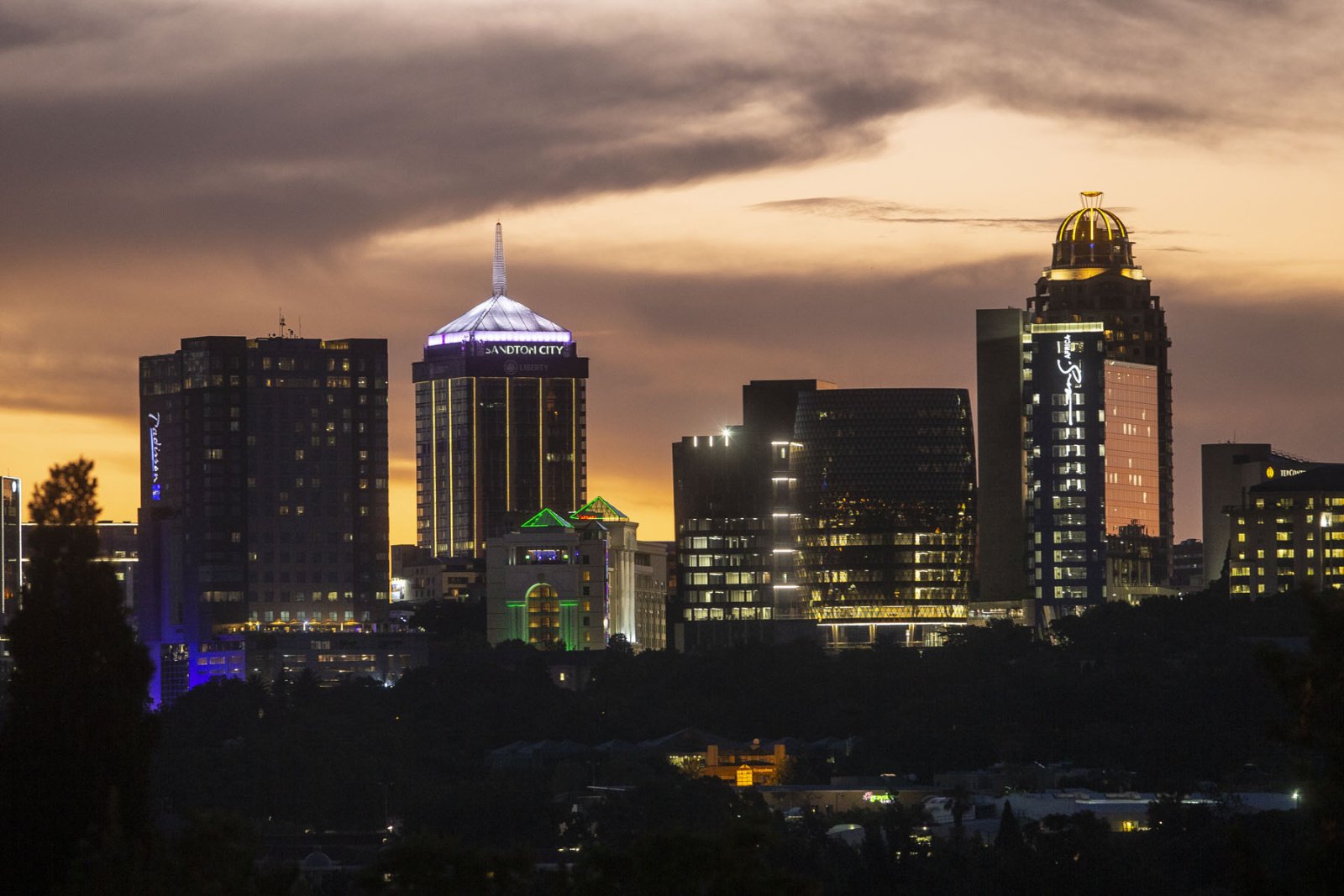
Sandton
Business towers, upscale malls, Nelson Mandela Square, and city nightlife.
Johannesburg CBD
Downtown streets, Commissioner Street, Gandhi Square, and real urban life.
Soweto
Township streets, Maponya Mall, Protea North, and cultural walking tours.
Rosebank & Melrose Arch
Shopping areas, nightlife, and modern mixed-use districts.
Johannesburg Latest News
IOL
Memorial details announced for former SABC presenter Owen Ndlovu
A memorial service for former SABC Sports presenter Owen Ndlovu will be held in Randburg on Wednesday, September 23, following his death after an alleged hijacking and kidnapping in Katlehong.
IOL
A backpacker’s guide to the KZN South Coast
Plan an affordable KwaZulu-Natal South Coast getaway with budget-friendly accommodation, beaches, wildlife, adventure activities and tips for saving on food and transport.
The Citizen
South Africa’s Mpox numbers creep up to 22: Here’s what you need to know
South Africa logged four more laboratory-confirmed Mpox cases, pushing the national total to 22 as of Tuesday. The virus isn’t restricted to local transmission either; imported cases are driving some of these new numbers. A 47-year-old Capetonian recently returned from Spain to Cape Town with the virus. Three additional cases were identified in visiting Norwegian and German nationals. Where the cases are concentrated The majority of infections are clustered in the Western Cape, with 18 cases, while Gauteng has three cases and one case was recorded in KwaZulu-Natal. Almost every patient identified so far is male, with ages ranging from 23 to 50. In July, the Africa Centre for Disease Control and prevention donated more than 10 000 Mpox vaccines to the National Health Department. Gauteng’s Health Department has assured it is ready to respond to Mpox. “Mpox vaccines are available with a total of 586 doses currently in stock. The vaccines are stored in dedicated freezers at regional pharmacies, from where clinics can request them,” it said on Tuesday. How to spot the symptoms early Mpox doesn’t always show up the same way in everyone, but it usually starts with flu-like warning signs before turning into distinct skin markings. Look out for high fever, pounding headaches and severe exhaustion, as well as deep muscle aches and persistent back pain. The giveaway signal of Mpox is a painful rash or raised fluid-filled lesions appearing on your face, hands, feet or intimate areas. How it spreads (and how to protect yourself) Mpox relies heavily on close physical contact where it requires direct skin-to-skin contact with infected lesions or body fluids. However, it can also be picked up from shared items like unwashed bedding, towels or clothing that an infected person used. Health Department spokesperson Foster Mohale highlighted the urgency for anyone who thinks they might have been exposed. “Anyone who has been in close contact with a confirmed case within the past 21 days and develops symptoms should seek medical attention promptly and inform healthcare providers of their exposure history,” he cautioned. Mohale also stressed that while the Western Cape holds the primary cluster, scattered cases across other provinces mean everyone needs to be vigilant. “The identification of transmission clusters and cases across multiple provinces highlights the need for sustained public co-operation, early detection and continued surveillance to prevent further spread,” Mohale explained, adding that official channels will issue further updates as new data comes in.
The Citizen
Racing operators making it easier to find winners
Newcomers to horse racing find the blizzard of numbers swirling around them a bit daunting. And it doesn’t help when digits and codes mean different things at different racecourses. So, this week’s news that South Africa’s two racing operators – Race Coast and 4Racing – have agreed “to align and synergise grassroots programming and related processes across the board on a national level” is welcome. Even seasoned horse players will cheer. Variety might be the spice of some areas of life but, when it comes to finding winning wagers, a smooth, familiar path is devoutly to be wished. For punters, a major change will be carded saddle-cloth numbers reflecting the barrier draw of the relevant runner in all racing centres countrywide. The other important change for the public at large is “a national reversion to programming traditional MR Handicapping styling of race categories”. Many of the other measures affect owners and trainers. The press release explains: “In a shift from the traditional top-weight-down or alphabetical order in 4Racing regions in recent years, all South African races will reflect runners carded according to barrier positions, regardless of the allocated weights. “While this not only means a standardisation of the South African racing product to an international audience, it also makes it easier for newcomers and racing fans in general to follow their selections from the saddle cloth number and colour, through to the starting stalls, where the number and colour will be clearly displayed. “Reserve runners will no longer be allocated a barrier draw, but should there be a scratching, the reserve will automatically take up the barrier of the scratched horse that it replaces.” Uniformity and standardisation Standardisation of race conditions and rules and procedures governing eliminations, as well as uniformity in the criteria and procedures relating to the cancellation of races, are among the changes to be introduced on 1 November 2026. Standardised conditions for the reduction of stakes in cases of reduced fields will be applied across the country, while supplementary entries – as available in KwaZulu-Natal and Western Cape – will be introduced in Gauteng and Eastern Cape for minor races, providing trainers with an additional opportunity to enter horses after the initial entry stage. The “unique position and equine demographics” of the Eastern Cape has been considered. “Gqeberha … ideally have to open entries two weeks before declarations as their jockey group is sourced, to a large degree, from out of the province. Therefore, more notice is needed to engage riders, with associated travel arrangements,” explained 4Racing’s Colin Gordon, who added he was pleased with the spirit of co-operation between the operators. Race Coast chief operations officer Dean Sawarjith said: “Racing faces many challenges in the competition for the customer rand, and simplifying an understanding of the mechanics for the racing public and all stakeholders made sense. Having the racing operators on the same page and working together means less complications for all, in an environment where we encourage trainers to travel to optimise earnings opportunities for their owners. The benefits to the broader SA racing industry must always be our collective first consideration.” The changes are timed to coincide with stakes increases. Race Coast has boosted its combined stakes in KwaZulu-Natal and Western Cape to R270-million, an increase of 20%. 4Racing has boosted stakes substantially across its Eastern Cape and Highveld regions. Detailed information on the changes has been published on www.sahorseracing.co.za.
The South African
FEEL GOOD | Poached pangolin rescued after 4 days without food or water
A 9kg female Temminck’s ground pangolin named Lotti is recovering after being rescued from poachers following at least four days in captivity without food or water. According to the Umoya Khulula Wildlife Centre, Lotti was among two pangolins rescued during a confiscation last Tuesday. Two suspects were arrested during the operation. READ | GOOD news on World Rhino Day: Decline in poaching Lotti had allegedly been held captive for at least four days before she was rescued. The wildlife centre said she spent the time trapped, frightened and desperately trying to escape, without access to food or water. Rescued just in time Lotti was taken for emergency treatment following her rescue and spent a night in intensive care before being transferred into the wildlife centre’s care. She was dehydrated and had lost weight but, fortunately, had no serious wounds or injuries. The wildlife centre said Lotti’s recovery and rehabilitation will now focus on getting her strong and healthy enough to return to the wild. When she is ready, she will be released and carefully monitored to ensure she adapts and thrives in her natural environment. Pangolins kept at secure location The centre stressed that all its pangolins are housed offsite at a secure and undisclosed location for the safety of both the animals and the people caring for them. The centre thanked everyone involved in Lotti’s rescue and for giving her a second chance at life in the wild. However, Lotti’s story is only part of the rescue operation. The wildlife centre revealed that she was not the only pangolin rescued that day, with another animal also taken into care. Further updates on the second pangolin are expected as its rehabilitation progresses. Pangolins are among the world’s most trafficked mammals, with their scales and meat making them targets of illegal wildlife trafficking. For Lotti, however, the immediate priority is recovery.
The South African
Petrol R30 a litre? October fuel shock worse than expected
South Africa’s motorists are facing the prospect of another major fuel-price increase in October, with the latest Central Energy Fund (CEF) data showing petrol and diesel under-recoveries deep in the red. The latest figures point to increases of more than R2.50 a litre across petrol and diesel if current conditions persist through the remainder of September. The latest projections are also worse than earlier estimates, despite international oil prices recently pulling back from their September highs. Petrol heads towards R30/litre The latest CEF-linked data shows an under-recovery of approximately R2.71 per litre for petrol 93 and R2.88/litre for petrol 95. That would put petrol prices – for both grades – at both the coast and inland, withing touching distance of R30 per litre. Diesel motorists are also facing another substantial increase. The latest figures indicate an under-recovery of approximately R2.60/litre for 0.05% diesel and R3.00/litre for 0.005% diesel. The potential increase would come only weeks after the substantial September adjustment. Oil prices remain the biggest problem International petroleum prices remain the main source of pressure on South Africa’s fuel-price outlook. Brent crude climbed sharply during September as concerns over Middle East supply disruptions and shipping through the Strait of Hormuz intensified. There has since been some relief, with Brent falling from around $108.75 a barrel on 15 September to below $100 by 22 September. However, the decline has come relatively late in the review period and has not yet removed the large under-recoveries accumulated earlier in the month. The latest projections indicate that international petroleum-product prices, rather than the rand, remain the dominant driver of the potential October increase. Rand provides limited relief South Africa’s fuel prices are influenced by both international petroleum prices and the rand/US dollar exchange rate. A stronger rand can reduce the local cost of imported petroleum products, while a weaker currency adds pressure. The latest data suggests that currency movements have provided only limited relief against the much larger increase in international petroleum-product costs. October prices are not final Motorists should not regard the latest CEF figures as the final October fuel prices. The CEF’s daily calculations are a snapshot of the under- or over-recovery during the review period. Oil prices, refined petroleum-product prices and the rand can still move substantially before the final adjustment is announced. The recent fall in Brent crude demonstrates how quickly the outlook can change. If the oil-price decline continues and the rand strengthens, the eventual increases could be smaller. Conversely, renewed supply disruptions or another spike in crude prices could push the projections higher. The final October fuel-price adjustment is expected to take effect on Wednesday, 7 October 2026. FUEL PRICE IN SOUTH AFRICA IMPACTED BY TWO MAIN FACTORS: 1. The international price of petroleum products, driven mainly by oil prices. 2. The rand/dollar exchange rate used in the purchase of these products. Oil price At the time of publishing the brent crude oil price is $98.95 a barrel. Exchange rate At the time of publishing the rand/dollar exchange rate is R16.26/$. Current September 2026 petrol and diesel prices (Inland and Coastal): INLANDSeptemberPetrol 93R26.76Petrol 95R26.92Diesel 0.05%R29.09Diesel 0.005%R30.04Illuminating ParaffinR20.89 COASTALSeptemberPetrol 93R25.97Petrol 95R26.05Diesel 0.05%R28.22Diesel 0.005%R28.78Illuminating ParaffinR19.84
TechCentral
Africa’s start-ups are building on Chinese AI
African start-ups are building on Chinese AI models as US private capital retreats, says Norrsken22’s Lexi Novitske.
TechCentral
Why true customer enablement starts on the inside
Backspace’s Graeme Thomson on why telecoms partners must break down internal silos first.