General Information
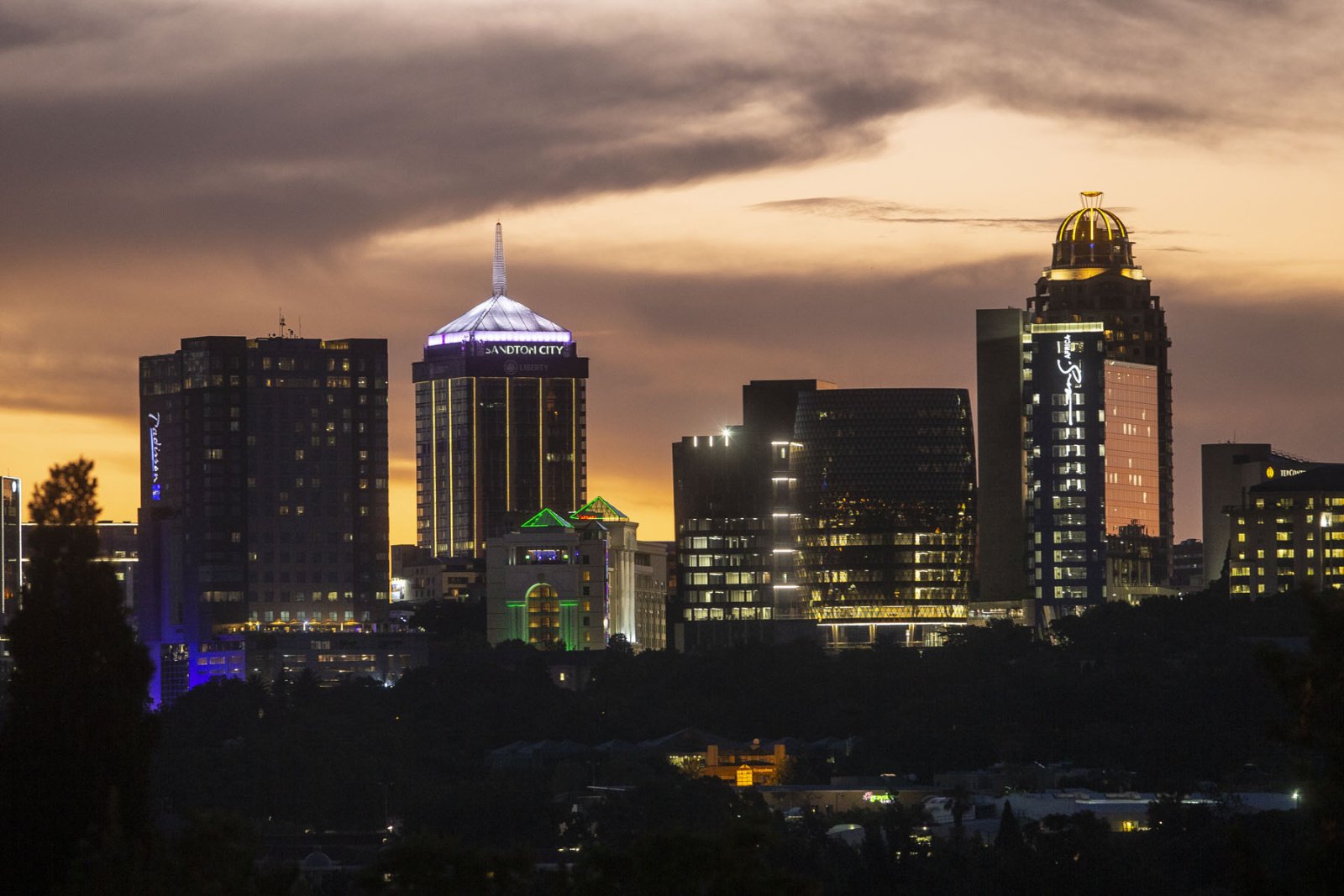
Johannesburg is the most populous city in South Africa. The City of Johannesburg itself has a population of 5,538,596, while the City of Johannesburg Metropolitan Municipality has a population of 6,599,190, making it one of the 100 largest urban areas in the world. Johannesburg is the provincial capital of Gauteng, the wealthiest province in South Africa, and seat of the country's highest court, the Constitutional Court. Situated on the mineral-rich Witwatersrand hills, the city has long been at the epicentre of the international mineral and gold trade. The richest city in Africa by GDP and private wealth, Johannesburg functions as the economic capital of South Africa and is home to the continent's largest stock exchange, the Johannesburg Stock Exchange.
- Population: 5,900,000+ (Metro Area)
- Area: 1,645 km²
- Currency: South African Rand (ZAR)
- Coordinates: Latitude: -26.204444885254, Longitude: 28.045555114746
- Timezone: Timezone info not available
- Current Local Time: ailab
Johannesburg Latest News
IOL
PICS: IFP launches 2026 local government election manifesto in KwaMashu
PICS: IFP launches 2026 local government election manifesto in KwaMashu
IOL
Cindy Crawford's son, Presley Gerber, dies aged 27
American model Presley Gerber, the son of Cindy Crawford and Rande Gerber, has died aged 27, according to a family representative.
The Citizen
It’s a girl! Ayanda Matsimbe announces baby no. 3 with a sweet gender reveal
Media personality and entrepreneur Ayanda Matsimbe (formerly Thabethe) has given her millions of followers something sweet to celebrate. She announced that she and her husband, Peter Matsimbe, are expecting their third child – a baby girl. A daughter after two sons The couple, who already share two sons, shared the news via an Instagram gender reveal that made use of the viral wine glass and coloured cake gender reveal format, sending fans and fellow celebrities into a congratulatory frenzy on social media. “Hamba Ciara!?!!” commented 947 breakfast show host Anele Mdoda. “A baby girl for mommy,” added Boity. Other influencers and celebrities like Kay Ngonyama (Kay Yarmz), Jessica Nkosi, Lerato Kganyago and Dineo Moeketsi all congratulated Ayanda. Their first son, Peter Junior, was born in March 2022, followed by their second son, Enzo, in September 2023. According to those close to the couple, who wish to remain anonymous, they had been hoping for a girl this time around, and the reveal confirmed they will be welcoming their first daughter into the family. View this post on Instagram A post shared by Ayanda Matsimbe (MBA) (@ayandathabethe_) A private and highly anticipated announcement Ayanda has previously spoken about balancing her public profile with a desire to protect her children’s privacy, often choosing to celebrate major family milestones on her own terms and in her own time. This pregnancy news follows a pattern of elaborate, carefully curated announcements that have become something of a signature for the star, whose first two pregnancy reveals were similarly celebrated online with friends, family and followers. She recently marked Enzo’s third birthday at Bounce South Africa in early September, where she shared a tender tribute calling him “the song and rhythm of my heart.” A new chapter for the Matsimbe family Ayanda Matsimbe announced that she and her husband, Peter Matsimbe, are expecting a baby girl. Picture: Instagram, @ayandathabethe The pregnancy comes just over a year after Ayanda and Peter tied the knot in an intimate signing ceremony in June 2025, which she described as “the beginning of our forever.” The couple began dating in 2021 and got engaged in December 2024. She has built an extensive media and business career over more than a decade, from hosting Top Billing and BET A-List to co-founding the Quick Face Beauty line with her sister Lungile Thabethe. She also completed her MBA at Henley Business School in September 2025 after a four-year journey that included the birth of both her sons.
The Citizen
Diesel refunds set to exit the VAT system
The South African Revenue Service (Sars) is introducing a new standalone diesel refund system that is being developed separately from the value-added tax (VAT) system. It forms part of Sars’s excise modernisation project. All existing and new users will have to re-register on the new system, with the registration process starting on Monday (21 September). In a significant change, both users and sellers of diesel will have to register, rather than only users. Claims for diesel purchased from a seller who is not registered with Sars will not qualify. At a high level, there are certainly some positives to the new system, says Amanda Nkwanyana, a partner in the Webber Wentzel tax team. “A standalone diesel refund system should, in principle, simplify administration and give both Sars and taxpayers greater visibility over registrations and claims. The move away from claiming through the VAT system may also create a more dedicated process for diesel refunds.” Rules and rollout Senior Sars officials on Friday shed light on the new system, the rules and the rollout process over the next couple of months. The first phase is the registration of users and sellers. Another change is the inclusion of contractors operating on a wet basis. Mahlatse Ledwaba, an excise specialist at Sars, says that under the current system only entities that purchase diesel for their own use qualify for the rebate. Under the new system, contractors operating on behalf of other entities will also become eligible. In terms of the new legislation, the qualifying categories are grouped into eight industries: agriculture (formerly farming and forestry), fishing, mining on land, offshore mining and offshore shipping, harbour shipping, rail freight transport, and electricity generation. Registration applications can be submitted via eFiling or by booking an appointment at a branch office. “Specific supporting documents, depending on the category, will be required and can be uploaded on the eFiling system.” Ledwaba says applicants will receive an acknowledgement letter, a case number and a letter informing them of the outcome of their registration. She stresses that until a “go-live date” has been announced, claims will continue to be submitted through the current system. Deshen Pillay, a member of the team designing the electronic registration solution, says the registration process is split into three phases, with the registration of users and sellers as the starting phase. The next phase will require users and sellers to declare their relationships to Sars. Nkwanyana says it appears that Sars intends to create a verified relationship between diesel sellers and users so that it can better monitor transactions and validate future claims. Unanswered questions “That being said, there are still a number of important practical questions that remain unanswered,” says Nkwanyana. “Many taxpayers purchase diesel from multiple suppliers, but there was very little detail on how those multiple supplier relationships will be managed in practice, what administrative burden this may create, and what happens if one of those suppliers falls out of compliance.” Another notable gap, she says, relates to logbooks and supporting records. “Historically, the adequacy of logbooks and diesel usage records has been one of the biggest areas of dispute between Sars and taxpayers during diesel refund audits.” She notes that the Sars webinar did not provide much detail on whether the substantiation requirements will change under the new system or how Sars intends to deal with these longstanding issues. Ledwaba says there will be follow-up information sessions to inform taxpayers of all the requirements and assist them with the process as the system is rolled out. The third phase will involve setting up users’ profiles. This will include their qualifying activities, site plans showing where the activities are performed, the equipment used, and the applicable licences and permits. “This part is still under development and will only be implemented early next year. This will be in preparation for the second project, which is the actual claim functionality,” Pillay said during the webinar. Key benefits Chetan Vanmali, a leading indirect tax specialist at Webber Wentzel, identifies four key benefits: Improved transparency: Standalone administration should provide users with clearer visibility of registrations, claims, verifications and refund status. Better compliance and reduced fraud: Electronic registration, automated checks and seller-user relationship validation should strengthen compliance and reduce fraud. Faster processing: If Sars’s technology performs as intended, dedicated processing should allow diesel claims to be dealt with independently of Vat verifications and assessments. More predictable cash flow: Separating diesel refunds from Vat may reduce situations where diesel refund issues affect Vat refunds, or vice versa. Since a large number of users and sellers must be registered and onboarded, the registration process has opened several months before the claim submission functionality becomes operational, Pillay says. “This is to afford Sars sufficient time to onboard everyone and to be ready when the claim submission system is implemented,” he adds. The new diesel refund system will only become effective once the claim submission functionality is implemented. Until then, claims will continue to be submitted through the existing Vat system. This article was republished from Moneyweb. Read the original here.
The South African
What is Heritage Day really about? The surprising history behind 24 September
For many South Africans, 24 September means a day off, a fire in the backyard and enough meat to feed a small army. But the public holiday has a much more complicated history than its modern braai-day reputation might suggest. Heritage Day is officially about recognising and celebrating South Africa’s cultural wealth and the many cultures, traditions and histories that make up the country. But 24 September did not start as a national day for everyone. In fact, before it became the Heritage Day we know today, the date had a very specific significance in KwaZulu-Natal. 24 September was once Shaka Day The origins of the date are closely linked to King Shaka Zulu, one of the most significant figures in Zulu history. In KwaZulu-Natal, 24 September was traditionally observed as Shaka Day, commemorating the Zulu king. The date is associated with the anniversary of his death in 1828. When South Africa’s new democratic government was creating the country’s post-apartheid public holiday calendar in the 1990s, however, Shaka Day was not initially included in the proposed Public Holidays Bill. That prompted objections from the Inkatha Freedom Party (IFP), which had a large Zulu support base. A compromise was eventually reached: rather than retaining the day solely as a commemoration of Shaka, 24 September would become a national holiday celebrating the heritage of all South Africans. The first Heritage Day was in 1995 Heritage Day was first celebrated as a national public holiday on 24 September 1995, just a year after South Africa’s first democratic elections. The idea was to create a day that recognised the country’s enormous cultural diversity while also helping build a shared South African identity. The government describes heritage much more broadly than historical monuments or famous people. It includes things such as language, food, music, oral traditions, rituals, indigenous knowledge, skills, crafts and other forms of living culture. That distinction is important because heritage is not simply about looking backwards. South Africa’s Department of Sport, Arts and Culture describes living heritage as something that continues to be practised and passed between generations. It can include everything from traditional knowledge and customary practices to music, dance, language and oral history. So where did the braai come in? This is where Heritage Day took on the identity many South Africans recognise today. In the 2000s, the Braai4Heritage campaign promoted the idea of using the traditional South African braai as a way for people from different backgrounds to come together on 24 September. The campaign was associated with Jan Scannell, better known as Jan Braai, and received particularly high-profile support from Archbishop Emeritus Desmond Tutu. The National Heritage Council later endorsed the initiative in 2008. The idea was not simply that everyone should eat the same food. Rather, the braai was presented as a simple shared activity that could bring people together regardless of their different cultural backgrounds. And, over time, the braai became one of the defining images of Heritage Day.
The South African
Tyla faces backlash over silence as Ekurhuleni women’s deaths
South Africa continues to grapple with the discovery of 10 women’s bodies across Gauteng. Amid this, public scrutiny has unexpectedly turned toward Grammy-winning singer Tyla who has faced growing criticism online. Her silence on the crisis is what sparked it. Tyla grew up in Edleen, Kempton Park, just kilometres from where several of the bodies were found. Yet she has continued her regular promotional posts for new music, without publicly addressing the situation. This has drawn sharp criticism from some South African social media users. WHY THIS HITS CLOSE TO HOME Tyla is a South African singer who rose to global fame with her breakout hit “Water.” She went on to win a Grammy and become one of the country’s most prominent musical exports on the world stage. She was raised on the East Rand, in an area close to several of the locations where the Ekurhuleni victims were discovered over the past two months. WHY SOME BELIEVE SHE SHOULD SPEAK UP Critics argue that Tyla’s global platform and standing carry a genuine responsibility. They believe she should spotlight a crisis affecting women in her own home region. Some point out that her international reach could genuinely help. Her platform could draw attention to South Africa’s gender-based violence epidemic on a scale few local voices can match. Others pointed to her past ties to the area directly. They argue that high-profile South African artists operating on international stages have a moral obligation to highlight what’s happening back home. ramaphosa watching you direct all your anger at tyla instead of him: pic.twitter.com/d8yT5EvQc8 angola hiIIs (@somebadbadnews) September 17, 2026 WHY OTHERS SAY THAT’S THE WRONG TARGET ENTIRELY Not everyone agrees Tyla owes the public a statement. Many social media users pushed back firmly. They argue the responsibility for action lies squarely with government officials and politicians, not musicians. Commentators specifically questioned why public pressure campaigns have tagged sports teams and public figures broadly. They pointed out that these campaigns largely avoided direct accountability calls toward the country’s actual political leadership. This tension reflects a broader frustration playing out across the Ekurhuleni case more generally. Who exactly should be expected to respond, and how quickly, when a crisis like this unfolds? Gauteng Premier Panyaza Lesufi himself faced separate backlash this week. He had urged the public to “not be emotional” while police build their case. This criticism drew a direct response from Amnesty International South Africa as well. It’s a genuinely difficult question with no clean answer. South Africans are asking public figures, politicians and ordinary citizens alike, in different ways, what they owe a moment like this. Reasonable people clearly land in very different places on where that responsibility should actually sit. Do you think public figures like Tyla have an obligation to speak out on issues like this, or is that pressure misplaced? Let us know in the comments below…
TechCentral
Kredete acquires Gravv to build agentic stablecoin infrastructure
Kredete has acquired Gravv, bringing its stablecoin settlement and global payment rails in-house.
TechCentral
Regulating AI: apply the laws we have first
South Africa doesn’t need new AI laws. It needs the evidence to apply the ones it already has, writes Dirk de Vos.