General Information
Johannesburg is the most populous city in South Africa. The City of Johannesburg itself has a population of 5,538,596, while the City of Johannesburg Metropolitan Municipality has a population of 6,599,190, making it one of the 100 largest urban areas in the world. Johannesburg is the provincial capital of Gauteng, the wealthiest province in South Africa, and seat of the country's highest court, the Constitutional Court. Situated on the mineral-rich Witwatersrand hills, the city has long been at the epicentre of the international mineral and gold trade. The richest city in Africa by GDP and private wealth, Johannesburg functions as the economic capital of South Africa and is home to the continent's largest stock exchange, the Johannesburg Stock Exchange.
- Population: 5,900,000+ (Metro Area)
- Area: 1,645 km²
- Currency: South African Rand (ZAR)
- Coordinates: Latitude: -26.204444885254, Longitude: 28.045555114746
- Timezone: Timezone info not available
- Current Local Time: ailab
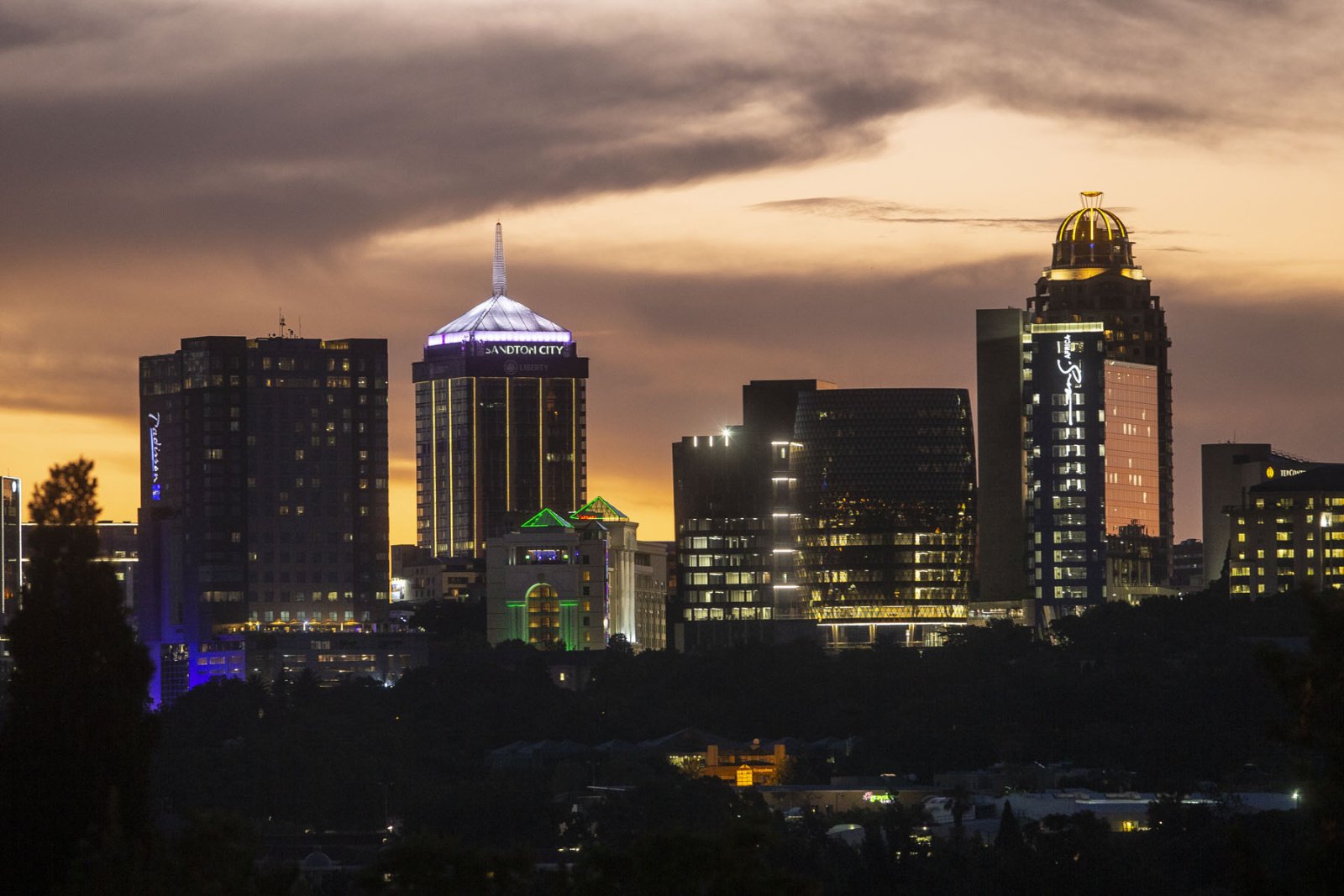
Sandton
Business towers, upscale malls, Nelson Mandela Square, and city nightlife.
Johannesburg CBD
Downtown streets, Commissioner Street, Gandhi Square, and real urban life.
Soweto
Township streets, Maponya Mall, Protea North, and cultural walking tours.
Rosebank & Melrose Arch
Shopping areas, nightlife, and modern mixed-use districts.
Johannesburg Latest News
IOL
Abdeslam Ouaddou explains decision to bench Oswin Appollis in MTN8 final defeat
Orlando Pirates head coach Abdeslam Ouaddou insists dropping star midfielder Oswin Appollis was a deliberate tactical strategy aimed at turning the second half against Mamelodi Sundowns.
IOL
Teboho Mokoena overcomes personal tragedy to fire Mamelodi Sundowns to MTN8 glory
Behind his star performance and opening goal in Durban, Teboho Mokoena reveals the profound grief and family turmoil he masked to help Mamelodi Sundowns dethrone Orlando Pirates.
The Citizen
MTN8 final – How Pirates’ players rated
Orlando Pirates were unable to make it five MTN8 titles in a row on Saturday as they lost 2-0 to Mamelodi Sundowns at the Moses Mabhida Stadium in Durban. We look at how the Buccaneers’ players rated in an underwhelming performance overall from Abdeslam Ouaddou’s side. Orlando Pirates player ratings Sipho Chaine 8/10 The Pirates goalkeeper made a series of outstanding saves in the first half to keep his side in the match. Unlucky to be on the losing side. Kamogelo Sebelebele 6 Sebelebele couldn’t really get forward and affect the game in the first half. Was unlucky to be forced off with a first half injury. Nkosinathi Sibisi 7 Orlando Pirates’ experienced centre back made a host of vital interventions to keep the scoreline respectable. Lebone Seema 5 Seema didn’t have one of his best games in defence. He was caught out by Thabang Matuludi’s flick for Mokoena’s opener. Deon Hotto 6 Hotto had an effective game as a left wing back, getting forward to good effect, but was unable to provide a killer pass or an equaliser for his side. Thapelo Mokobodi 6 Mokobodi was a bit overrun at times in midfield, but he was desperately unlucky to have a penalty awarded against him after a poor decision from referee Abongile Tom. Simphiwe Selepe 5 Selepe didn’t have much influence on the game and was one of the poorer Pirates players on show in Durban. Thalente Mbatha 6 Mbatha was caught on the ball early on by Brayan Leon and Sundowns should have doubled their lead. He hit one shot into the side netting but was not his usually dominant self. Gamphani Lungu 6 Lungu was Pirates’ most threatening attacker and had one first half effort well saved by Ronwen Williams. Williams then denied Lungu from the penalty spot in the second half. Yanela Mbuthuma 7 Mbuthuma led the line quite well for Pirates, but remains frustratingly inconsistent in front of goal. He did well to used his strength and win a second half penality for his team. Tshepang Moremi 6 Moremi was another Pirates player who didn’t play up to his usual standards. Try as he might, the Bafana man couldn’t really influence the game. Pirates substitutes Oswin Appollis 6 It was a surprise that Appollis did not start the final, though he did come off the bench for Sebelebele at half time. He did set up Lungu with one brilliant pass but generally failed to affect the game. Kabelo Kgositsile 5 Came off the bench as part of a triple substitution in the 74th minute but didn’t really make an impression. Simphiwe Masilela 7 Came off the bench with Kgositsile and Evidence Makgopa and very nearly scored with a brilliant run and shot that went inches wide. Evidence Makgopa 5 Like Kgositsile, couldn’t really influence the game when he came on. Mohau Nkota Only came on for the last eight minutes so impossible to rate.
The Citizen
MTN8 Final: How Sundowns’ players rated
Mamelodi Sundowns were crowned MTN8 champions following a 2-0 victory over Orlando Pirates at Moses Mabhida Stadium on Saturday night. Teboho Mokoena and Iqraam Rayners were on target as the Brazilians lifted the season-opening competition after an entertaining encounter in Durban. Mamelodi Sundowns Player Ratings: Ronwen Williams – 8/10 Williams delivered when his team needed him most in a frantic opening 45 minutes. He also denied Ghampani Lungu from the penalty spot on the hour mark, producing a crucial save to keep his side in front. Thabang Matuludi – 6 Matuludi looked comfortable on the ball and was rarely troubled at right-back. Making only his second start in Sundowns colours, wasn’t caught out at the back, with much of Pirates’ attacking threat not coming down his flank. Khulumani Ndamane – 5 Ndamane showed commitment in his individual battles and was not afraid to get stuck in. However, he looked less assured than the final scoreline might suggest, with Pirates finding opportunities to trouble the Sundowns defence. Malibongwe Khoza – 6 Khoza endured a challenging evening alongside Ndamane in central defence. The pair could have been punished had Pirates been more clinical in front of goal, leaving both defenders somewhat fortunate to escape without greater scrutiny. Thapelo Morena – 5 Morena endured a quiet night and missed a golden opportunity in the first half. The experienced wing-back struggled to make an impact after that early miss and offered little going forward. Aubrey Modiba – 5 Modiba struggled to influence proceedings at either end of the pitch. His contribution in attack was limited, while he also failed to make a significant impact defensively. Miguel Cardoso’s decision to withdraw him at half-time, particularly after his first-half booking, came as little surprise. Teboho Mokoena – 7 Mokoena did not appear to be at full fitness after returning from international duty with Bafana Bafana carrying an injury. Nevertheless, the midfielder used his experience to make a valuable contribution. Although he lacked his usual freedom of movement, he put in a solid shift to help Sundowns get over the line. Nuno Santos – 5 Santos failed to reach the heights expected of him after his impressive brace in Sundowns’ 2-1 victory over Al-Ahli Saudi in the FIFA Intercontinental Cup last month. The Portuguese attacker struggled to make a telling impact and was relatively quiet throughout the final. Marcelo Allende – 6 Allende looked comfortable dictating play from deep but offered little attacking threat in the final third. Despite his limited contribution going forward, the Chilean midfielder worked hard and delivered a solid performance in the MTN8 decider. Brayan León – 5 It was a frustrating evening for León who struggled to make his presence felt in attack. The Colombian striker was indecisive in several promising situations and missed a golden opportunity late in the second half before being substituted with eight minutes remaining. Tashreeq Matthews – 5 Matthews was guilty of poor decision-making when Sundowns broke forward into promising positions, and greater composure in the final third could have helped his team put the game beyond Pirates’ reach earlier. Sundowns Substitutes Divine Lunga – 6 Lunga offered little in attack but was dependable defensively. He played an important role in helping Sundowns keep Pirates at bay during his time on the pitch. Iqraam Rayners – 6 Rayners made his presence felt by converting the penalty in injury time. Beyond that decisive contribution, the striker had little opportunity to influence the game during his brief 12-minute appearance. Siyanda Ndlovu – 6 Ndlovu brought energy after coming off the bench and made an immediate impact by winning a late penalty. Introduced with eight minutes of regulation time remaining, he looked lively and gave the Sundowns attack a lift. Thabo Cele – 5 Cele struggled to get involved after replacing Santos with 22 minutes remaining. He often found himself chasing the game without the ball but worked hard defensively and helped cover for Mokoena when the midfielder was unable to track back.
The South African
All Blacks pay heavy price for Bledisloe Cup win
Four New Zealand players were ruled out of next week’s second Test against Australia on Sunday, denting their prospects of completing a clean sweep in the Bledisloe Cup series. Forwards Asafo Aumua, Anton Segner (both concussion) and Ethan Blackadder (calf) will all miss game two in Sydney next weekend. Wing Leroy Carter could face a longer stint out after injuring his ankle while scoring a try in the 50-19 first Test win in Auckland on Saturday. Several key players were already ruled out of the two Wallabies Tests, many of them injured in the recent 3-1 series loss to South Africa Assistant coach Mike Blair said the latest setbacks created an “exciting” chance to measure the All Blacks’ depth a year out from the World Cup. “You’re going to get through numbers during your international season,” Blair told reporters on Sunday. “It’s a brilliant opportunity for guys to come through and step up and build depth into the World Cup. We want to keep the motivation high within the group.” There are recalls for hooker George Bell, lock Jamie Hannah, back-rower Du’Plessis Kirifi and midfield back Anton Lienert-Brown for the upcoming match on Saturday. Carter’s high ankle sprain could also rule him out of November’s four Nations Championship Tests after he fell awkwardly in a Rob Valetini tackle New Zealand coach Dave Rennie said “didn’t look good”. Rennie and Blair did not want to comment on what appeared to be a “hip drop” tackle from Valetini, in which the defender swings behind the ball carrier and lands on his lower legs, sometimes resulting in serious injury. World Rugby this week announced the tackle technique would be outlawed, but not until November 1, meaning Valetini is likely to escape sanction. Rematch Meanwhile, Australia will be without influential centre Len Ikitau for the Bledisloe Cup rematch after he exited Eden Park in the first half with a head knock. New Zealand attack coach Blair praised his team’s dynamic display, with experienced back Damian McKenzie the spearhead after switching to flyhalf following injuries to Ruben Love and Richie Mo’unga. Blair said the diminutive McKenzie showed his attacking class after starting all seven previous Tests this year at fullback. “Damian’s running game, his understanding of manipulation of space was brilliant, there was some good balance to our game,” Blair said. “He’s a brave player as well. He was throwing his body into tackles, and breakdowns.” By Garrin Lambley © Agence France-Presse
The South African
US lethal injection survivor Christa Pike returns to prison
Convicted murderer Christa Pike, who survived a botched execution attempt in the US state of Tennessee last week, has been discharged from hospital and returned to prison, her lawyers said on Saturday. Pike, 50, was given two doses of the drug pentobarbital on September 30 – a usually fatal dose that nevertheless failed to kill her. She was transported to hospital in critical condition but later regained consciousness, with her lawyers saying this week that she was walking around but in a “foggy” mental state. Only person to survive lethal injection Pike is the only inmate to ever survive after being injected with lethal doses of execution drugs, according to the Death Penalty Information Center (DPI). “Christa Pike was discharged from a local hospital and is now at Deborah K. Johnson Rehabilitation Center where she has been housed for more than 30 years,” her lawyers said in a statement on Saturday. “She is grateful to the first responders and her medical team for their care in these extraordinary circumstances,” the statement added. Pike “is continuing to receive medical care at the prison, and we will continue to track her recovery,” the lawyers said. Pike was sentenced to death in Tennessee after she and her boyfriend beat and killed 19-year-old Colleen Slemmer at a job training camp. Pike was 18 at the time of the murder. Debate over death penalty The attempted execution came after days of legal wrangling that ultimately reached the Supreme Court. Pike’s legal team had previously objected to the execution IV protocol, saying it would have caused needless suffering due to her small veins and a blood condition. Since the botched execution, her lawyers have repeatedly called on Tennessee Governor Bill Lee to commute her sentence to life in prison. Lee, who is a Republican, has suspended executions in Tennessee pending an independent investigation. Pike’s stunning survival renewed focus on the ethical debate surrounding capital punishment in the United States. Debate intensified That debate has intensified following the Pentagon’s announcement that it intends to livestream a military execution by firing squad later this year. Nidal Hasan, a onetime US Army psychiatrist, is scheduled to be put to death on December 3 at Fort Hood, Texas, where he gunned down 13 people in 2009. The decision to livestream the execution has prompted outrage from a broad array of public figures in the United States, including many Republicans who support the death penalty. US President Donald Trump indicated on Saturday he could still decide against the livestreaming. “There are two thoughts: don’t show it and show it,” Trump told reporters at the White House. “Because you know by showing it, maybe other people won’t be doing what he did. So I’ll make a decision ultimately.” Pope Leo, the first American pontiff, posted on Saturday on X that “the death penalty is inadmissible because it is an attack on the inviolability and dignity of the person.” “The common good can be safeguarded and the requirements of justice can be met without recourse to capital punishment,” he said. The death penalty has been abolished in 23 of the 50 US states, while three others – California, Oregon and Pennsylvania – have moratoriums in place. The federal government instituted a moratorium under president Joe Biden, but Trump’s administration lifted it when he returned to office in 2025. By Garrin Lambley © Agence France-Presse
TechCentral
Shoprite ranks cybersecurity as its number one risk
Cybersecurity is Shoprite’s top-ranked risk, and the only one whose controls it rates as partially effective.
TechCentral
Standard Bank to take up to $200-million stake in OPay
Standard Bank will buy as much as 4.99% of Nigeria-focused fintech OPay as it files to list in New York.