General Information
Johannesburg is the most populous city in South Africa. The City of Johannesburg itself has a population of 5,538,596, while the City of Johannesburg Metropolitan Municipality has a population of 6,599,190, making it one of the 100 largest urban areas in the world. Johannesburg is the provincial capital of Gauteng, the wealthiest province in South Africa, and seat of the country's highest court, the Constitutional Court. Situated on the mineral-rich Witwatersrand hills, the city has long been at the epicentre of the international mineral and gold trade. The richest city in Africa by GDP and private wealth, Johannesburg functions as the economic capital of South Africa and is home to the continent's largest stock exchange, the Johannesburg Stock Exchange.
- Population: 5,900,000+ (Metro Area)
- Area: 1,645 km²
- Currency: South African Rand (ZAR)
- Coordinates: Latitude: -26.204444885254, Longitude: 28.045555114746
- Timezone: Timezone info not available
- Current Local Time: ailab
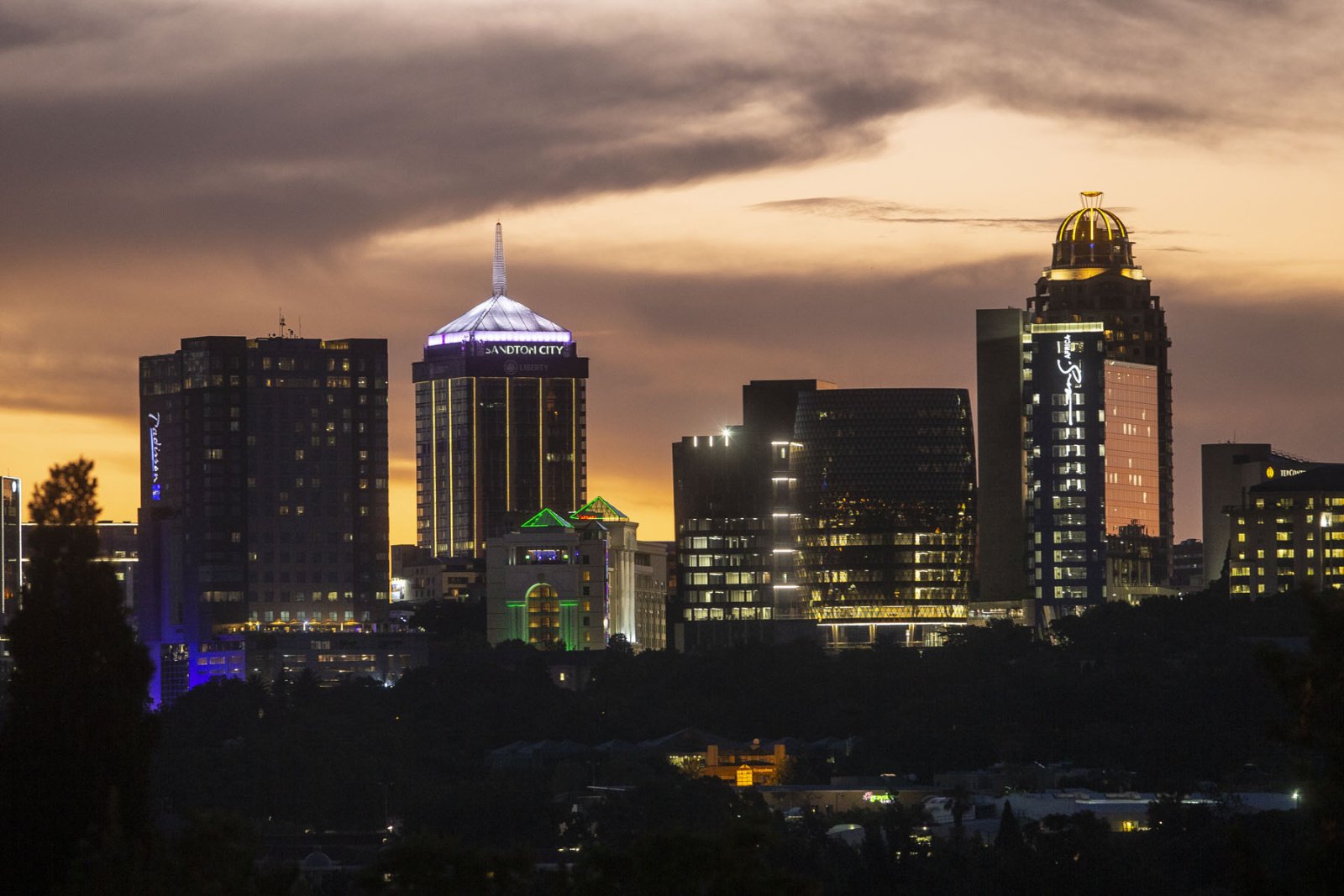
Sandton
Business towers, upscale malls, Nelson Mandela Square, and city nightlife.
Johannesburg CBD
Downtown streets, Commissioner Street, Gandhi Square, and real urban life.
Soweto
Township streets, Maponya Mall, Protea North, and cultural walking tours.
Rosebank & Melrose Arch
Shopping areas, nightlife, and modern mixed-use districts.
Johannesburg Latest News
IOL
R30bn illicit cigarette trade puts pressure on South Africa to act
Ipsos figures cited by BATSA show cheap cigarettes in three-quarters of stores, as the company calls for a R38 minimum price and tougher enforcement.
IOL
Durban’s homeless accuse metro police of brutality during election dialogue
Homeless residents told a Durban political dialogue that metro police had assaulted, pepper-sprayed and harassed them, prompting calls for investigation and safer sleeping spaces.
The Citizen
Charlotte Maxeke hospital cancer treatment continues, says Gauteng health department
The Gauteng Department of Health said on Thursday that cancer patients at Charlotte Maxeke Johannesburg Academic Hospital are still receiving radiation therapy amid questions over licensing of machines and staff shortages. “The hospital’s four machines remain operational, with radiation therapy services continuing daily as normal,” the department said. It said two machines had been bought to widen access to cancer care. It then addressed the licensing claims directly. “The Department also informs the public that the South African Health Products Regulatory Authority (SAHPRA) has not revoked any Radiation Oncology licence at the hospital,” it said. Staffing delayed licence for two new machines However, the department did acknowledge that licensing for the two new Elekta Harmony Pro machines was not licensed for clinical use yet. SAHPRA raised concerns about staffing for the expanded service. “We can also confirm that all personnel currently employed in Radiation Oncology are qualified,” the department said. The department said it was recruiting for two vacant medical physics posts and talking to the regulator. “The two new machines will only be used for clinical treatment once the outstanding staffing and licensing requirements have been addressed and the necessary authorisation has been granted,” it said. DA says patients are at risk The department was responding to claims made by the DA on Wednesday. According to DA Gauteng health spokesperson Madeleine Hicklin, unnamed sources said SAHPRA had revoked licences for two machines because of a shortage of qualified staff. She said this effectively halved the hospital’s radiation service. “This is a devastating blow for cancer patients who depend on the hospital for life-saving radiation treatment,” Hicklin said. She said the DA would put questions to Health MEC Faith Mazibuko. “Cancer treatment cannot be put on hold,” Hicklin said. Machines bought before bunkers were built Hicklin also raised two machines bought two years ago for Chris Hani Baragwanath Hospital. “Yet, the bunkers needed to house these machines have still not been built, leaving expensive equipment in storage instead of being used to treat cancer patients,” she said. The department acknowledged that three machines meant for Dr George Mukhari and Chris Hani Baragwanath hospitals were bought before their bunkers existed. It said it would move them to North West and the Eastern Cape, with one going to the former and two to the latter. “The Department is pursuing the construction of two new oncology centres, one at each hospital, to strengthen radiation oncology services,” the department added.
The Citizen
Recipe of the Day: Ethiopian Lamb Tibs
This is a quick and easy dish to make and delicious. Ethiopian lamb tibs is spicy, but the combination of flavours makes it possible to enjoy the dish nicely hot, or not. Chef Fedaki Shiferow’s recipe from the Skylight Hotel in Addis Ababa is delicious and a traditional favourite. Ingredients 650g boneless, cubed lamb Half a teaspoon of salt A tablespoon of olive or canola oil Two teaspoons of butter or clarified butter, the traditional Ethiopian way Half an onion, sliced One jalapeño pepper Three tablespoons of crushed ginger A tablespoon of crushed garlic About one and a half teaspoons of fresh rosemary Some fresh, diced tomato A quarter cup of water Berbere spice mix, to taste. For a local substitute, Woolworths has a 6-Spice mix, or you can use baharat spice mix. Method Season the lamb with half of the salt. Heat the oil in a cast-iron skillet over medium heat. Add the lamb and cook it evenly for about eight minutes, or until cooked to your liking, then transfer to a plate. While the lamb rests, use the same pan to add the butter, then fry the onion, jalapeño, ginger, rosemary and garlic together with the berbere spice mix. Stir often and cook for around two to three minutes. Add the remaining salt, then the tomato, and simmer the whole lot together until the tomato softens. This should take another three to four minutes. Do not forget to stir the mixture every now and then. Once the mixture has cooked, stir in the water, give it a final stir or two and return the lamb to the pan. Toss everything together until the meat is nicely coated and heated through. Serve straight away, preferably with traditional Ethiopian injera. Injera is a slightly sour, spongy flatbread made from fermented teff flour. If you do not have injera, a roti will do.
The South African
Degree or NO degree: Which is more employable in South Africa?
Which is more employable in South Africa: degree or no degree? This is less of a question and more a widely held belief that the former makes you more likely to find a job. However, a revealing new report from Pnet has turned a common assumption on its head. Get this, South Africans with lower qualifications and no degree are finding jobs faster than those with. The data comes from analysis of 2.8-million records of people who started new jobs between 2022 and 2025, counting roles that lasted at least one year. DEGREE OR NO DEGREE? According to PNet, the average job-search times by qualification are affected like so. Graduate roles are more specialised, higher-paying, have fewer vacancies and, therefore, involve longer hiring processes: Below matric: 11 months N4 and N5: 12 months Matric: 13 months N6 or diploma: 14 months Degree, master’s or doctorate: 16 months Moreover, the degree or no degree conservation also crosses work sectors. Sales is the quick to hire at 9 months. Specialised finance, architecture and engineering jobs take 16.3 months. Drivers find work in 8.3 months, construction workers in 8.7 months, and electricians in 10.5 months. Therefore, according to the report, the overall average wait time for jobs is about 15 months. Keep that in mind if you’re thinking of quitting your existing job or want to make unemployment fund (UIF) benefits last. THE BIG NO DEGREE CATCH Unemployment between 15 and 24 year olds in actually above 60% in South Africa. Image: File However, it sould be noted that Pnet only measures people who have found work. It says nothing about those who did not and continue to search and apply for jobs. Stats SA’s latest figures tell that side of the story: the Q2 2026 Quarterly Labour Force Survey put youth (15 to 34) unemployment at 47.4%, with 5-million young people jobless. Among 15 to 24-year-olds, unemployment is above 60%. Don’t be fooled by the degree or no degree argument, qualifications still matter enormously for the odds of getting a quality job. What Pnet fails to mention is that graduate unemployment is 12.4%, against 39.2% for people without matric. Lower qualifications may mean a quicker hire, but they don’t necessarily mean a safer and sustainable one … WHAT GOVERNMENT IS DOING FOR BASIC INCOME SUPPORT Facing a worsening unemployment crisis, the R370 Social Relief of Distress (SRD) Grant is funded until 31 March 2027, with a R36.4-billion allocation. Talk is that government wants to replace it with a permanent Basic Income Support (BIS) grant, for working-age people with no income. The Department of Social Development (DSD) aims to finish the policy and submit it to Cabinet by March 2027. And Treasury has said it will only fund it if SASSA links working-age recipients to skills development and employment programmes. Who knows, Finance Minister Enoch Godongwana may even reveal more about it at his Medium-Term Budget Policy Statement (MTBPS) on Wednesday 21 October 2026. But what do you think? Do you think the degree or no degree debate has any bearing in South Africa’s unemployment crisis? Please share your thoughts in the comments section below …
The South African
Revealed: Sundowns paid R4 million for 16-year-old development player
Few people remember Mamelodi Sundowns’ Gomolemo Kekana wearing the colours of TS Galaxy as a young teenage star. The 20-year-old central midfielder left the Mpumalanga club when he was just 16 after the Under-18 Engen Knockout tournament in 2023. GOMOLEMO KEKANA TO MAMELODI SUNDOWNS Speaking to Andile Ncube on Metro FM’s Sports Night Amplified show, TS Galaxy chairman Tim Sukazi revealed that Kekana moved to Ka Bo Yellow for R4 million. “People don’t know he is from TS Galaxy,” Sukazi said. “We played him at DDC [DStv Diski Challenge] and he was bought by Sundowns for millions. The record price for a 16-year-old transfer fee. It was R4 million.” Kekana later became Sundowns reserve team captain. He was soon integrated into the first team before making his debut against Magesi FC on 20 August 2025. One of his finest displays came against Red Bull Leipzig in May when he dazzled and stole the show despite coming on midway through the second half. FROZEN OUT OF THE FIRST TEAM Fast forward to the new season and Kekana has been nowhere to be seen. The Zebediela-born, Alexandra-raised star has been frozen out of both the Sundowns’ first team and the DDC reserve team. Reports say he declined the club’s offer of a new contract. He is likely to run down the remainder of his deal before moving to a new club as a free agent. SUNDOWNS’ CURRENT LIST OF CENTRAL MIDFIELDERS: Teboho Mokoena, 29 Bathusi Aubaas, 31 Thabo Cele, 29 Marcelo Allende, 27. Meanwhile, the club have reportedly signed two midfielders. The Ecuadorian Jhegson Mendez (29) arrives in January, while Lazola Maku (19) is expected to be announced in the coming days. WHAT DO YOU MAKE OF THE SITUATION BETWEEN KEKANA AND SUNDOWNS? Share your thoughts by clicking on the red comments block below.
TechCentral
Netflix is losing the battle for your screen time
Amid sweeping layoffs, Netflix has replaced the content chief whose tenure included Squid Game and Bridgerton.
TechCentral
Safaricom control to stay with Vodacom until appeal
The shares and the purchase price paid to Kenya's government will stay where they are until a fast-tracked appeal is heard.