General Information
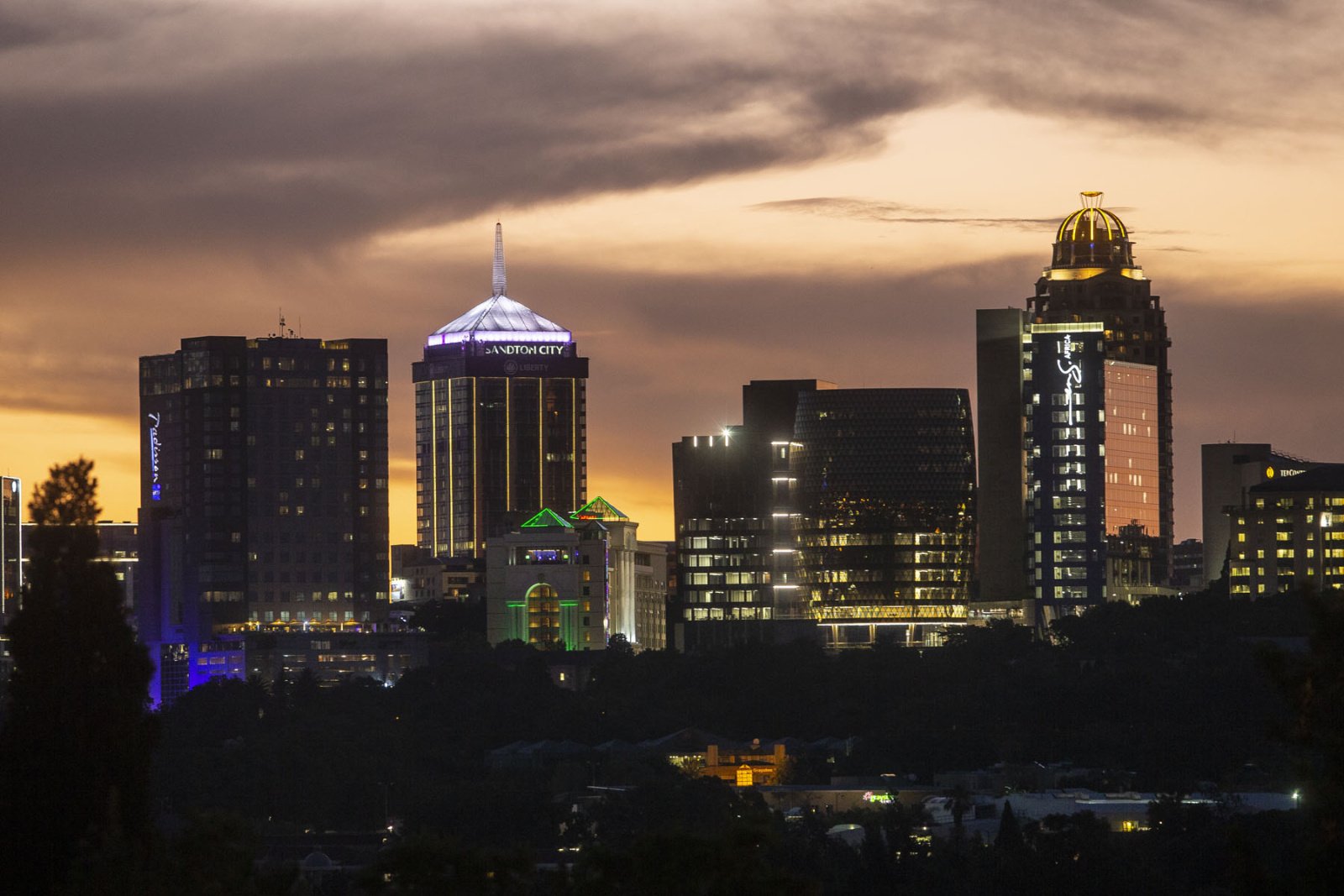
Johannesburg is the most populous city in South Africa. The City of Johannesburg itself has a population of 5,538,596, while the City of Johannesburg Metropolitan Municipality has a population of 6,599,190, making it one of the 100 largest urban areas in the world. Johannesburg is the provincial capital of Gauteng, the wealthiest province in South Africa, and seat of the country's highest court, the Constitutional Court. Situated on the mineral-rich Witwatersrand hills, the city has long been at the epicentre of the international mineral and gold trade. The richest city in Africa by GDP and private wealth, Johannesburg functions as the economic capital of South Africa and is home to the continent's largest stock exchange, the Johannesburg Stock Exchange.
- Population: 5,900,000+ (Metro Area)
- Area: 1,645 km²
- Currency: South African Rand (ZAR)
- Coordinates: Latitude: -26.204444885254, Longitude: 28.045555114746
- Timezone: Timezone info not available
- Current Local Time: ailab
Johannesburg Latest News
IOL
AI breakthrough: The machines are listening, talking, impersonating and it's name is Dessa
IOL Tech editor Michael Sherman had a firsthand look at Dessa, a groundbreaking conversational AI whose lifelike cadence, emotional depth, and mid-sentence laughter blur the boundary between human and machine.
IOL
Mngqithi to Chiefs: Is Naturena finally calling after Yanga exit?
Manqoba Mngqithi is back on the market after leaving Young Africans, reopening speculation over Kaizer Chiefs — the club he says showed interest before his move to Tanzania.
The Citizen
Experts say policing alone not alone enough to curb gang violence
Policing alone is not enough to curb gang-related violence in SA, with experts calling for a comprehensive strategy that addresses the root causes of gangsterism, while strengthening law enforcement. These observations follow a shooting in Steenberg, Cape Town, on Saturday, which claimed the lives of five people and left three others wounded. Shooting in Steenberg claimed lives of five people In a statement, the SA Police Service (Saps) said detectives from the Western Cape Anti-Gang Unit were investigating five counts of murder and three of attempted murder over the shooting. “Preliminary reports indicate the victims were drinking at a residence at 8pm when gunmen entered and fired several shots indiscriminately. Four men and a woman between the ages of 21 and 33 died at the scene,” police said. The three wounded, a man and two women, were taken to a medical facility for treatment. Willem Els, an expert from the Institute for Security Studies, said SA was not winning the fight against gang violence on the Cape Flats. He added authorities are treating the symptoms, rather than tackling the underlying causes. SA not winning fight against gang violence – Els Els raised concerns about allegedly compromised policing and brazen gangs that appeared to have little fear of the consequences, making it difficult for law enforcement to tackle the violence effectively. He said a holistic, whole-of-society approach was needed, combining effective policing with community upliftment, job creation and interventions to address socioeconomic challenges. Communities had previously mobilised against drugs because they felt police were failing them, yet the problem has persisted for decades, he said. “Without a comprehensive strategy and operational plan, we risk having the same conversations about gang violence in another 10 years,” added Els. “We are not winning the fight. We are just putting a bandage on the wound.” Holistic whole of society approach needed He said the country needed to confront the underlying causes of violence instead of continually responding to its consequences. The call echoes that of the Cape Crime Crisis Coalition, which has urged the government to involve civil society in the fight against gangsterism in the Western Cape. The coalition has also called for gangsterism to be declared a provincial disaster, arguing a coordinated response is needed to tackle the scourge effectively. However, Ian Cameron, parliament’s portfolio committee on police chair, has called for tougher action against gang-related violence, saying law enforcement agencies must exert sustained pressure on gang leaders and their networks. “Gangs, especially their leaders, must face relentless pressure,” he said. Cameron calls for tougher action “Tactical teams executing warrants, doors being kicked down if need be and K9 dog units searching for illegal guns and drugs are needed. “They must have nowhere to operate with impunity.” He said prosecutors should vigorously oppose bail for armed gang suspects wherever the evidence supported such opposition. Cameron also urged authorities to target financial networks sustaining organised crime. “Cut off their lifeblood. SA Revenue Service, banks and investigators must follow the money, freeze criminal proceeds through lawful processes and shut down the kingpins’ access to banking for criminal business,” he said. Cameron added that the City of Cape Town’s metro police needed expanded investigative powers to help sustain pressure on gangs. Gangs, especially leaders, must face relentless pressure from tactical teams Describing the Lavender Hill shooting as horrific, Cameron expressed his sympathy for the victims, their families and residents living in fear. “After weeks of violence and chaos, what is Operation Prosper actually achieving?” he asked. Cameron said Saps and military leadership needed to demonstrate tangible results instead of offering further assurances. “Expanding the City of Cape Town’s policing powers, including investigative powers for its metro police, is urgently needed to strengthen the fight against gangs. Communities need protection and investigations that lead to convictions. They cannot keep paying for government failure with their lives,” he said. Witness Maluleke, a senior criminologist at the University of Limpopo, said the country’s continued struggle against gang-related violence was a serious cause for concern. Serious cause of concern “The recurring shootings and loss of innocent lives suggest that our current responses are not yielding the desired results,” Maluleke said. He called for a rethink of the country’s approach, with evidence-based strategies that address the root causes of gang violence, while strengthening intelligence-led policing and cooperation between law enforcement agencies and communities. “We cannot continue responding to these incidents after lives have been lost. There must be a proactive, coordinated and sustained effort to prevent violence and protect vulnerable communities,” he said.
The Citizen
South Africa must repair strained US relationship, Roelf Meyer says
South Africa’s ambassador to the United States (US), Roelf Meyer, says Pretoria must repair its relationship with Washington, warning that the current state of affairs cannot continue as tensions persist between the two countries. Speaking at the launch of his political memoir at the Cape Town Press Club on Monday, Meyer described the US as a critical partner for South Africa and said restoring the relationship was one of his key responsibilities as ambassador. US tensions Meyer said that despite tensions with the Trump administration, his goal was to ease them. “Why is it important that we have good relations with the United States? It’s because it’s the biggest economy on earth, as a starting point.” Meyer, who had just returned from Washington ahead of the event, said his long association with the US had reinforced the importance of maintaining strong ties between the two countries. Tensions between Washington and Pretoria escalated recently after US Secretary of State Marco Rubio announced new visa restrictions targeting foreign nationals accused of involvement in race‑based discrimination and uncompensated land seizures in South Africa. US President Donald Trump has singled out South Africa on several issues since he returned to the White House, notably making debunked claims of white Afrikaners being systematically “killed and slaughtered” in the country. Meyer said he had visited the US dozens of times over more than four decades and had come to understand the relationship’s significance for South Africa. ‘The relationship is strained’ Meyer acknowledged that relations between Pretoria and Washington are under pressure, describing the situation as requiring urgent attention from both sides. “There is at the moment, unfortunately, a tension. The relationship is strained, everybody knows it, and we have to work and find ways to get out of this.” Blame The veteran politician and former chief negotiator in South Africa’s democratic transition said assigning blame would not help resolve the challenges facing the two countries. “I’m not going to put blame anywhere; it’s not necessary. I have a job to do, and that is to make sure that we restore the relationship in the best possible way and as quickly as we can.” Meyer said the relationship extends beyond politics and diplomacy, arguing that it has direct implications for South Africa’s economic growth, investment prospects and employment opportunities. Jobs and investment at stake According to Meyer, economic cooperation remains one of the most important pillars of the bilateral relationship. He noted that more than 600 American companies do business in South Africa, supporting investment and job creation. “Our job is to create jobs in South Africa. That is ultimately what it is about.” Meyer said South Africa must focus on improving both its political and trade relationship with the United States. “If we have to improve the relationships at the trade level, it’s necessary, but also at the political level. We can’t go on like this.” He added that he was prepared to play whatever role was necessary to help improve the relationship. “Whether there’s persuasion necessary on the US side or on the South African side, I will be the messenger to try and make it happen.” Lessons from South Africa’s transition While discussing his memoir, Meyer reflected on South Africa’s transition from apartheid to democracy and the lessons he believes remain relevant today. “One success of the transfer from the old to the new, the transition from apartheid to democracy, is the fact that we succeeded in keeping the middle ground together.” He described a key turning point in the negotiations as the moment leaders stopped focusing on preserving the past and began concentrating on the future. “What is it that we want from the future instead of what is it that we want to protect from the past?” Constitution remains South Africa’s foundation Meyer also highlighted the importance of South Africa’s constitutional democracy, describing the constitution as the country’s ultimate foundation. “the president is not the most important factor in this country. The Executive isn’t, Parliament isn’t; it’s the constitution. And there’s only one adjudicator, and that is the Constitutional Court.” He said the supremacy of the constitution remains one of the most significant achievements of South Africa’s democratic transition and a cornerstone of the country’s political system.
The South African
‘They took R200 from me’: SASSA grant recipients vent ahead of the festive season
Grant recipients have taken to The South African’s Facebook page to vent about missing money, card confusion and SASSA grant values they say fall short as the festive season nears. Luthando Ndlovu summed up the mood in isiZulu: “Kudlaliwe ngogogo,” loosely meaning that gogo has been played. Money missing without explanation Yvonne Pietersen says part of her grant disappeared, and nobody told her why. “They took R200 from me last month, what for I don’t know, hope it will be right this month,” she wrote. SASSA grant recipients who notice unexplained deductions should ask for a bank statement showing where the money went and query any debit order or deduction they did not agree to. Postbank customers can contact Postbank’s toll-free helpline on 0800 535 455. Gold card still causing confusion Precious Kgomo asked: “Does the gold card working?” It does not. From 1 September 2026, SASSA Gold Cards stopped working, and beneficiaries who still relied on them needed to switch to the Postbank Black Card or another bank. Those who missed the deadline have not lost their money. The agency says the card is what stopped working, not the account or the grant, and any grant already paid into a Postbank account is still there. Replacing the card is free, and a valid ID or temporary ID is needed to collect a Black Card. Win R2 000 in the South African SASSA grant survey If you receive a SASSA grant and want to share your story, we want to hear from you. Take part in our survey and stand a chance to win R2 000. Your responses help us tell the stories that matter.
The South African
Orania residents to ‘refugees’ – Leader calls on Afrikaners to stay behind
More residents of Orania are choosing to leave the Afrikaner-only town to take up refugee status in the US. The programme is open to South Africans of minority race groups – predominantly white – who are “victims of racial persecution”. ORANIA RESIDENTS TAKING UP REFUGEE STATUS – HERE’S WHY According to a new report, a small percentage of residents in Orania have been granted refugee status in the US. Orania Movement leader Joost Strydom predicts this to be around 5% of the 2 900 population he believes have left the Afrikaner-only town to pursue bigger and better opportunities in America Strydom stated that families were interested in applying to the refugee resettlement programme, as the US boasted a “powerful economy” compared to Orania. He added in a Facebook post: “America has a lot to offer. This is the most powerful economy in the world. There are definitely many safe places in the USA, and there are welfare services for Africans who arrive there. Housing, food, and medical care are paid for by the U.S. government for a number of months, and there are other benefits. He continued: “There are many places out there with better service delivery and obviously without an ANC government. Orania can’t compete with all those economic benefits. Orania is still small and is still very strong under the ANC government’s influence”. Strydom added that many Afrikaner families saw Orania as a “stepping stone” to other opportunities. We are also saddened by each of these individuals who had to seek greener pastures beyond their native land. The reality is that with every person who leaves, fewer and fewer Afrikaners remain in South Africa. CALL TO STAY AND ‘BUILD’ Joost Strydom appealed to those considering leaving from Orania or elsewhere in South Africa on the refugee programme, or of their own accord, to consider staying behind. He shared: “We cannot give you anything; we ask that you come and help build. Come and help build for those who choose to live in South Africa. Come help build for Afrikaners who believe that we belong here on this continent. “Yes, we are sad about everyone leaving…they made a choice. If we want to survive as Africans in Africa, we must choose to build on something where our people can have opportunities again, where our children can go to school and study in Afrikaans, and where we can protect our culture”. Strydom listed attractions such as Orania’s high-quality education, training facilities, and booming tourism sector. He added, “All these things contribute to us being able to build a bigger and stronger economy. We choose to stay here and build a future for our people. What is your choice?”. WHAT RACIAL PERSECUTION DO THEY FACE? Orania is located in the Northern Cape, with a population of around 3000 individuals. The Afrikaner-only town was built on private property in 1963. It is self-sufficient, with its own businesses, schools, hospitals, and even currency. So, how do residents qualify to enter the refugee programme? Like other applicants, those from Orania must meet the following criteria… Be South African Be of Afrikaner ethnicity or be a member of a racial minority in South Africa Must be able to articulate an experience of persecution or fear of future persecution. In line with US President Donald Trump’s claims of “racial discrimination”, South Africans interested in the refugee resettlement programme must prove that they have been “persecuted” in their applications. In the Statement of Interest form, applicants are required to specify if the “persecution” was based on race, religion, nationality, political opinion, membership of a social group, or a fear of “future harm”. Other questions included when the prospective “refugee” would like to travel to the US, how many family members they would like to bring, and if interested parties have a valid passport.
TechCentral
SA banks warn customers not to share logins with AI agents
Absa says customers who hand banking credentials to an AI agent may be held liable, as local banks keep outside agents out.
TechCentral
Former Icasa chairman Paris Mashile has died
Paris Mashile led Icasa's fight to cut mobile termination rates, and admitted when the regulator fell short.